Artwork
Expulsion from Paradise
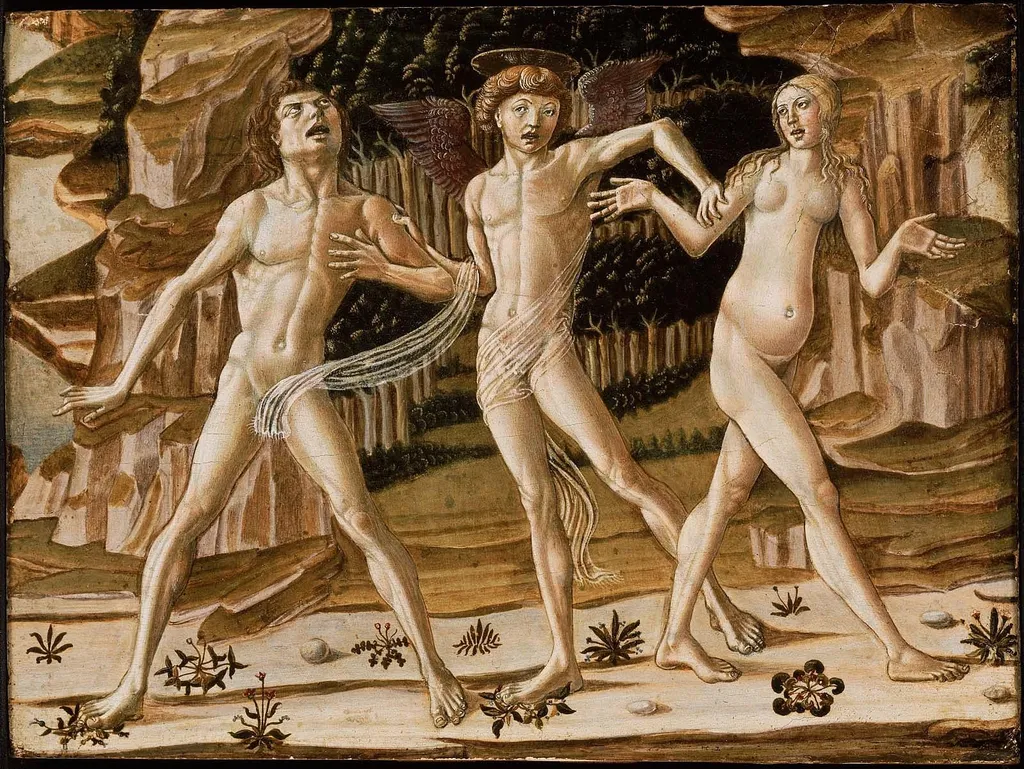
Expulsion from Paradise is a tempera painting by the Early Renaissance artist Benvenuto di Giovanni. It dates from 1470 and is held in the collection of the Museum of Fine Arts Boston.
About this work
Overview
Created circa 1470 by the Sienese artist Benvenuto di Giovanni, this tempera panel portrays the biblical expulsion of Adam and Eve from Eden. The composition places three figures on a barren, rocky landscape, framed by sparse vegetation and rendered in a muted palette of earth tones and pale whites.
Subject & Meaning
The central narrative shows the first humans, unclothed, reacting to their forced departure. One figure covers his face in distress, while another, crowned with a feather‑like headpiece and clutching a staff, appears to embody a symbolic guide or angelic presence. A third, robed figure extends an arm outward, suggesting a divine or punitive force.
Technique & Style
Executed in egg tempera, the work relies on fast‑drying pigments mixed with a binding agent, allowing for precise, luminous detailing. Benvenuto’s handling reflects early Renaissance sensibilities, with careful modeling of flesh and a restrained use of color that emphasizes the scene’s solemnity.
History & Provenance
Benvenuto di Giovanni was active from the mid‑15th to early 16th centuries, known for miniatures, decorative pavements, and frescoes. This painting belongs to his mature period, preceding the stylistic developments evident in his later 1480s works. Its ownership record prior to modern collections is not documented.
Context
The depiction aligns with contemporary religious art that emphasized moral instruction through biblical episodes. Siena’s artistic environment, characterized by a blend of Gothic tradition and emerging naturalism, informs the work’s compositional balance and the emotive gestures of the figures.
Own this work as a print
Artist & collection

Artist
Benvenuto di Giovanni, also known as Benvenuto di Giovanni di Meo del Guasta (13 September 1436 – c.