Artwork
San Pietro Polyptych
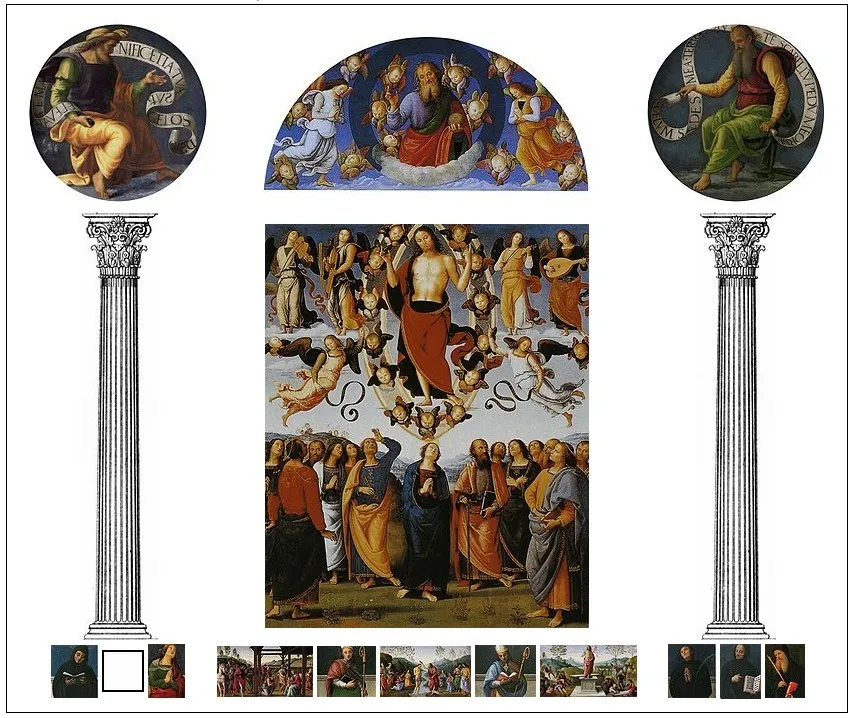
San Pietro Polyptych is an unspecified painting by the High Renaissance artist Pietro Perugino. It dates from 1498 and is held in the collection of the Museum of Fine Arts of Lyon.
About this work
Overview
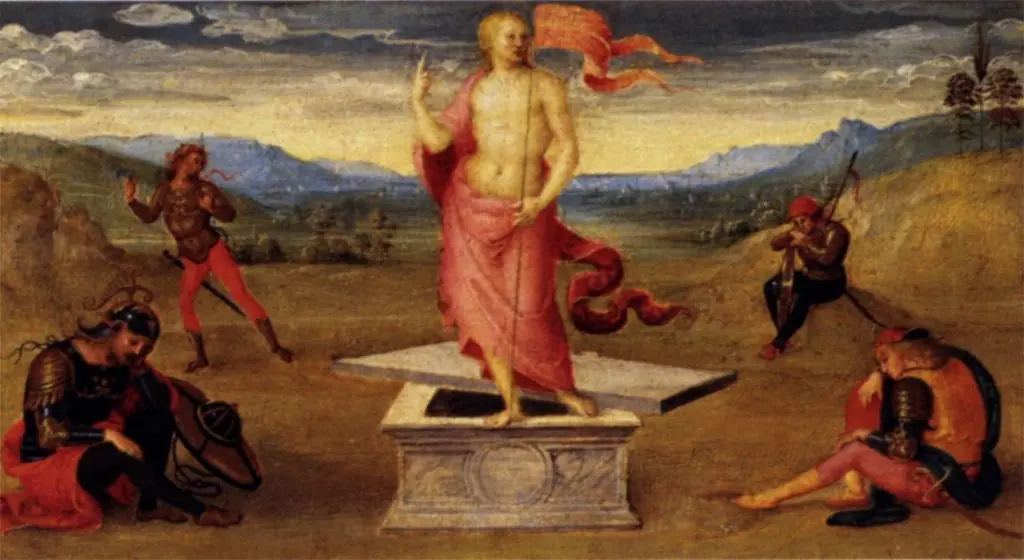
Today the central panel and its lunette, which together portray the Ascension of Christ, are housed in the Museum of Fine Arts in Lyon, France.
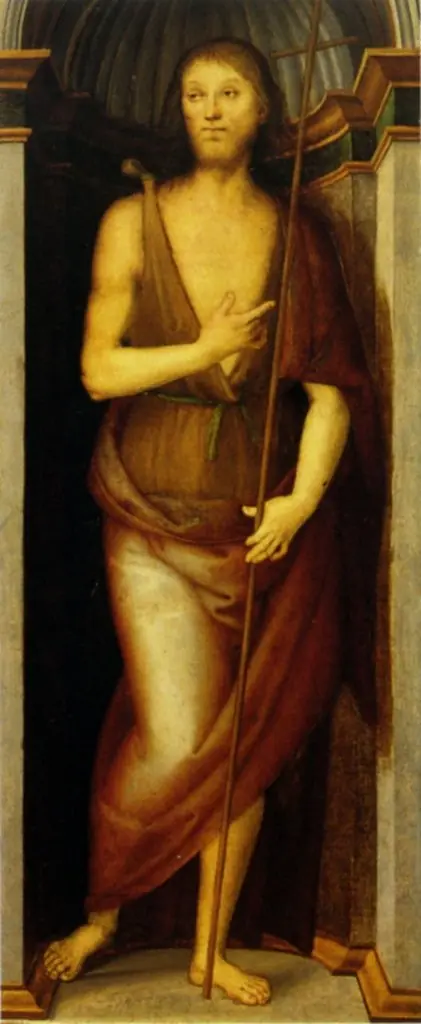
The San Pietro Polyptych is a multi‑panel altarpiece executed by the Italian Renaissance painter Perugino around the turn of the 16th century, approximately 1496–1500. The work originally comprised a central panel, a lunette above, and flanking side panels, forming a cohesive devotional ensemble. Today the central panel and its lunette, which together portray the Ascension of Christ, are housed in the Museum of Fine Arts in Lyon, France.
Subject & Meaning
The focal scene depicts Christ’s ascent into heaven, surrounded by a congregation of figures gathered beneath a luminous sky. A prominently dressed individual in a red robe stands out among the assembled witnesses, emphasizing his role within the narrative. The composition conveys the theological triumph of the Resurrection and the promise of salvation, a common theme in late‑15th‑century ecclesiastical art.
Technique & Style
Perugino employs a balanced arrangement of figures set against a serene blue backdrop, punctuated by soft clouds and a distant landscape that recedes into atmospheric perspective. The use of gentle chiaroscuro models the drapery and flesh, while the clear, harmonious color palette reflects the artist’s characteristic calm classicism. Architectural elements, such as the two flanking columns, frame the central action and reinforce spatial order.
History & Provenance
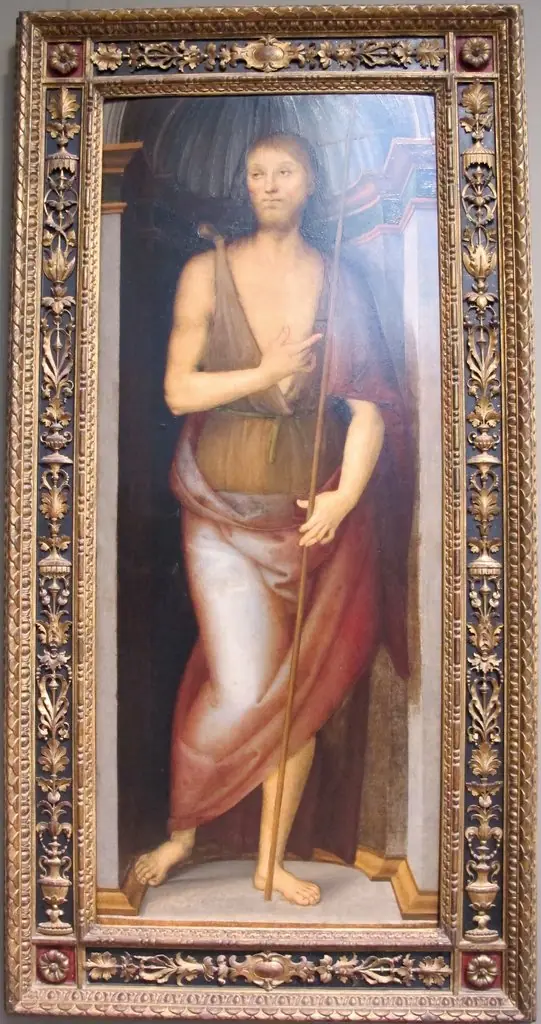
Originally created for the church of San Pietro, the polyptych was later dismantled and its components dispersed. By the early 19th century the central panel and its lunette entered the collection of the Museum of Fine Arts of Lyon, where they remain displayed together. The side panels are recorded in other European collections, illustrating the common practice of fragmenting large altarpieces for the art market.
Context
Perugino, a leading figure in the Umbrian school, worked contemporaneously with artists such as Raphael, who was his pupil. The San Pietro Polyptych reflects the period’s shift toward more naturalistic representation and the integration of architectural framing within religious narratives, aligning with the broader trends of the High Renaissance in central Italy.
Artist & collection
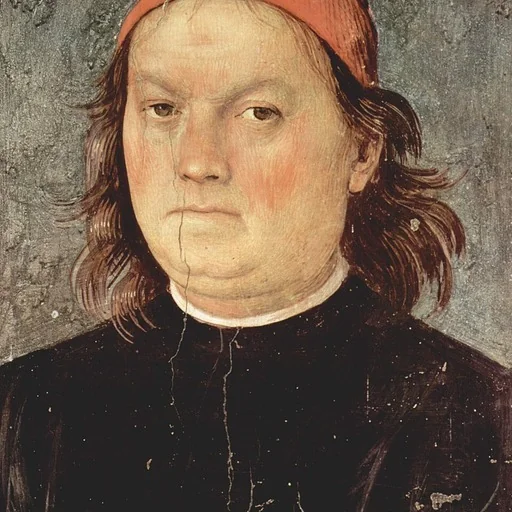
Artist
Pietro Perugino (US: PERR-ə-JEE-noh, -oo-; Italian: ; born Pietro Vannucci or Pietro Vanucci; c.

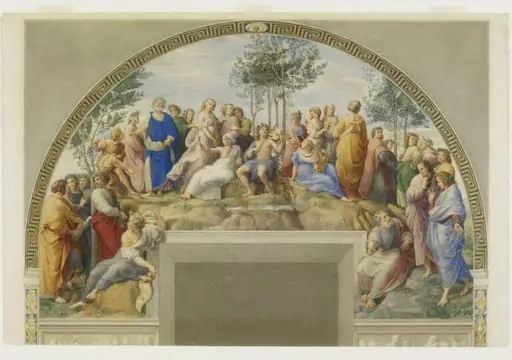 Copy after Raphael’s fresco representing the ‘Poets on Mount Parnassus’ in the Stanza della Segnatura (Vatican Palace, Rome, 1510-11), 1864-66
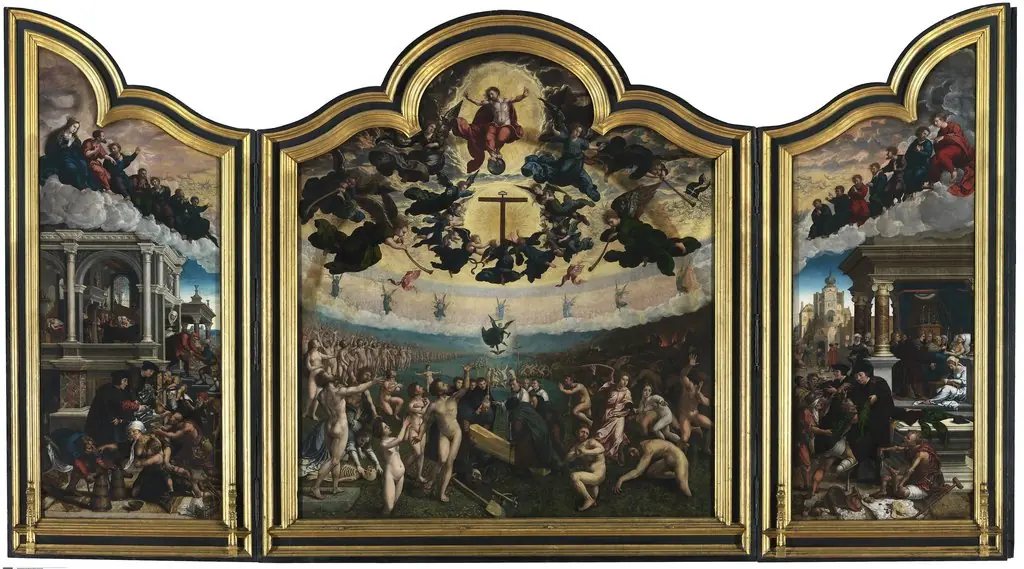 Last Judgement and the seven Acts of Mercy
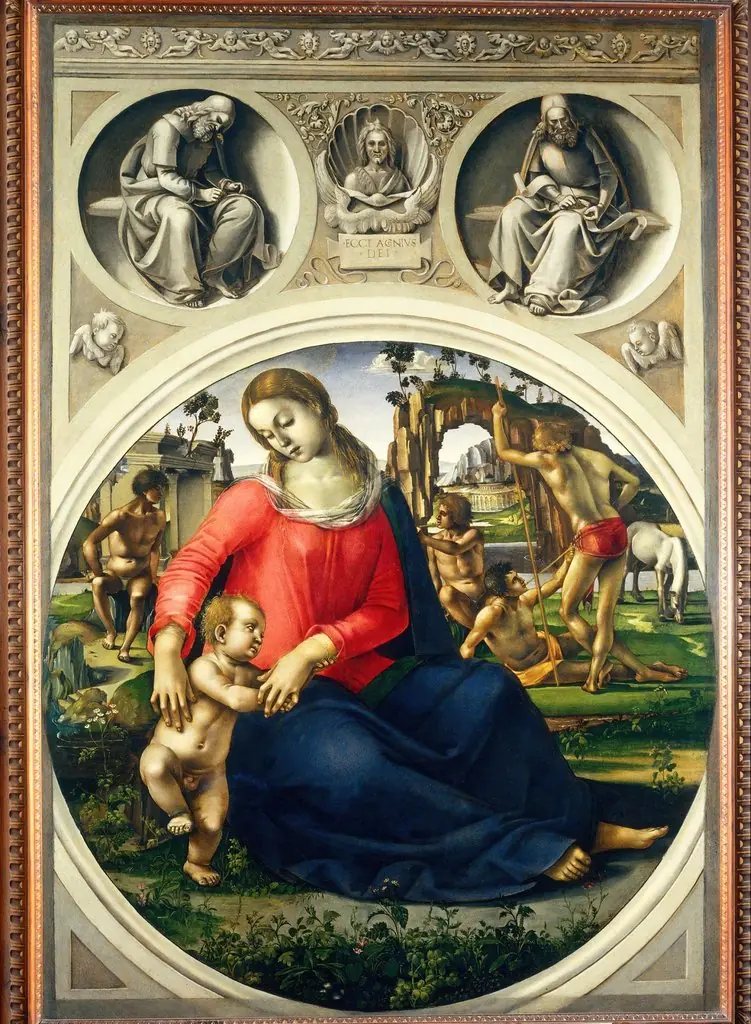 Madonna and Child
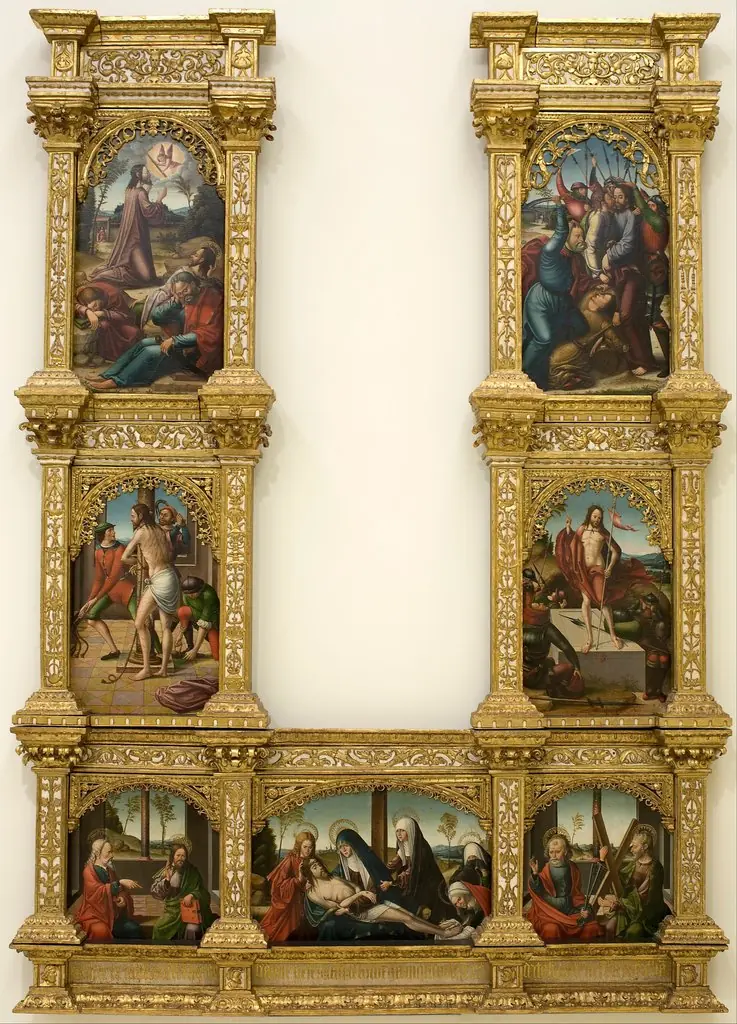 Altarpiece of the Passion of Christ
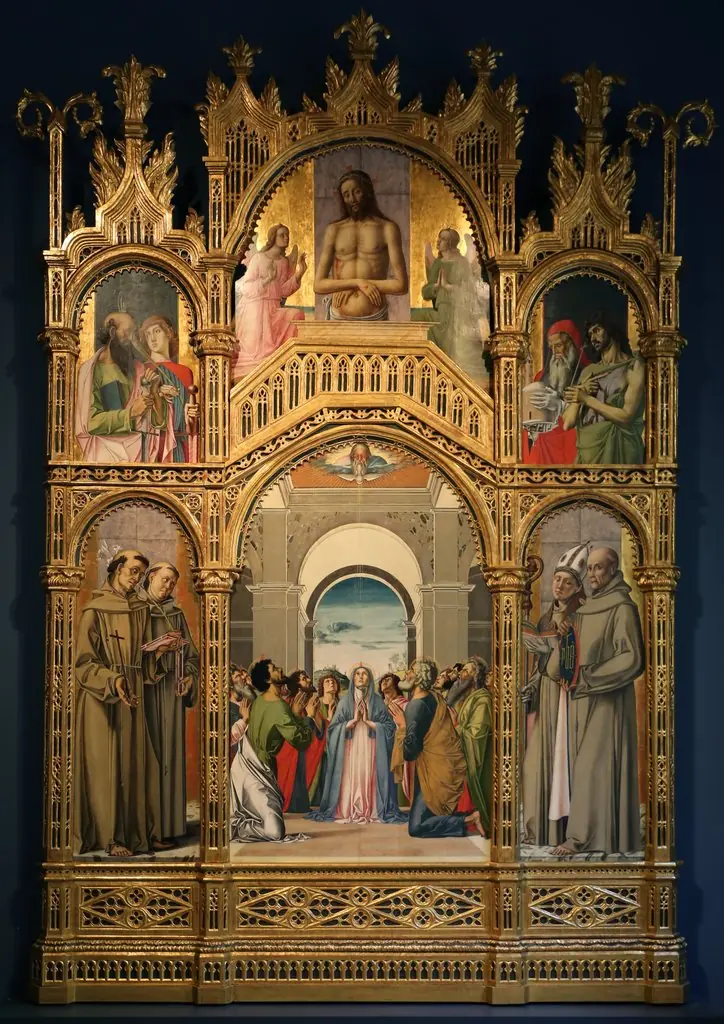 Pentecost table (6 panels)
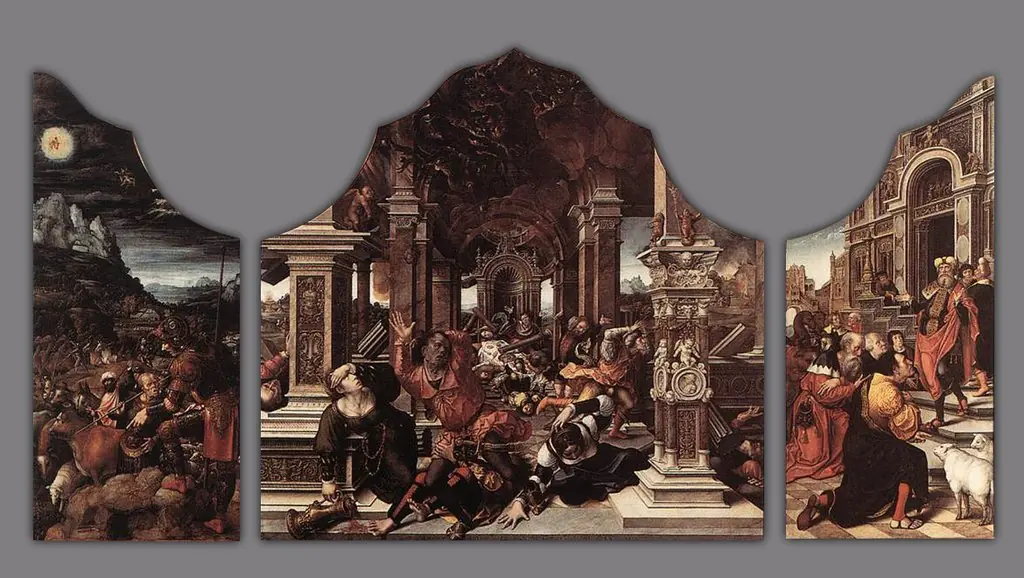 Virtue of Patience
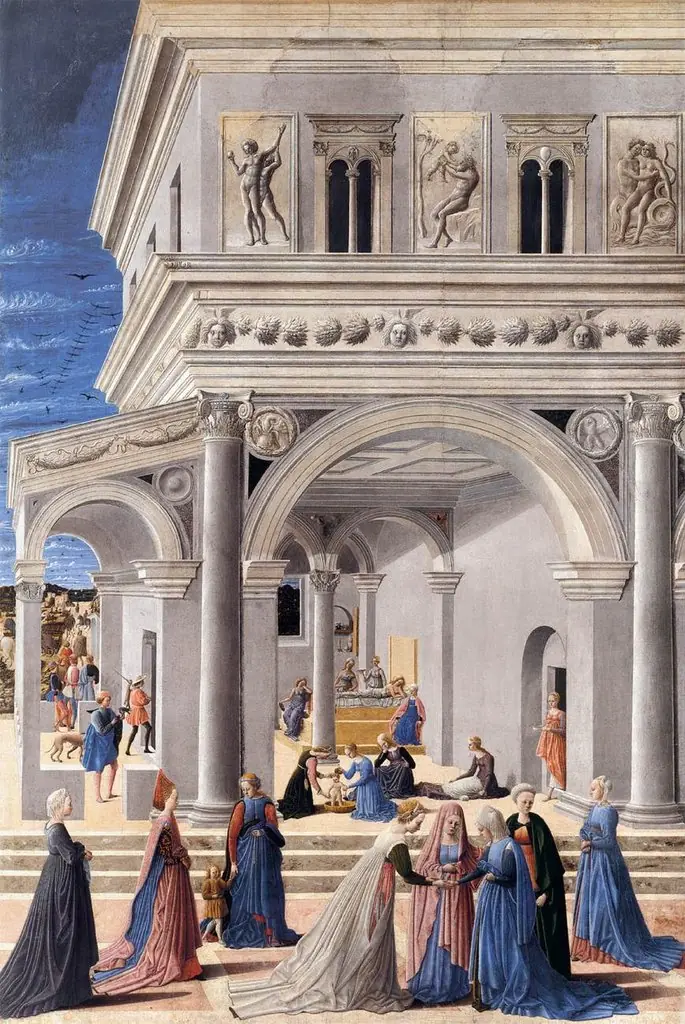 The Birth of the Virgin