Artwork
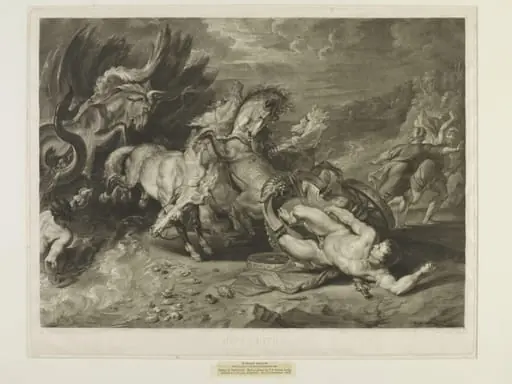
Achilles Dragging the Body of Hector
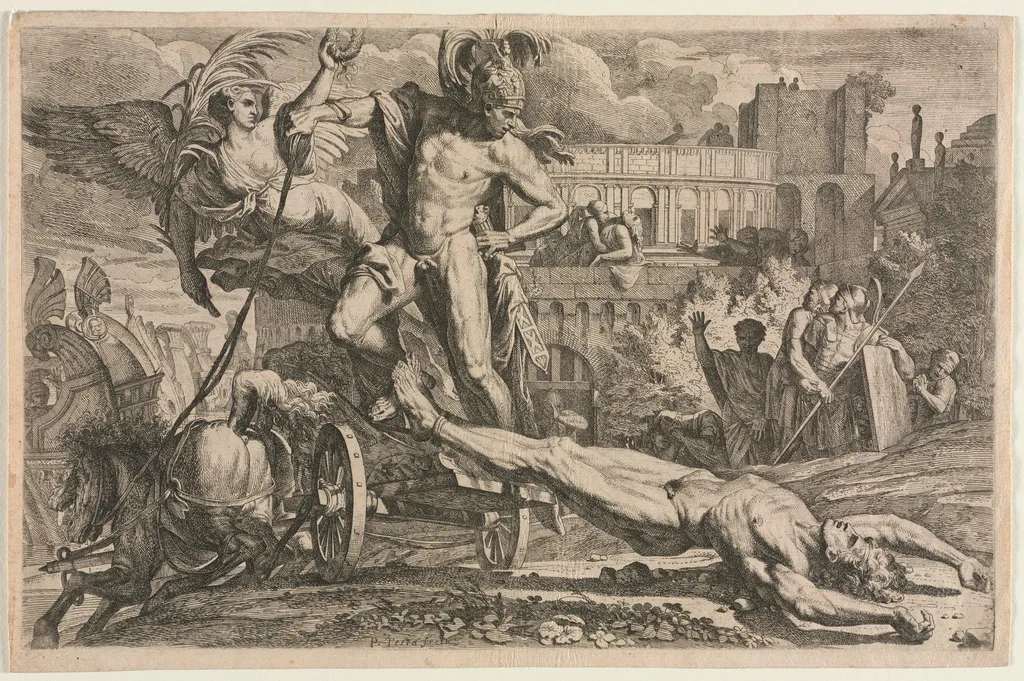
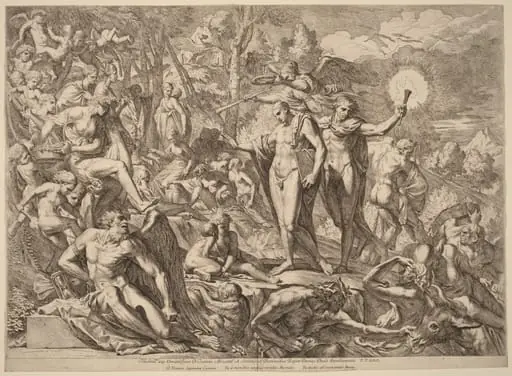
Achilles Dragging the Body of Hector is a print by the Baroque artist Pietro Testa. It dates from 1648 and is held in the collection of the Cleveland Museum of Art.
About this work
Overview
Testa’s mastery of etching allows for a dynamic interplay of light and shadow, emphasizing the emotional weight of the moment without overt sentimentality.
This etching by Pietro Testa depicts a pivotal moment from the Trojan War: Achilles dragging the corpse of Hector behind his chariot. The scene unfolds before the walls of Troy, capturing the brutality of vengeance after Hector’s killing of Patroclus. Testa’s mastery of etching allows for a dynamic interplay of light and shadow, emphasizing the emotional weight of the moment without overt sentimentality.
Subject & Meaning
The print illustrates Achilles’ act of retribution, a defining moment of grief-turned-violence in Homeric epic. By showing Hector’s lifeless body dragged through dust, Testa underscores the collapse of honor in war. The figures are isolated against a sparse background, focusing attention on the physical and moral weight of the act, while the looming city walls suggest the impending consequences for both victor and vanquished.
Technique & Style
Testa employed multi-stage acid etching on copper, allowing varying depths of line to create dramatic contrasts. Deeply etched shadows frame the central figures, while lighter, sketchier lines suggest movement in the dust and distant landscape. This technique, refined through controlled exposure, gives the print a tactile richness and atmospheric depth, aligning it with the tonal experiments of contemporary printmakers like Rembrandt.
History & Provenance
Created in the mid-17th century, this print emerged from Testa’s prolific output as a draftsman and printmaker in Rome. Though his works were widely circulated among collectors, few survive in pristine condition. The Cleveland Museum of Art’s version is among the better-preserved examples, reflecting its early acquisition and careful conservation within a European private collection before institutional ownership.
Context
Testa worked during a period when classical themes were revived in Italian art, often to explore human emotion and moral ambiguity. His etchings responded to both Baroque theatricality and the intellectual currents of humanist scholarship. This print reflects a broader trend of using ancient narratives to interrogate violence, glory, and loss—themes resonant in a Europe still recovering from decades of religious conflict.
Legacy
Testa’s technical innovations in etching influenced later generations of printmakers interested in atmospheric depth and emotional nuance. Though less celebrated than his contemporaries, his ability to convey psychological tension through line and tone secured his place in the history of printmaking. This work remains a quiet but potent example of how classical myth could be rendered with modern sensitivity.
Artist & collection
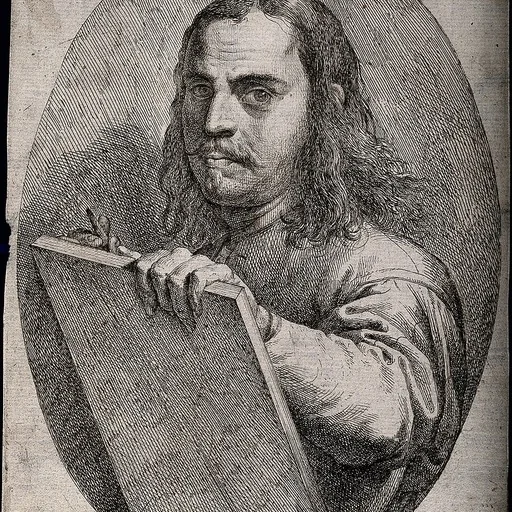
Artist
Pietro Testa (1612 – 1 March 1650) was an Italian High Baroque artist active in Rome.

![The Martyrdom of Saints Peter and Paul [recto], by Antonio da Trento](https://artifactworldgallery.com/img/antonio-da-trento--the-martyrdom-of-saints-peter-and-paul-recto--a51e90060085a207-w320.webp)