Artwork
Parnassus
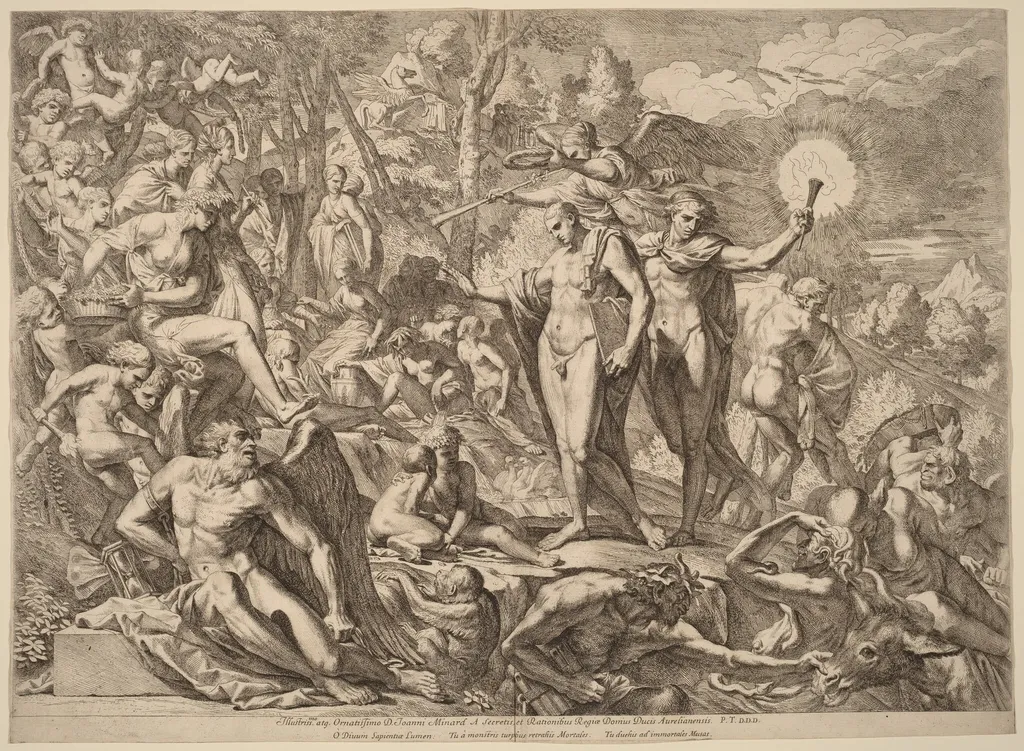
Parnassus is an ink print by the Baroque artist Pietro Testa. It dates from 1645 and is held in the collection of the National Gallery of Art.
About this work
Overview
Pietro Testa's etching *Parnassus*, created around 1645, is a densely populated scene set in a rugged landscape. The work showcases Testa's skill as a printmaker, a medium in which he excelled during the 17th century.
Subject & Meaning
The etching depicts a multitude of figures, including musicians, poets, and thinkers, surrounding two central naked figures holding a torch and staff. The exact significance of these figures is unclear, but the scene is rich in activity and drama, suggesting a complex narrative or allegory.
Technique & Style
The work is characteristic of the Baroque style, with its crowded and dynamic composition. Testa's use of etching allows for intricate detail, evident in the varied poses and activities of the figures, as well as the textured landscape and cloudy background.
History & Provenance
Testa was active in Rome within a circle of artists and scholars influenced by Classical ideals, centered around Cassiano dal Pozzo. His engagement with these intellectual and artistic circles is reflected in the etching.
Context
As a printmaker and draftsman, Testa was part of a community that valued Classical culture. The Latin text at the bottom of the etching suggests a deeper meaning or reference, consistent with the intellectual currents of his time.
Artist & collection
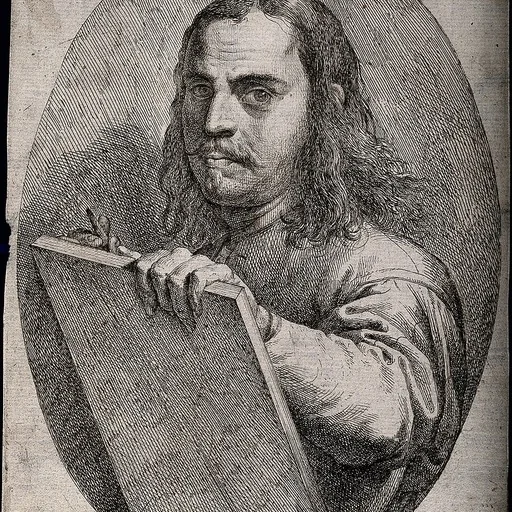
Artist
Pietro Testa (1612 – 1 March 1650) was an Italian High Baroque artist active in Rome.