Artwork
The ruined Hall, Wycoller
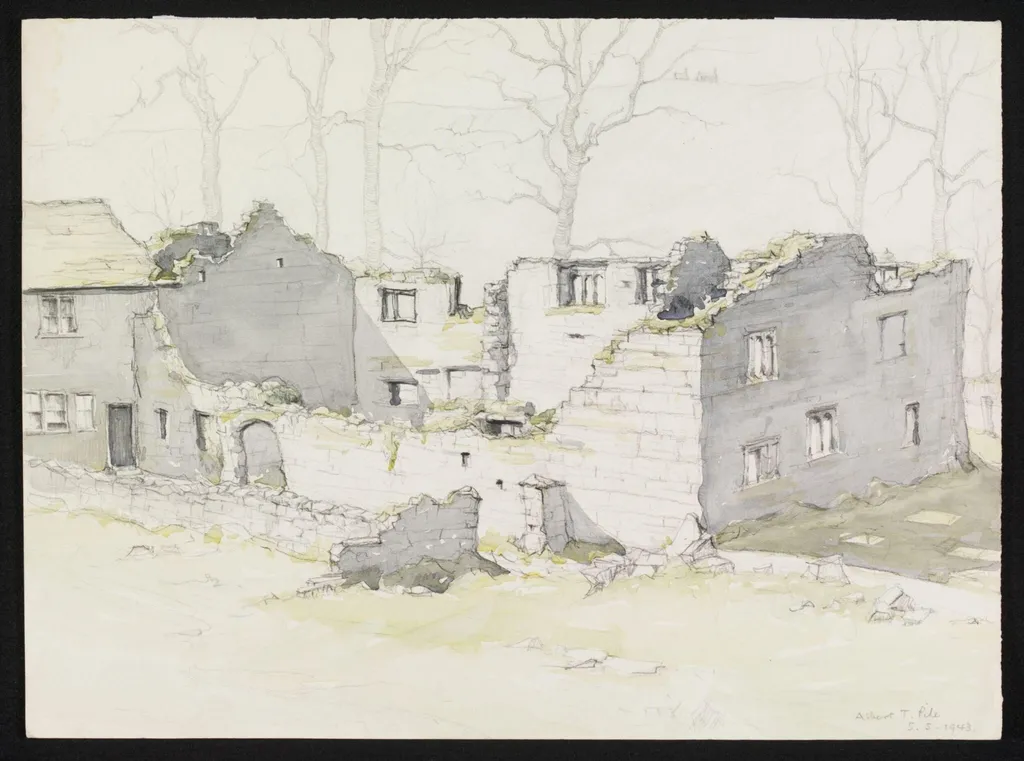
The ruined Hall, Wycoller is a watercolor work on paper by Pile. It dates from 5 and is held in the collection of the Victoria and Albert Museum.
About this work
The artist focused on how weather and time wear away stone—notice the rough texture of the walls and the way light hits the uneven surfaces.
This sketch shows old, crumbling stone buildings with broken walls and missing roofs. The ground is uneven, littered with rubble and debris. Bare trees stand in the background, their branches reaching across a pale sky.
The artist focused on how weather and time wear away stone—notice the rough texture of the walls and the way light hits the uneven surfaces. This was drawn in 1943, capturing a quiet moment of decay.
Next, check out the Victoria and Albert Museum to see more works like this.
Overview
The work is a watercolour executed by the artist Pile in 1943, bearing his signature and date. It presents an intimate view of the dilapidated remains of Wycoller Hall, capturing the structure’s broken walls, missing roofs and the surrounding debris under a pale sky.
Subject & Meaning
The painting records the physical decline of a historic country house, emphasizing the effects of weather and time on stone architecture. By foregrounding the ruin amidst barren trees, the image reflects concerns about the loss of cultural heritage during a period of national upheaval.
Technique & Style
Pile employs a muted palette and careful washes to render the rough textures of crumbling masonry and the uneven ground. Light is rendered with soft, diffused tones that accentuate the weathered surfaces, while the sparse foliage is suggested with delicate brushstrokes, creating a quiet, contemplative atmosphere.
History & Provenance
The watercolour was produced as part of the Recording Britain project, a wartime scheme (1940‑43) that commissioned artists to document vulnerable landscapes and historic sites. The initiative was financed by the Pilgrim Trust and overseen by Sir Kenneth Clark, aiming to preserve visual records of places at risk from bomb damage and modernization.
Context
During the early 1940s, Britain faced threats to its built environment from both wartime destruction and rapid post‑war change. Recording Britain sought to capture a sense of national identity through images of rural scenes, traditional buildings and ruins, situating this depiction of Wycoller Hall within a broader effort to safeguard cultural memory.
Artist & collection

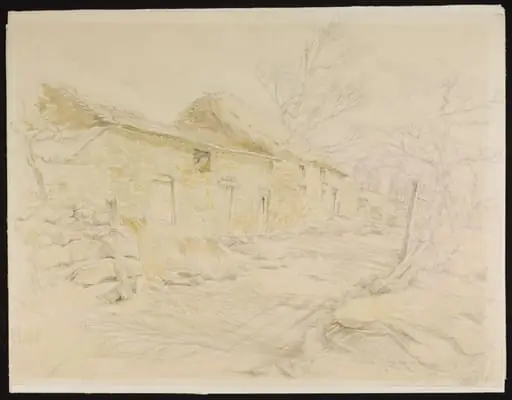 Tan-y-foel, Cefn Coch, Montgomeryshire
 The Ruined Temple of Friendship in the Grounds at Stowe
 Farm above Selattyn, Denbighshire
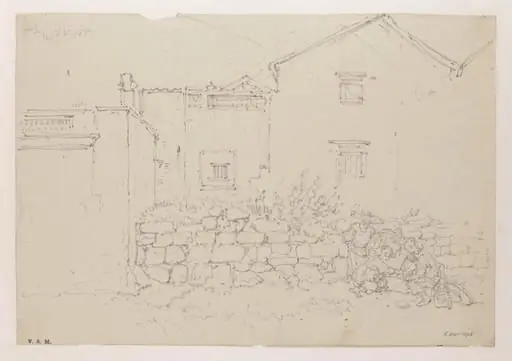 Figures by a stone wall with houses behind, Macau
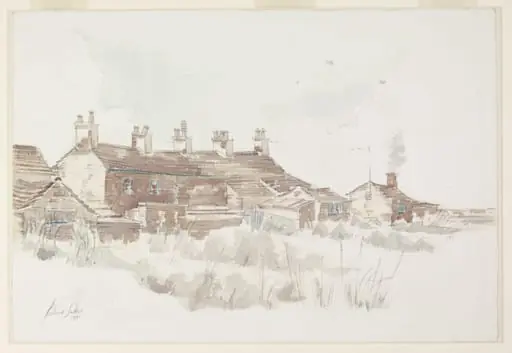 Cottages at Norton, No.3
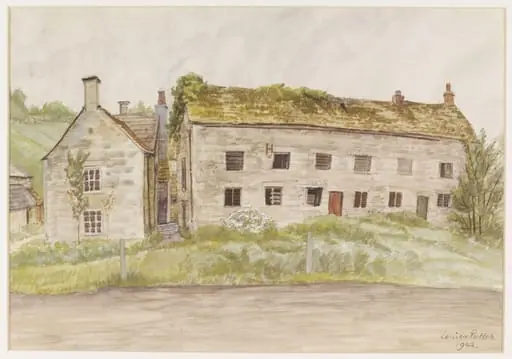 House and Factory at Burleigh near Brimscombe
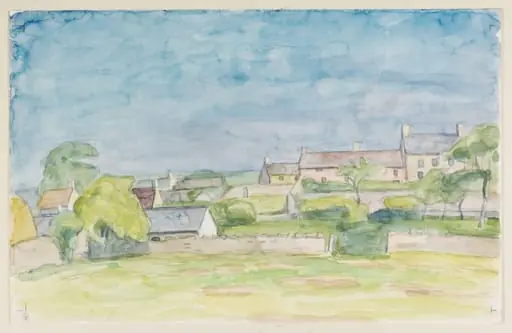 Llysworney, Glamorganshire
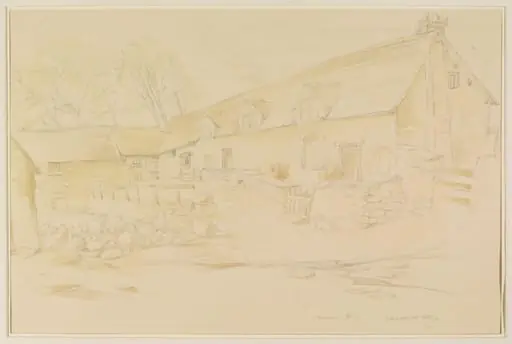 Berwyn Farm, Swch Cae Rhiw, Denbighshire
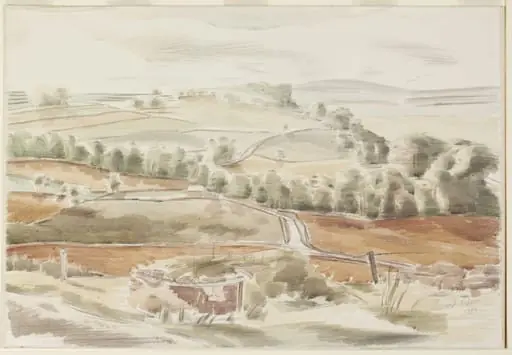 The Porter Valley, No.1