Artwork
Tan-y-foel, Cefn Coch, Montgomeryshire
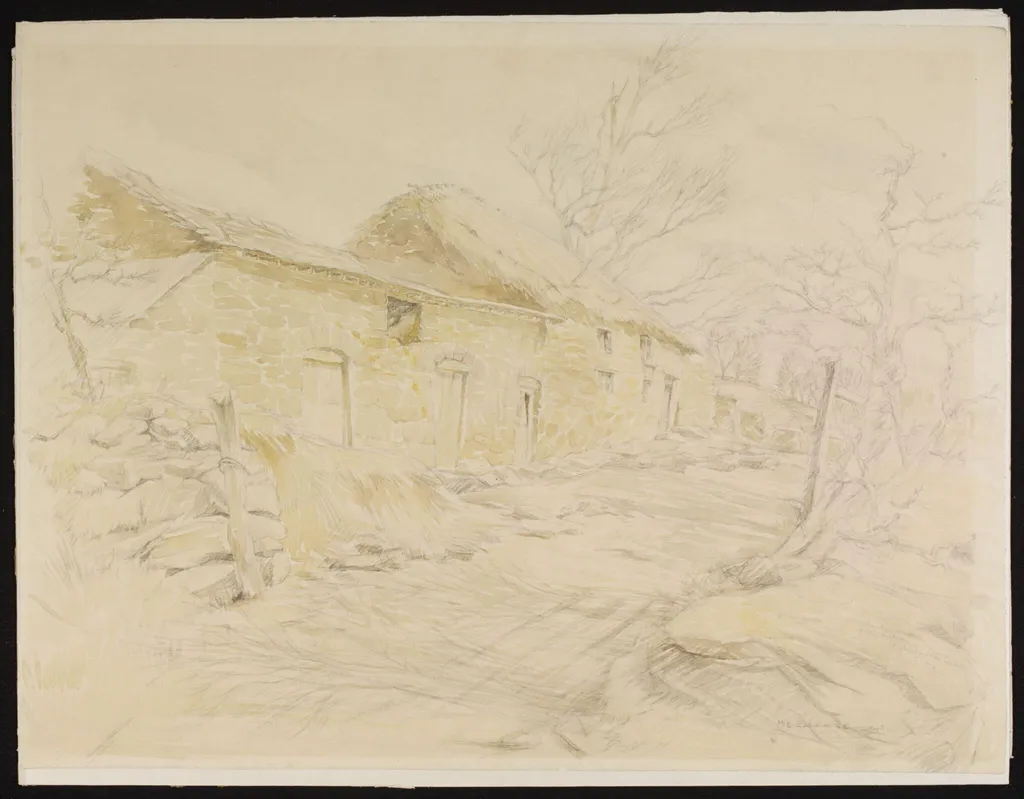
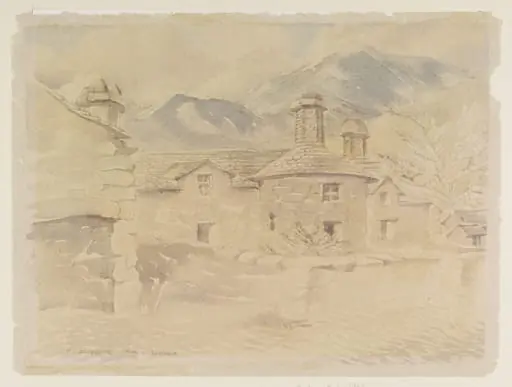
Tan-y-foel, Cefn Coch, Montgomeryshire is a watercolor work on paper by Mildred E. Eldridge. It dates from 1943 and is held in the collection of the Victoria and Albert Museum.
About this work
Overview
Tan-y-foel, Cefn Coch, Montgomeryshire is a 1943 watercolour by Mildred E. Eldridge, capturing a rustic scene of traditional Welsh architecture in Montgomeryshire.
Subject & Meaning
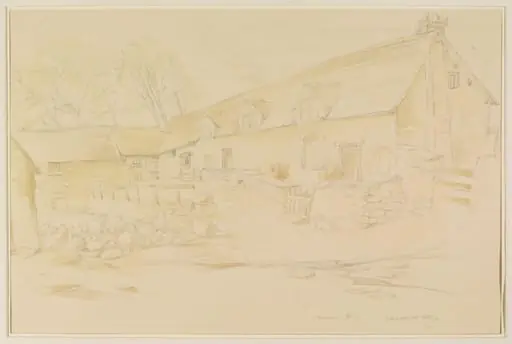
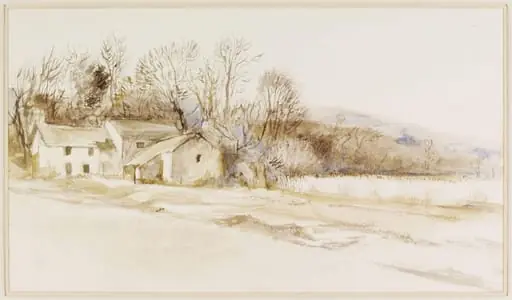
The artwork depicts a simple, old stone house with a thatched roof, set amidst a grassy hill, wooden fence, and bare trees. The scene conveys a sense of quiet, worn simplicity, reflecting the artist's aim to document a perceived vanishing aspect of national heritage during WWII.
Technique & Style
Eldridge employed light watercolour strokes to evoke texture, rendering the stone walls as grainy and the grass as patchy. This approach contributes to the overall serene and slightly weathered atmosphere of the piece.
History & Provenance
Created as part of the 'Recording Britain' project (1940-1943), led by Sir Kenneth Clark and funded by the Pilgrim Trust, this work is one of over 1500 pieces by 97 artists. Notably, it represents one of the few contributions from Montgomeryshire, one of only four Welsh counties featured in the project.
Context
Part of a broader wartime effort to preserve images of the British landscape, this watercolour reflects the initiative's focus on topographical views and rural heritage, amidst concerns over the erosion of traditional ways of life.
Legacy
Now part of a significant collection, works like Tan-y-foel, Cefn Coch, Montgomeryshire can be explored at institutions such as the Victoria and Albert Museum, offering insight into mid-20th-century British cultural preservation efforts.
Artist & collection
Artist
Mildred E. Eldridge painted the hills and barns of 1940s Wales in watercolours. She left us five small scenes of rural life, each titled by the place it shows: a stone barn in Llanrhaeadr, peat cutters near Cefn Coch,…

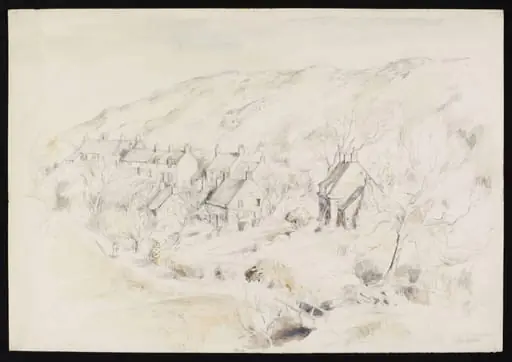 Sandsend
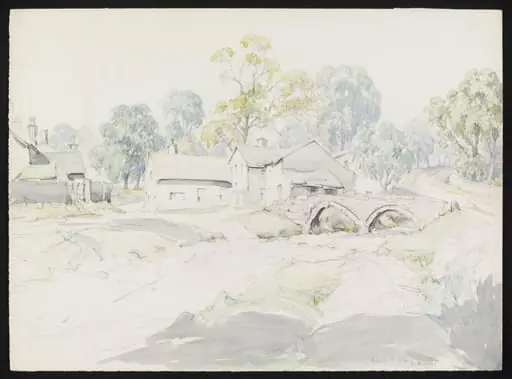 Wycoller Village
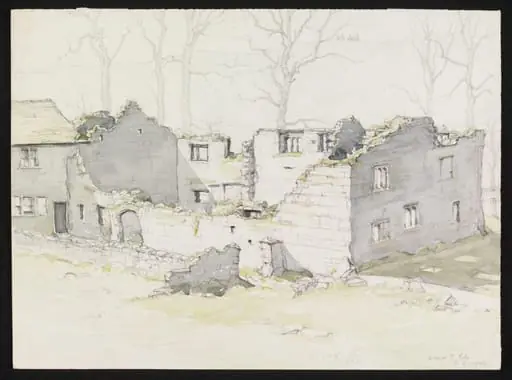 The ruined Hall, Wycoller
 Old Mill, Clynne Valley, Gower, Glamorganshire
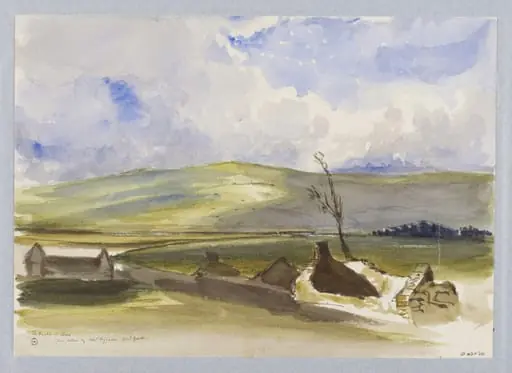 Sketches made during the Campaign of 1854-55 in the Crimea, Circassia and Constantinople
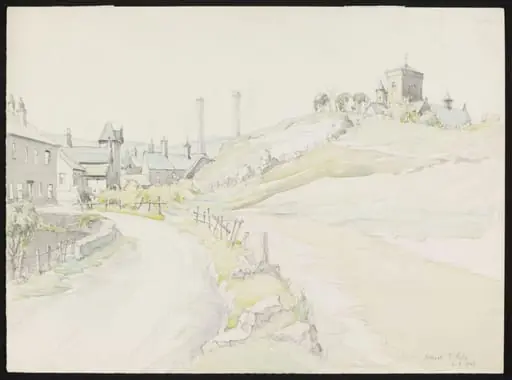 The church and village of Lumb
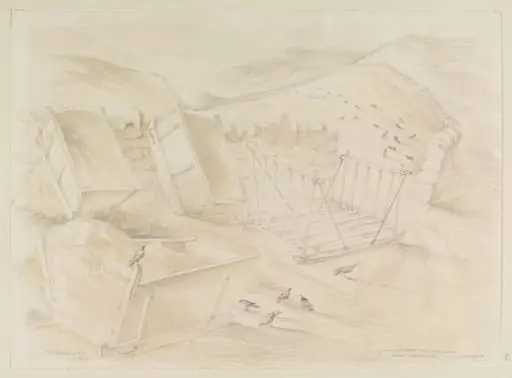 Gambo and Car Llusg below Cader Idris, Merionethshire
 Plas-yn-Brithdir, Dolgelly, Merionethshire