Artwork
The Village Shelter, Eton Wick
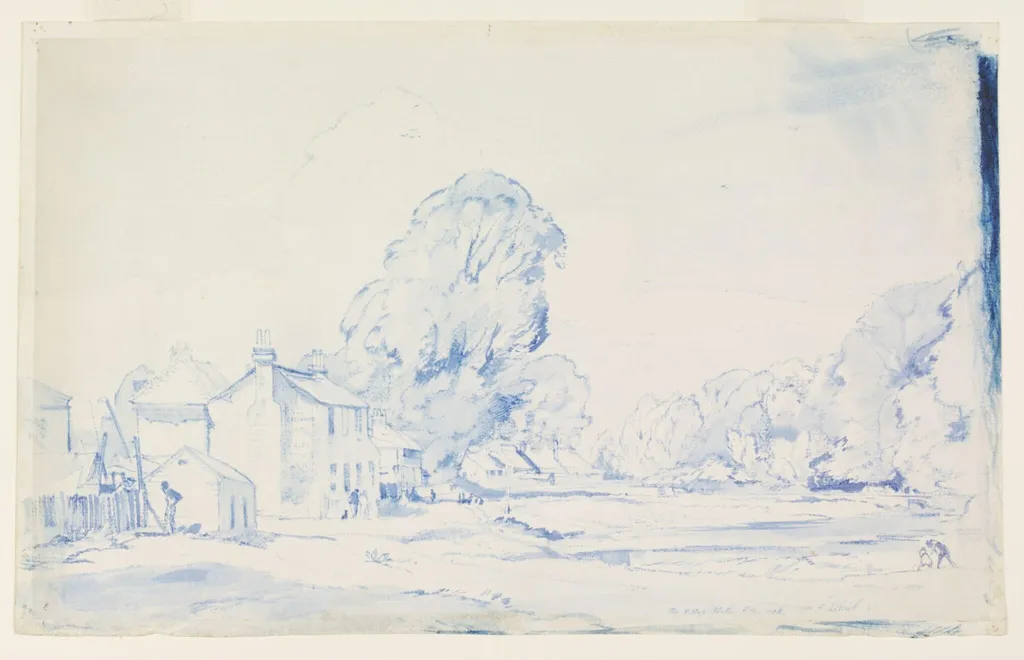
The Village Shelter, Eton Wick is a watercolor work on paper by the Social Realist artist Robins. It dates from 1941 and is held in the collection of the Victoria and Albert Museum.
About this work
Overview
The Village Shelter, Eton Wick is a 1941 watercolour by Robins, created as part of the Recording Britain project.
Subject & Meaning
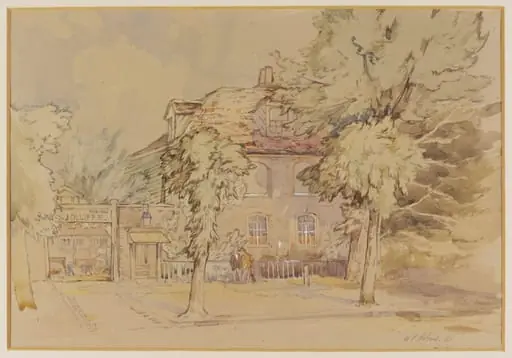
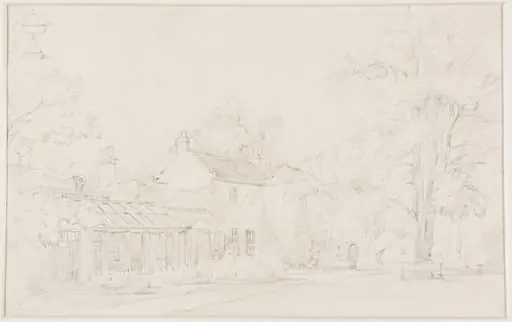
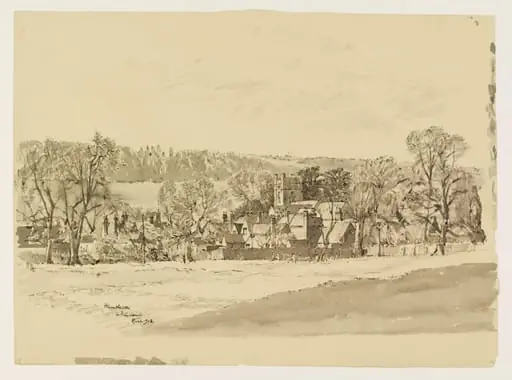
The painting depicts excavations for an air-raid shelter in the village of Eton Wick, capturing a moment in everyday life during World War II. The scene conveys a sense of quiet normalcy amidst wartime preparations.
Technique & Style
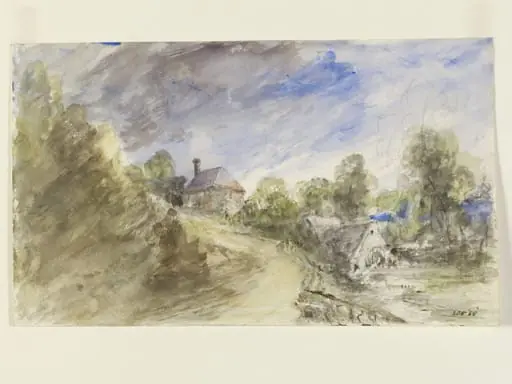
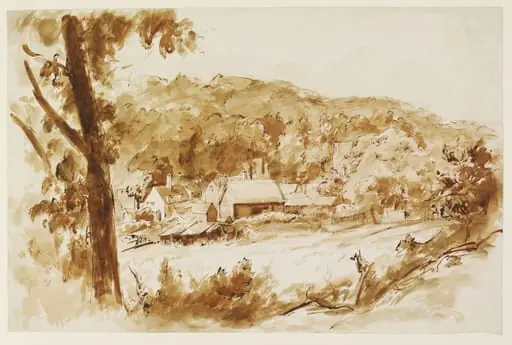
Characterized by loose, sketchy lines and a predominantly blue and white palette, the work conveys a calm, wintry atmosphere. The artist's emphasis on quick impressions over detail gives the painting a snapshot-like quality.
History & Provenance
Commissioned as part of the Recording Britain project, led by Sir Kenneth Clark and supported by the Pilgrim Trust and the Ministry of Labour and National Service, this work is one of over 1,500 pieces documenting Britain's changing landscape during the war.
Context
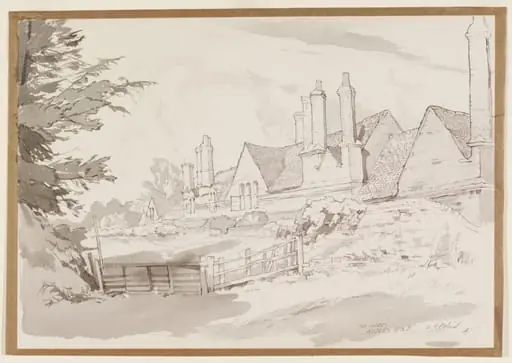
The Recording Britain project aimed to record scenes of national identity, focusing on English towns, villages, and landscapes under threat from bomb damage or modern development.
Artist & collection
Artist
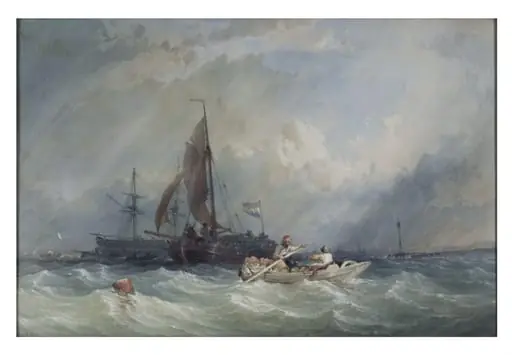
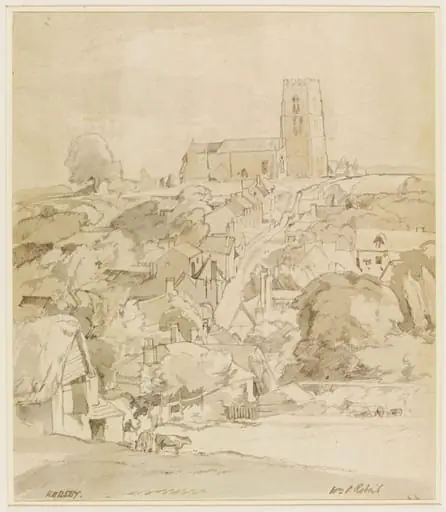
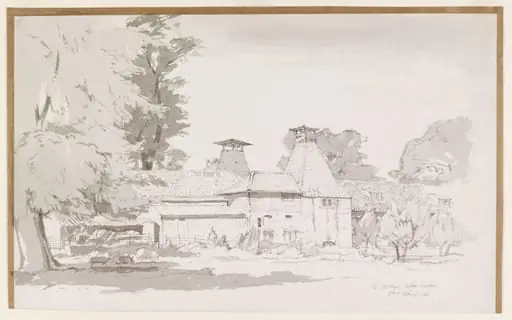
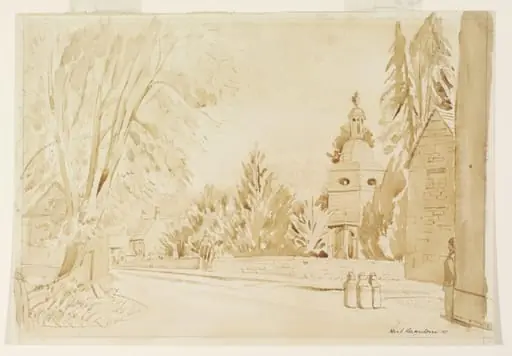
Robins filled thin sheets of paper with watercolour to show English villages, churchyards and ships at sea.