Artwork
The Prodigal Son Wasted His Substance
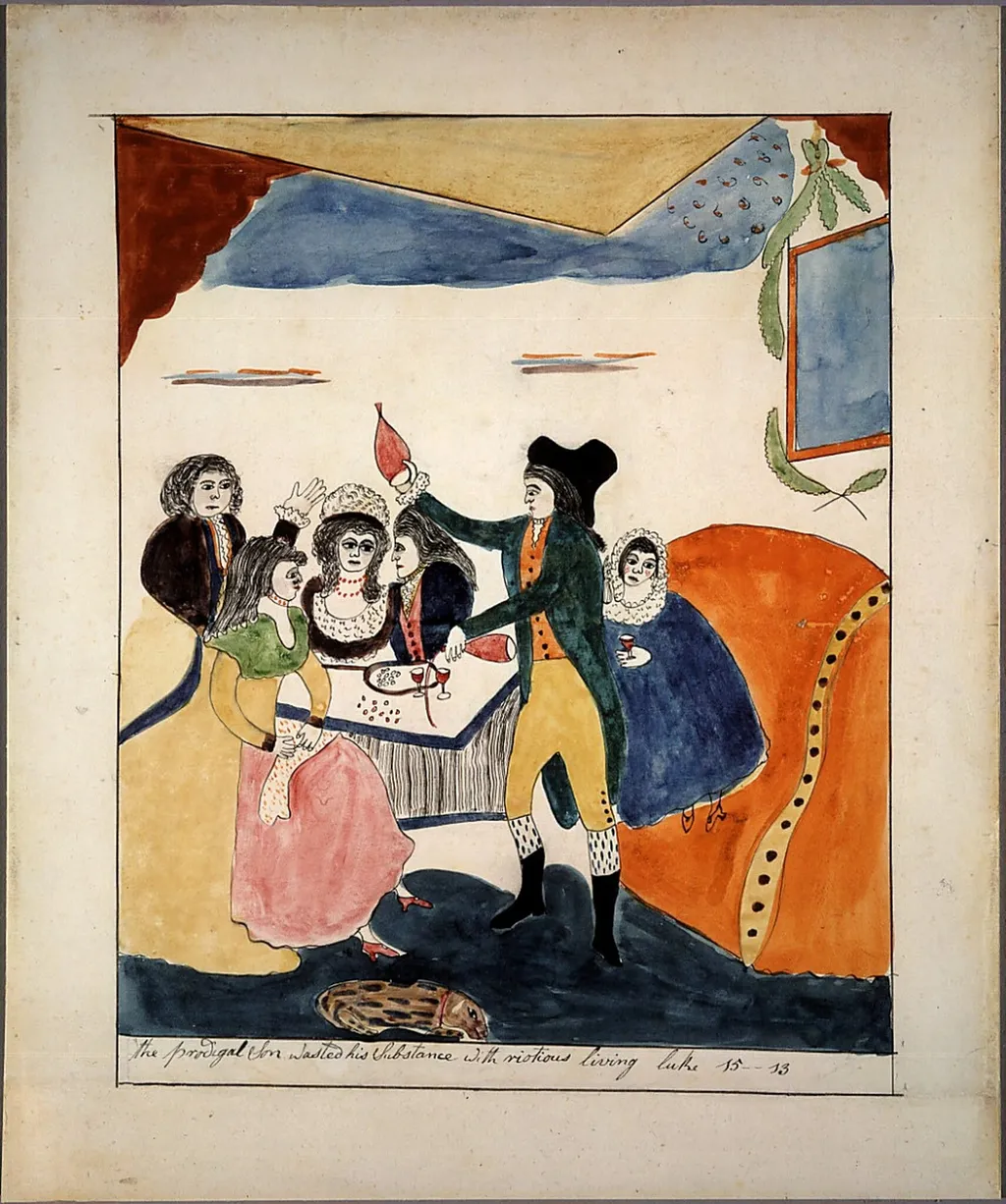
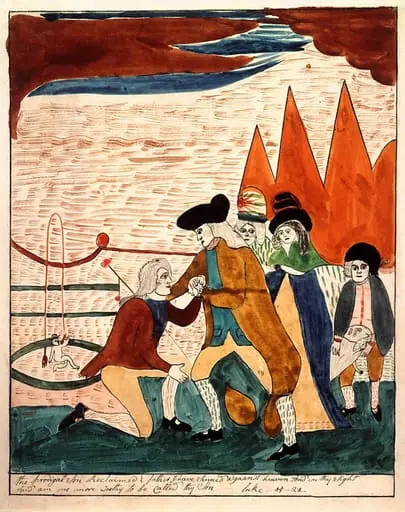
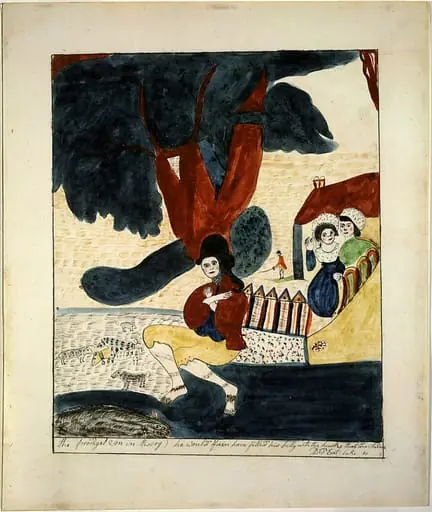
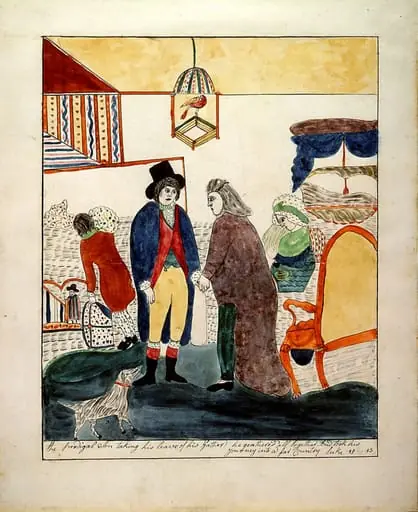
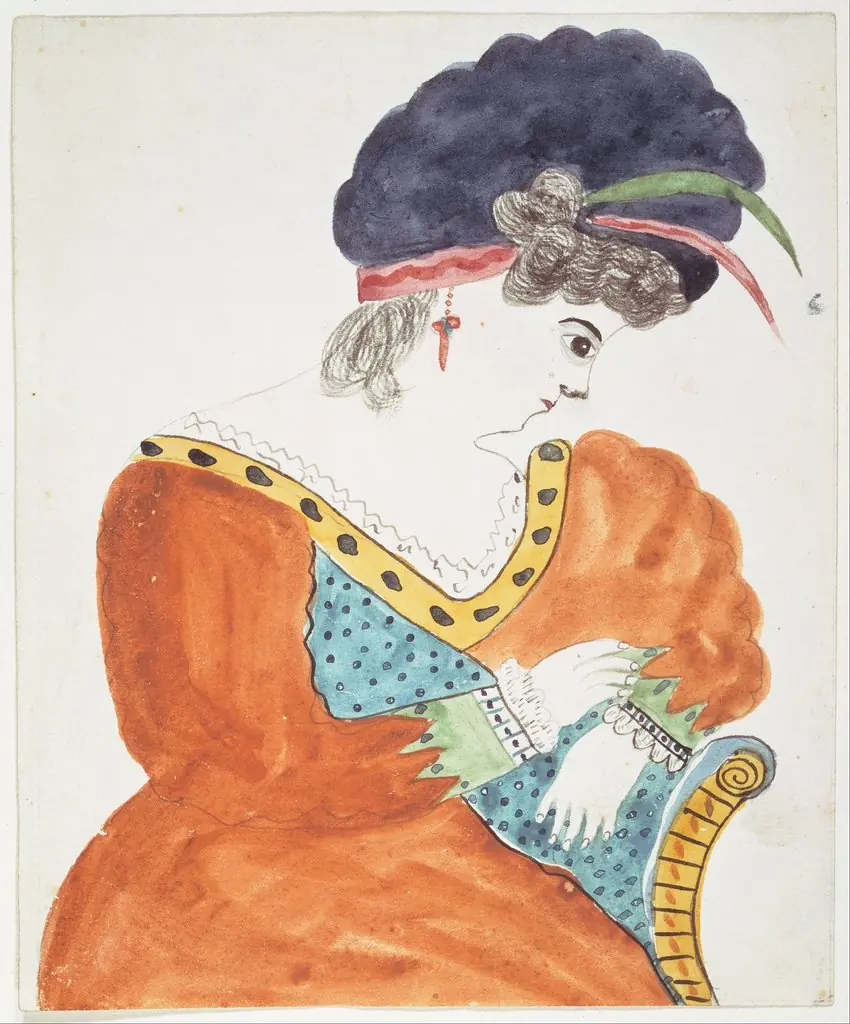
The Prodigal Son Wasted His Substance is an ink drawing by the Romanticist artist Mary Ann Willson. It dates from 1815 and is held in the collection of the National Gallery of Art.
About this work
Overview
Mary Ann Willson, an early 19th-century American folk artist, created *The Prodigal Son Wasted His Substance* circa 1815. This drawing combines pen and black ink with watercolor to depict a biblical scene in a characteristic folk art style.
Subject & Meaning
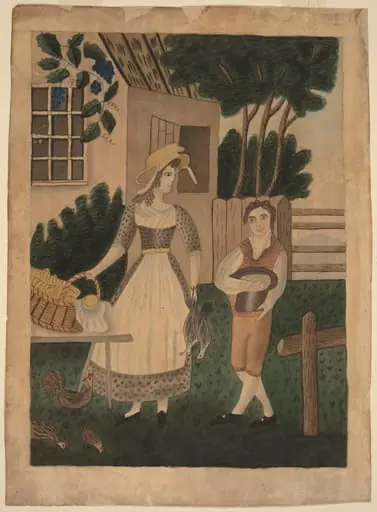
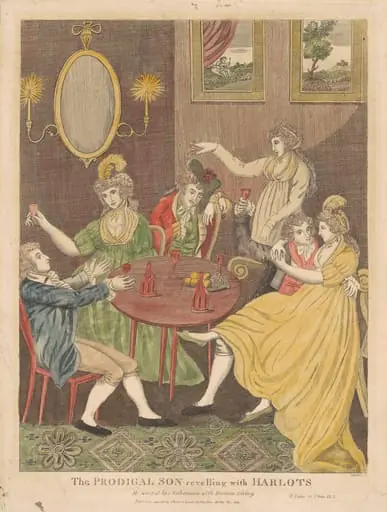
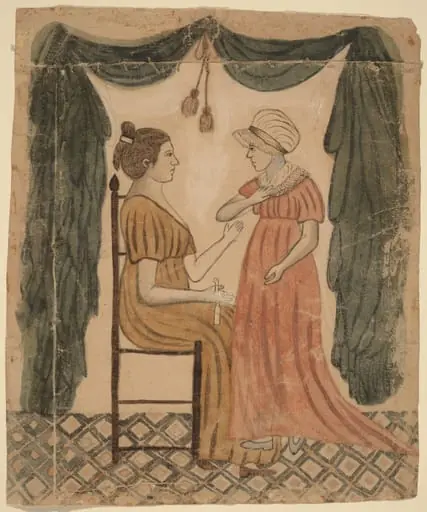
The piece illustrates a scene from the parable of the Prodigal Son, showing a man (likely the prodigal) pouring a red liquid, surrounded by onlookers including a woman in pink and a man in yellow. The straightforward depiction conveys the narrative's themes without embellishment.
Technique & Style
Willson's use of pen and black ink defines the composition, while watercolor adds vibrancy. Notable visual elements include intricate patterns on clothing and a contrasting color palette (e.g., red liquid against a blue background), reflecting folk art's simplicity and directness.
History & Provenance
Willson's work remained largely unrecognized during her lifetime (active 1810-1825). *The Prodigal Son* gained visibility through a 1944 exhibition on American Primitive paintings, contributing to Willson's recognition as one of the earliest known American watercolorists.
Context
While stylistically rooted in folk art, the piece's emotional and imaginative elements subtly align with broader Romantic movement themes prevalent during the early 19th century.
Legacy
*The Prodigal Son Wasted His Substance* contributes to Mary Ann Willson's significance in American art history, highlighting her contribution to early American watercolor and the evolution of folk art traditions.
Artist & collection
Artist
Mary Ann Willson (active 1810 to 1825) was an American folk artist whose work remained undiscovered for over a century, until it appeared in an exhibition of American Primitive paintings in 1944.