Artwork
Head of a Youth Looking Up
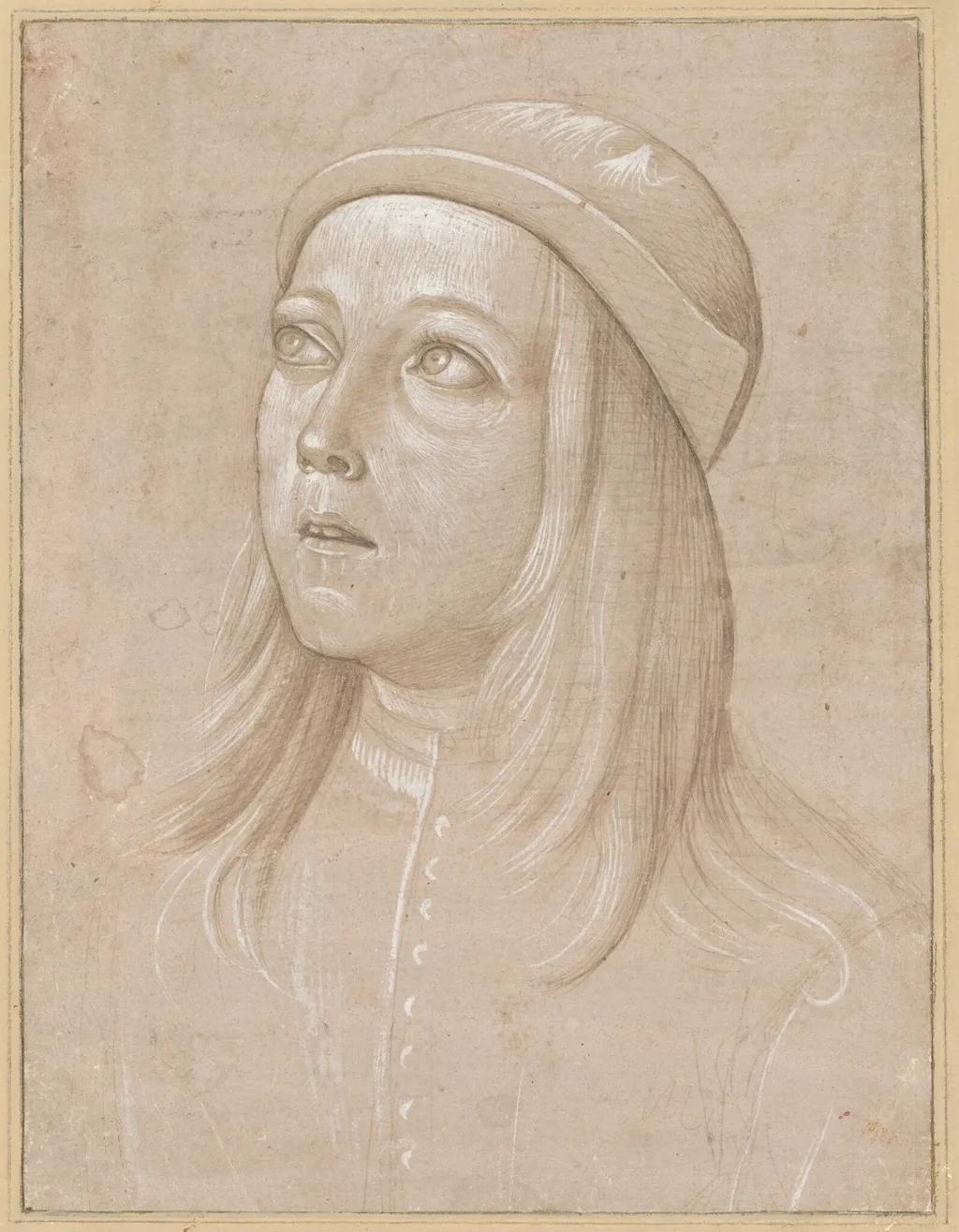
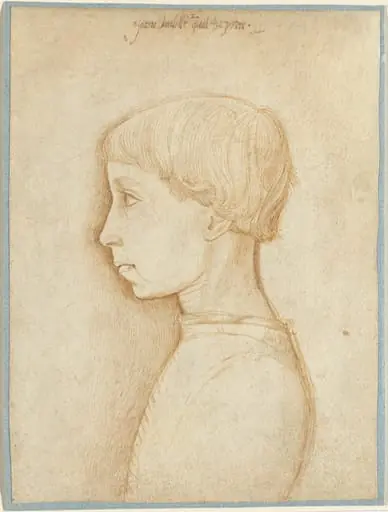
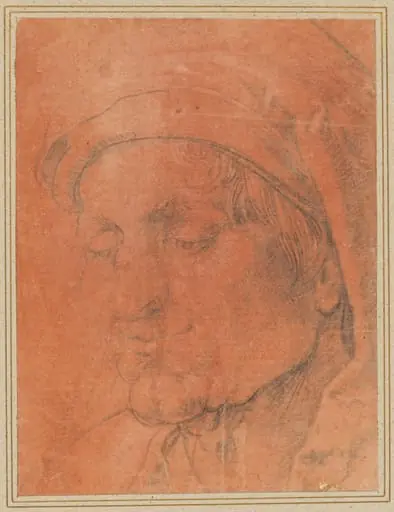
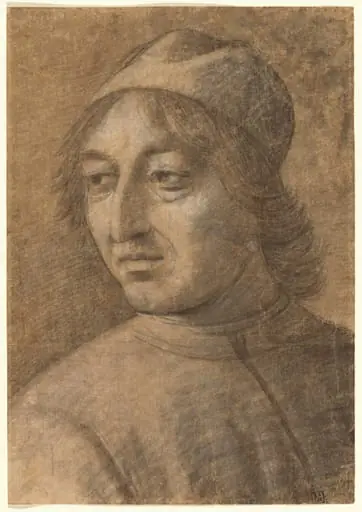
Head of a Youth Looking Up is a gouache drawing by the Renaissance artist Pinturicchio. It dates from 1485 and is held in the collection of the National Gallery of Art.
About this work
Overview
This drawing, attributed to Pinturicchio and dated around 1485, is a study in leadpoint and brown wash, enhanced with white gouache on gray prepared paper.
This drawing, attributed to Pinturicchio and dated around 1485, is a study in leadpoint and brown wash, enhanced with white gouache on gray prepared paper. Mounted on a support, it exemplifies the precision and subtlety of Renaissance draftsmanship. The medium choices reflect a deliberate approach to tonal gradation and surface texture, typical of preparatory work for larger compositions during the late Quattrocento.
Subject & Meaning
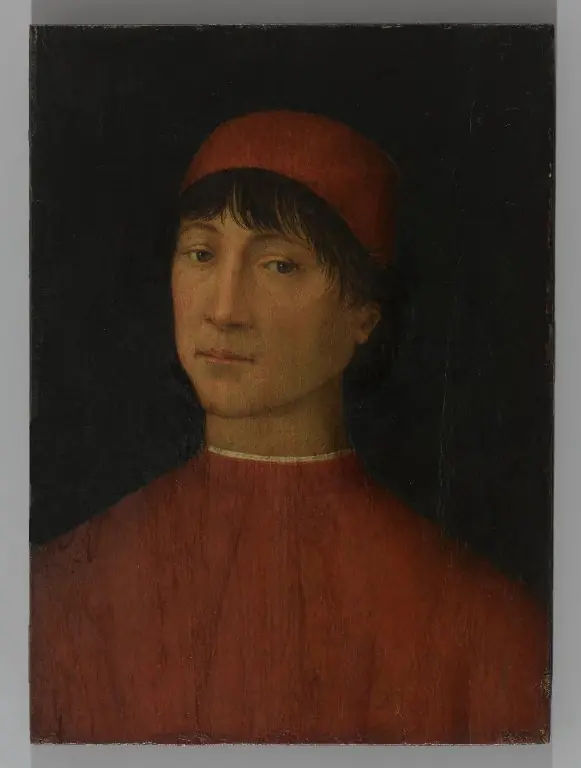
The portrait depicts a young male figure with long hair, wearing a close-fitting cap and a high-collared shirt. His gaze is directed upward, not toward the viewer, suggesting contemplation or a moment of divine attention. The neutral expression and unadorned attire imply an emphasis on quiet presence rather than narrative or identity, aligning with the period’s interest in psychological stillness in studies of the human form.
Technique & Style
Pinturicchio employed leadpoint for fine linear definition, layered with translucent brown wash to build volume and shadow. White gouache was sparingly applied to highlight contours and catch light, particularly along the brow, cheekbone, and collar. The gray paper provided a mid-tone base, allowing the artist to modulate light and dark with minimal pigment. This method reveals a sensitivity to atmospheric effect and anatomical subtlety.
History & Provenance
The drawing was likely created during Pinturicchio’s early career in Siena or Rome, possibly as a study for a fresco or altarpiece figure. It was later mounted on a support, a common practice to preserve fragile works on paper. Its survival into the modern era reflects its value as a document of artistic process, though its exact early ownership remains undocumented.
Context
In the 1480s, Italian artists increasingly turned to independent figure studies to refine their understanding of anatomy and expression. Pinturicchio’s work aligns with this trend, paralleling the practices of contemporaries like Perugino. Drawings like this one served as bridges between observation and monumental painting, emphasizing the role of preparatory work in the workshop system of the time.
Legacy
Though Pinturicchio is better known for his frescoes, this drawing endures as a testament to his skill in intimate, monochromatic rendering. It contributes to the broader understanding of how Renaissance artists cultivated naturalism through disciplined study. Its preservation offers insight into the transition from linear draftsmanship to tonal modeling in late 15th-century Italian art.
Artist & collection

Artist
Pinturicchio, or Pintoricchio (US: , Italian: ; born Bernardino di Betto; 1454–1513), also known as Benetto di Biagio or Sordicchio, was an Italian Renaissance painter.