Artwork
Doxe (Doge)
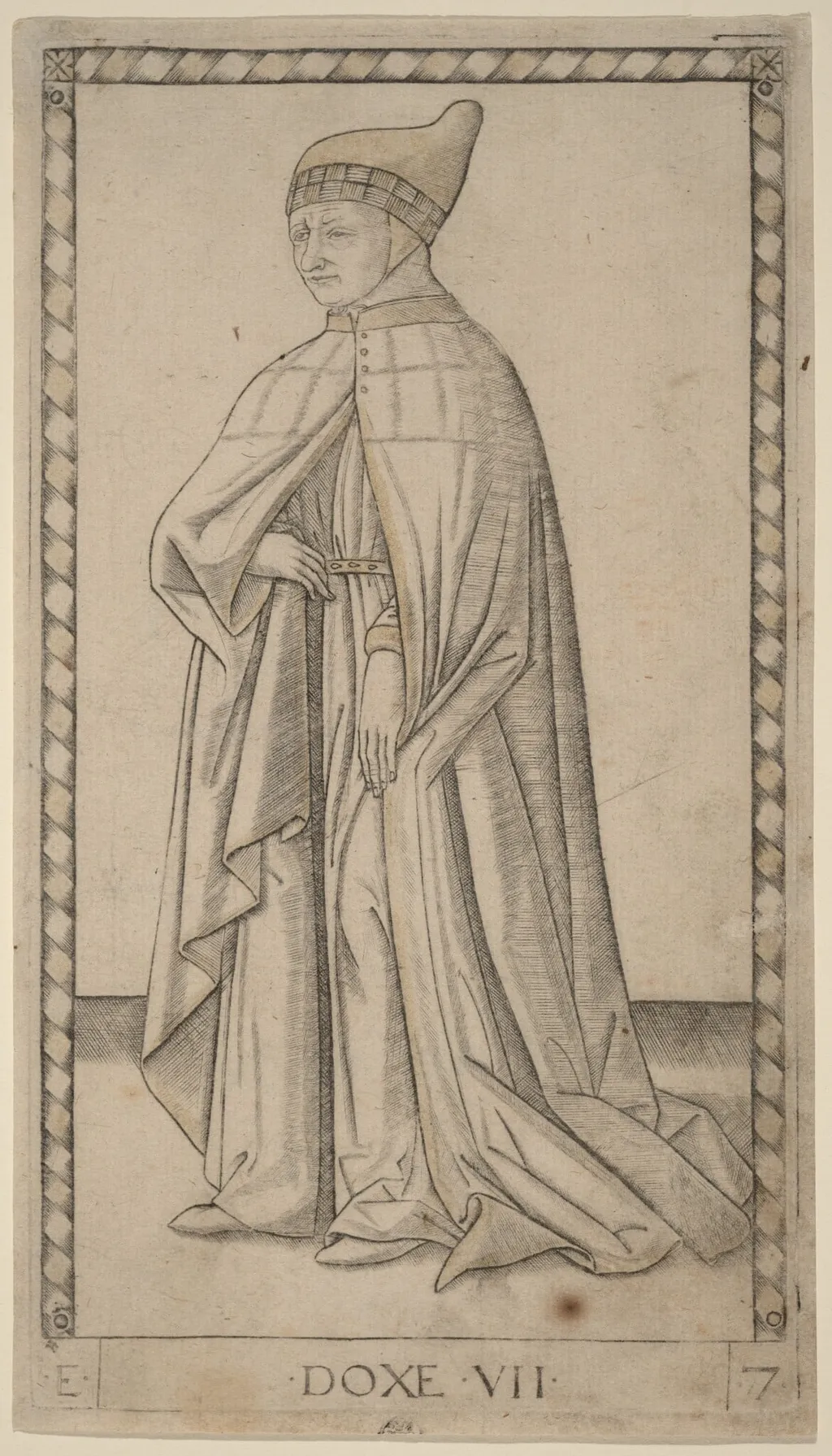
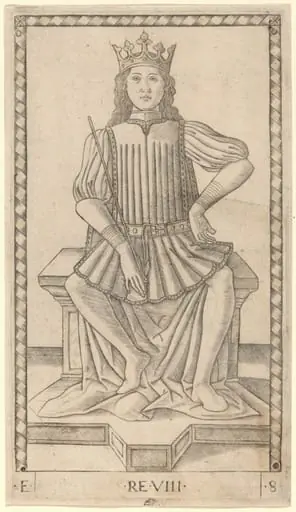
Doxe (Doge) is an ink print by the Renaissance artist Master of the E-Series Tarocchi. It dates from 1465 and is held in the collection of the National Gallery of Art.
About this work
Overview
Doxe (Doge) is a 15th-century engraving with gilding, attributed to the Master of the E-Series Tarocchi, dating to around 1465. The print depicts a dignified figure in ornate attire.
Subject & Meaning
The subject, identified as 'DOXE VII' in the inscription, is likely a Doge of Venice, indicated by the title 'Doxe' and the regal attire, including a tall hat and draped cloak. He is shown holding gloves in one hand, with a subtle suggestion of a chair behind him.
Technique & Style
The work is characterized by precise lines achieved through metal engraving, a technique that preceded photographic reproduction. The absence of brushwork marks emphasizes the engraver's meticulous craftsmanship.
History & Provenance
Created circa 1465 by the Master of the E-Series Tarocchi, specific details about the print's ownership history are not provided in the available information.
Context
As part of the E-Series Tarocchi, 'Doxe' reflects the Renaissance interest in depicting figures of authority and possibly the influence of Venetian political icons of the time.
Legacy
While the broader impact of 'Doxe' on subsequent art is not detailed here, it remains a notable example of 15th-century engraving techniques and Renaissance portraiture of political figures.
Artist & collection
Artist
Master of the E-Series Tarocchi
Master of the E-Series Tarocchi (b. 1400) was an Italian artist.