Artwork
Re (King)
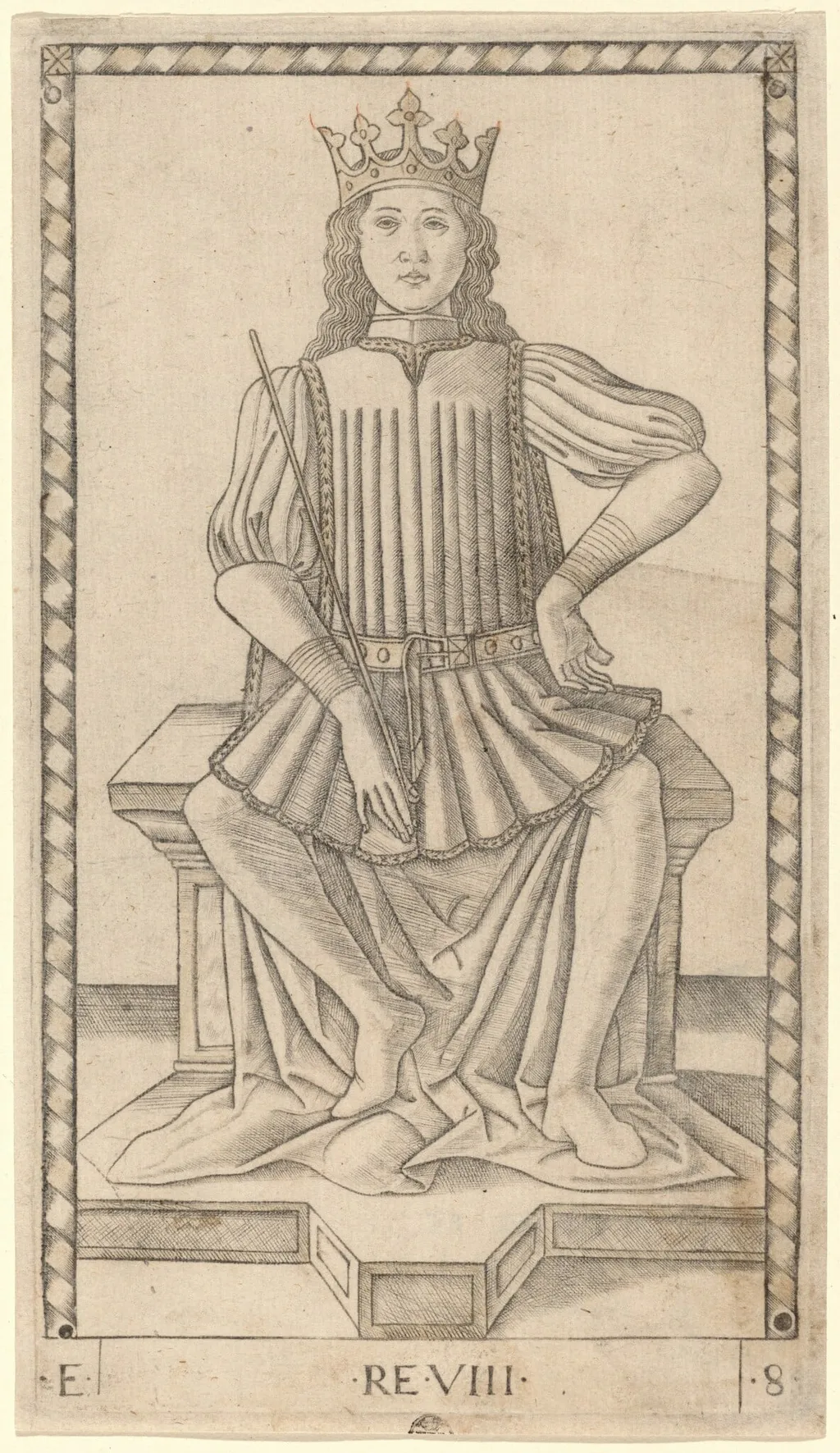
Re (King) is an ink print by the Renaissance artist Master of the E-Series Tarocchi. It dates from 1465 and is held in the collection of the National Gallery of Art.
About this work
Overview
Created around 1465, this engraving by the Master of the E-Series Tarocchi depicts a royal figure in a restrained, formal composition. Executed in black ink with faint traces of gold leaf, the print belongs to a series of tarot-like cards. The king is rendered with precise linear detail, emphasizing dignity through posture and minimal ornamentation rather than elaborate decoration.
Subject & Meaning
The figure represents a monarch, identified by regalia: a crown, a scepter, and an orb—symbols of temporal authority. His bare feet suggest humility or ritual, while the cross on his belt may imply divine sanction of rule. The sparse background focuses attention on the figure, reinforcing the idea of sovereignty as an isolated, solemn responsibility rather than a scene of courtly splendor.
Technique & Style
The limited palette and absence of color heighten the graphic clarity, aligning the work with early printmaking traditions that prioritized line over tone.
The artist employed fine cross-hatching to model volume and texture, particularly in the king’s robe and throne. Parallel lines, layered at varying angles, create subtle gradations of light and shadow, giving the fabric and wood a tactile presence. The limited palette and absence of color heighten the graphic clarity, aligning the work with early printmaking traditions that prioritized line over tone.
History & Provenance
This print is part of a small, enigmatic group of cards attributed to the Master of the E-Series Tarocchi, active in northern Italy during the mid-15th century. The series likely served as playing or divinatory cards for elite patrons. Few examples survive, and the artist’s identity remains unknown, though their technical skill suggests training in a workshop familiar with metal engraving and manuscript illumination.
Context
Produced during a period when printed images began circulating among the educated classes, this engraving reflects the growing interest in symbolic systems—tarot, astrology, and moral allegory. Its austere style contrasts with the ornate court art of the time, possibly indicating a more intellectual or esoteric audience. The use of engraving, rather than woodcut, points to a niche market valuing fine detail over mass reproduction.
Legacy
Though not widely known outside scholarly circles, the engraving exemplifies the transition from manuscript illumination to print culture in Renaissance Italy. Its restrained iconography and technical precision influenced later card makers and engravers who sought to convey authority through minimalism. The work remains a quiet testament to the power of line and suggestion in early graphic art.
Artist & collection
Artist
Master of the E-Series Tarocchi
Master of the E-Series Tarocchi (b. 1400) was an Italian artist.

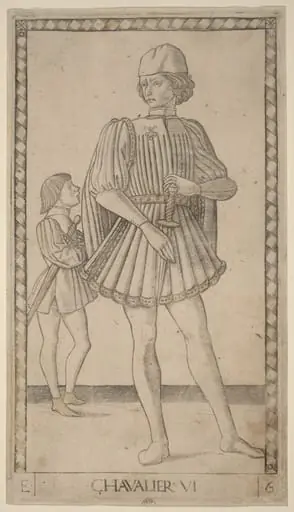
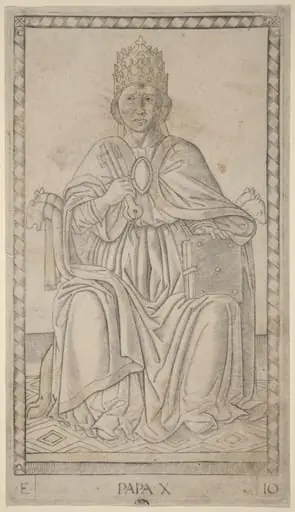
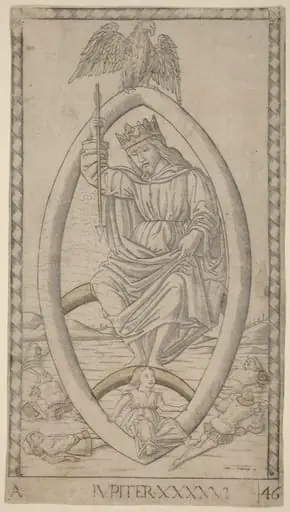
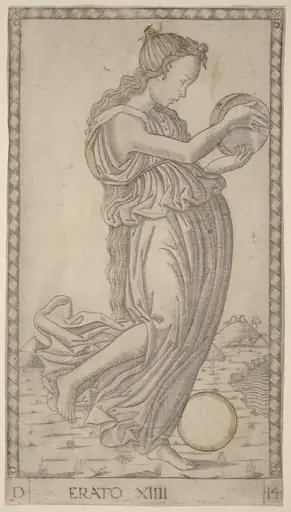
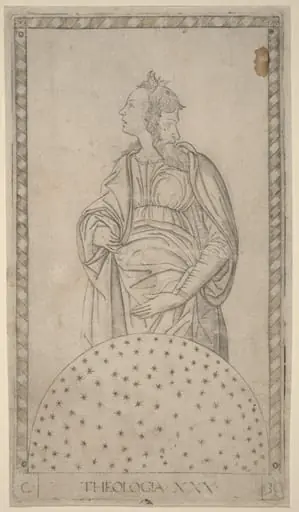
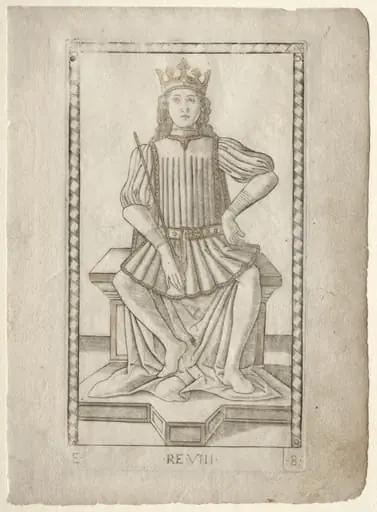 The King (from the Tarocchi, series E: Conditions of Man, #8)
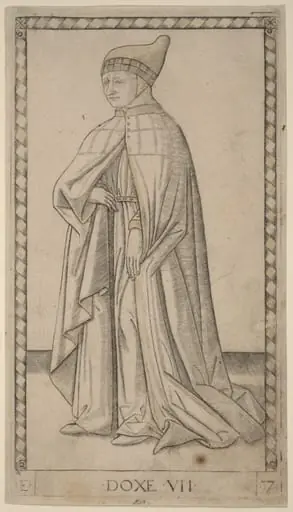 Doxe (Doge)
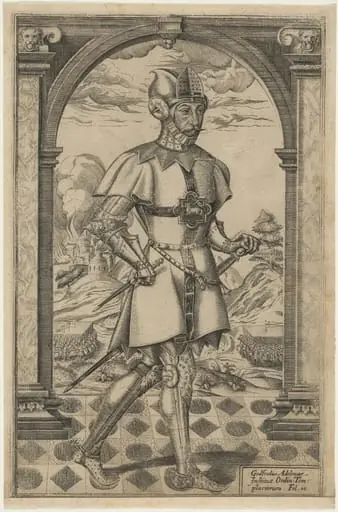 Godfrey Adelmar, Founder of the Knights Templar
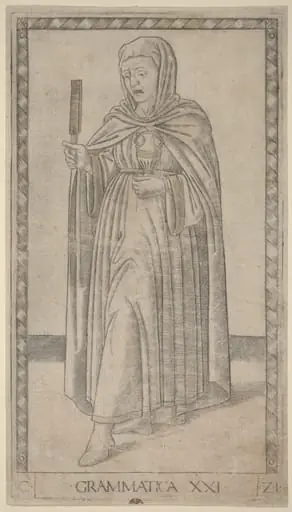 Grammatica (Grammar)
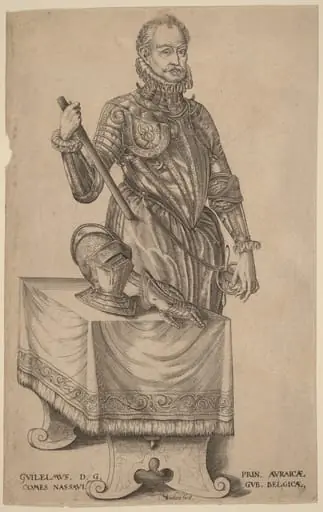 William of Nassau, Prince of Orange
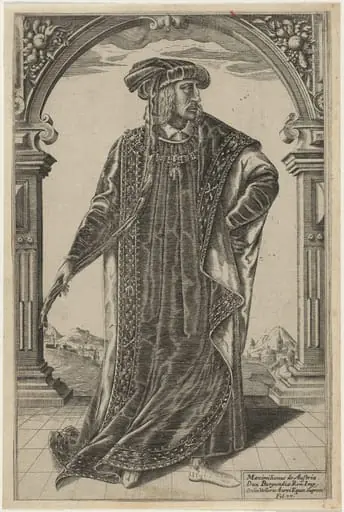 Emperor Maximilian I
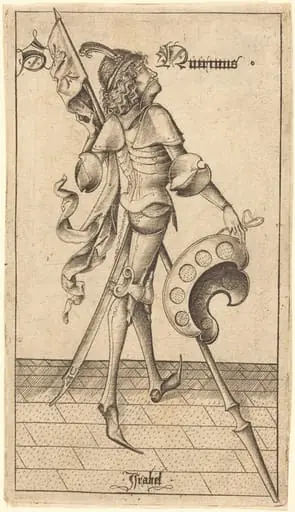 Saint Quirinus of Neuss
 Don Carlos, Prince of Asturias
 The Knight (from the Tarocchi, series E: Conditions of Man, #6)
 Maximilian I, Son of Emperor Frederick III
 The Pope (from the Tarocchi, series E: Conditions of Man, #10)
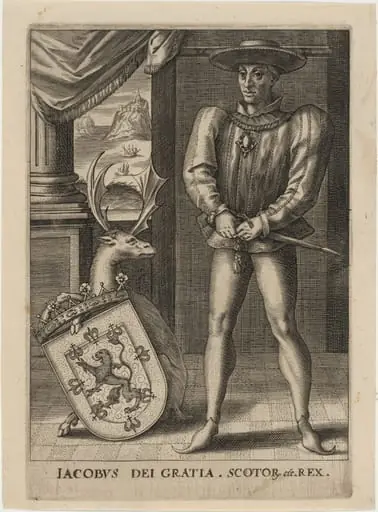 James, King of Scots