Artwork
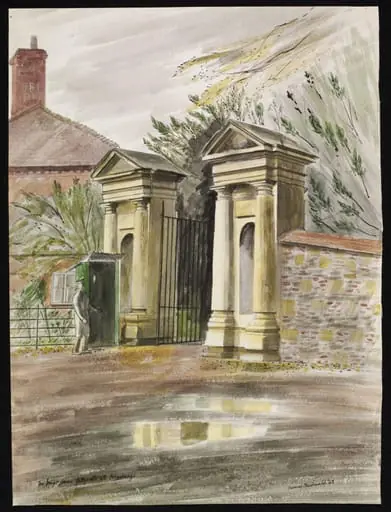
The Inigo Jones Gate, Chiswick House
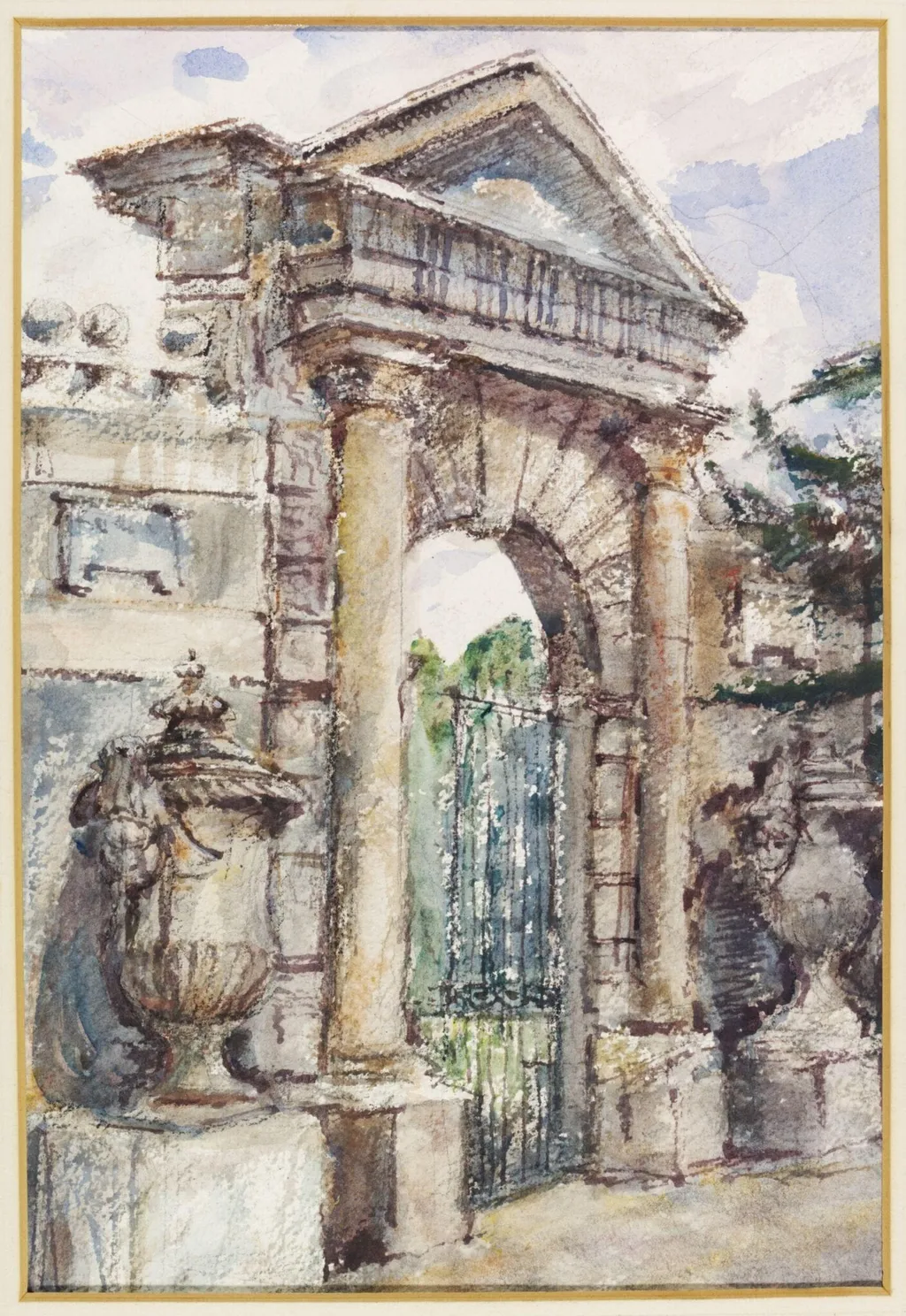
The Inigo Jones Gate, Chiswick House is a watercolor work on paper by the British Romanticist artist Archibald Standish Hartrick. It dates from 1940 and is held in the collection of the Victoria and Albert Museum.
About this work
Overview
This watercolour by Archibald Standish Hartrick, completed in 1940, is one of over 1,500 works produced for the Recording Britain project.
This watercolour by Archibald Standish Hartrick, completed in 1940, is one of over 1,500 works produced for the Recording Britain project. Funded by the Pilgrim Trust and administered under a Ministry of Labour scheme, the initiative sought to document Britain’s architectural and rural heritage during the early years of the Second World War. Hartrick’s depiction of the Inigo Jones Gate at Chiswick House reflects a broader effort to preserve visual records of structures perceived as vulnerable to wartime destruction or societal change.
Subject & Meaning
The painting captures the classical stone gateway designed by Inigo Jones, a key example of early 17th-century English architecture. Framed by paired columns and a central arch, the gate symbolizes a fading era of formal landscape design. Its inclusion in the Recording Britain project underscores its cultural significance as a relic of pre-industrial Britain, valued not for grandeur alone but as a quiet emblem of continuity amid wartime uncertainty and impending transformation.
Technique & Style
Hartrick employed watercolour to render the gate’s weathered stone with delicate precision. The medium’s transparency allows subtle gradations of light and shadow, enhancing the texture of carved ornamentation without heavy definition. The cloudy sky, rendered in soft washes, imparts atmospheric depth and a contemplative mood. The restrained palette and fine detailing reflect a commitment to observational accuracy, characteristic of the project’s documentary aims.
History & Provenance
Created under the auspices of the Recording Britain project, the work was commissioned during a period when cultural preservation was framed as a patriotic duty. The project, led by Sir Kenneth Clark, provided employment for artists while compiling a national archive of threatened sites. Hartrick’s watercolour entered institutional collections following its completion, becoming part of a curated visual record now held by the Victoria and Albert Museum.
Context
The Recording Britain initiative emerged as Britain faced aerial bombardment and the prospect of invasion. Artists were dispatched to regions deemed at risk, documenting vernacular buildings, gardens, and monuments before they could be lost. The Inigo Jones Gate, though not in a combat zone, represented the enduring English landscape that many feared would vanish under modernization or war. The project thus served both archival and psychological functions during national crisis.
Legacy
Hartrick’s watercolour remains part of a significant wartime archive that reshaped how Britain’s heritage was valued. The Recording Britain collection continues to inform conservation efforts and historical research, offering a baseline for understanding architectural change. The work exemplifies how art, under state sponsorship, can function as both record and quiet resistance — preserving the ordinary and the enduring in times of upheaval.
Artist & collection
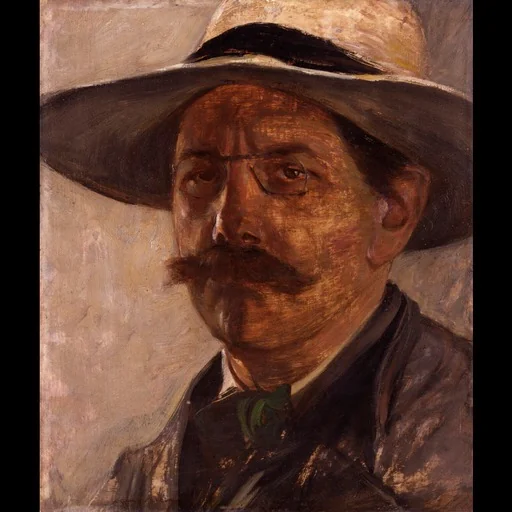
Artist
Archibald Standish Hartrick (7 August 1864 – 1 February 1950) was a Scottish painter known for the quality of his lithographic work.

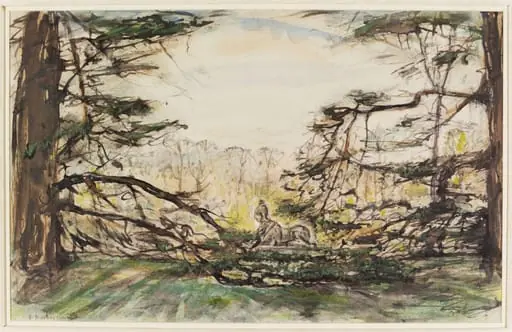 The Cedars, the Sphinx and the spring in the Grounds of Chiswick House
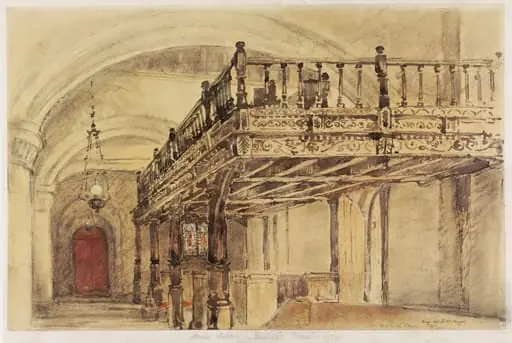 Music Gallery, St. Michael's Church, Bishop's Cleeve
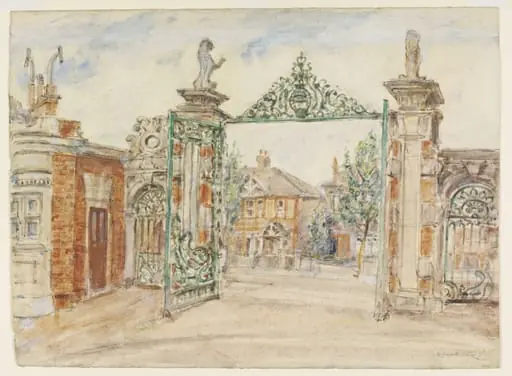 The Gateway, Boston Manor Park, Brentford.
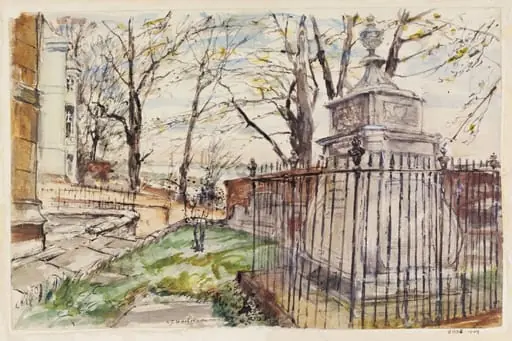 Hogarth's Tomb and Chiswick Reach
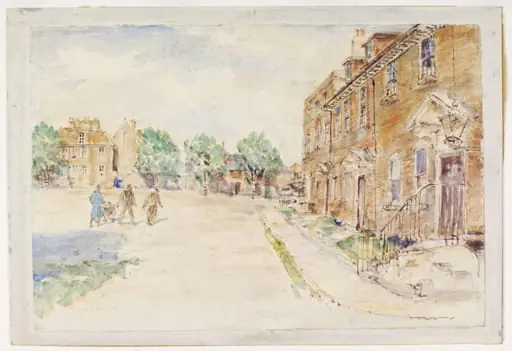 18th century houses at The Butts, Brentford
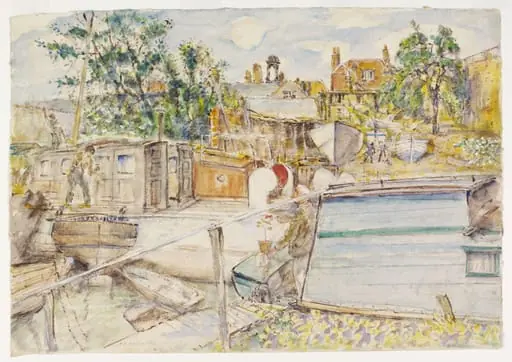 Dock of the Grand Union Canal Co., Brentford
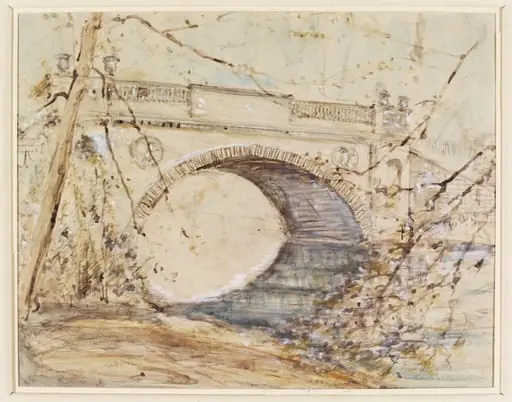 The Bridge in Chiswick House Grounds
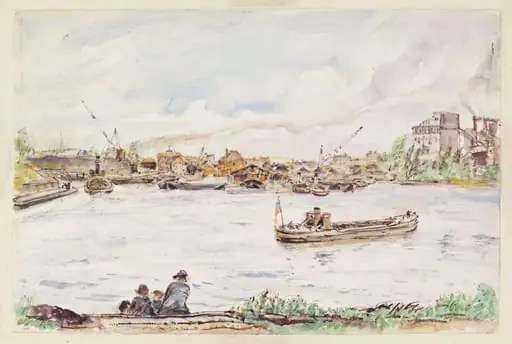 The Thames at Brentford