Artwork
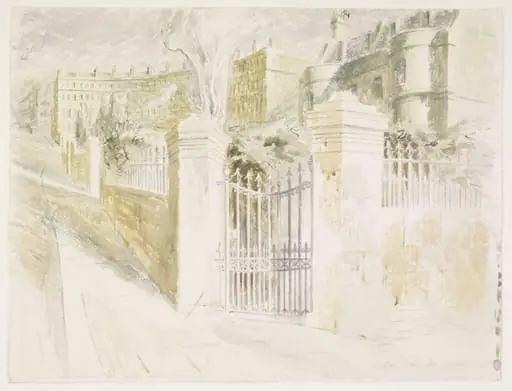
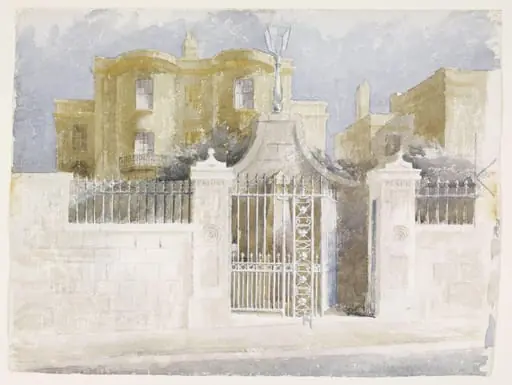
Gateway, Cedar Lodge, Lambridge, Bath
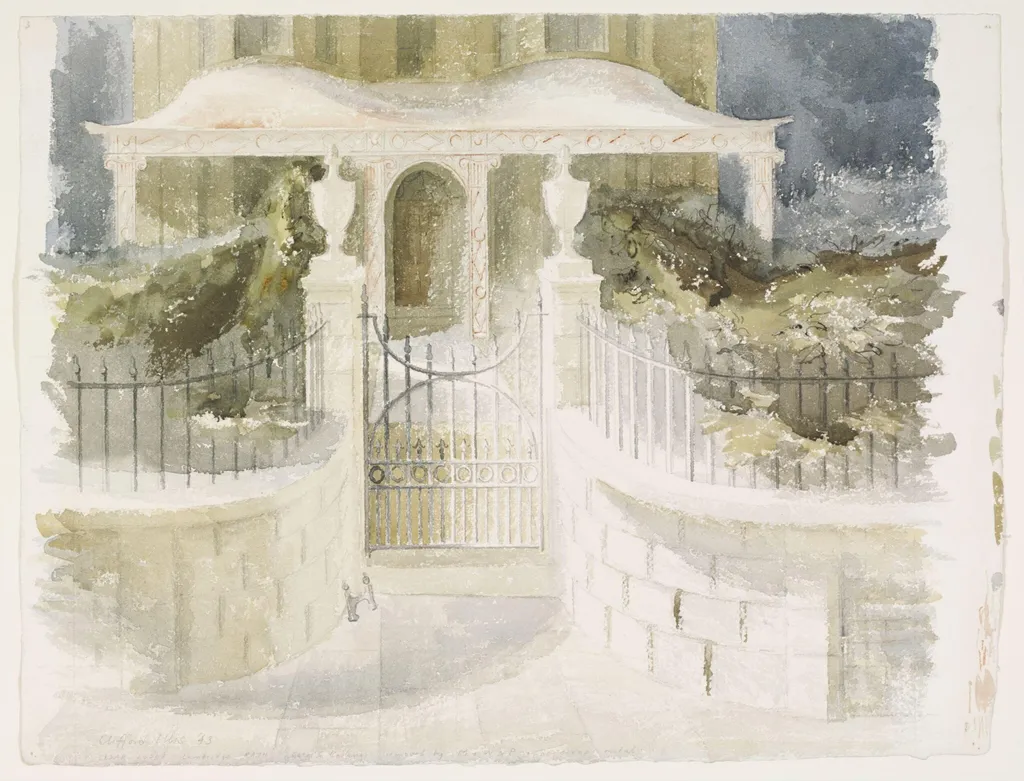
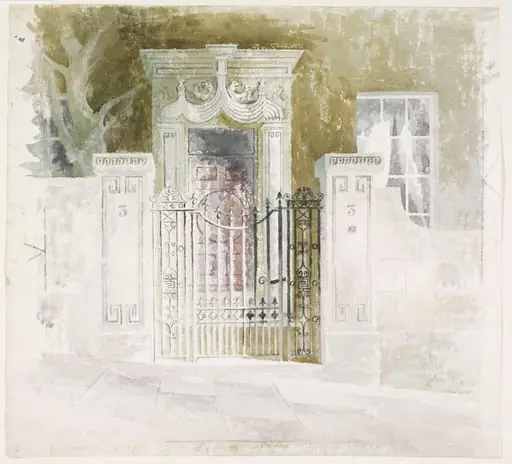
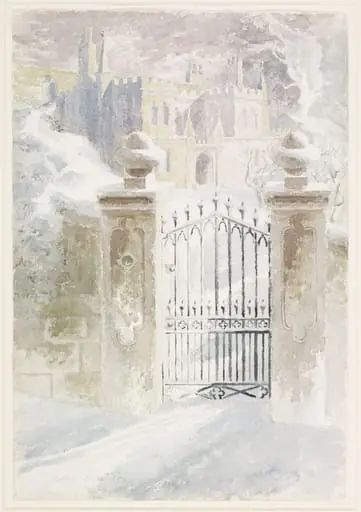
Gateway, Cedar Lodge, Lambridge, Bath is a watercolor work on paper by the British Romanticist artist Ellis. It dates from 1943 and is held in the collection of the Victoria and Albert Museum.
About this work
Overview
The piece is signed and dated by the artist, affirming its place within this documented collection held by the Victoria and Albert Museum.
This 1943 watercolour by Ellis captures the ornamental iron gateway at Cedar Lodge in Lambridge, Bath. Created as part of the Recording Britain project, the work belongs to a broader wartime effort to visually archive architectural details deemed vulnerable to destruction or obsolescence. The piece is signed and dated by the artist, affirming its place within this documented collection held by the Victoria and Albert Museum.
Subject & Meaning
The subject is a modest yet finely detailed entrance gate and railings, framing the approach to a private townhouse. Rather than emphasizing grandeur, the focus lies in the quiet dignity of domestic craftsmanship. The gate, framed by foliage, suggests a threshold between public and private space, evoking a sense of stillness and continuity amid the upheaval of wartime Britain.
Technique & Style
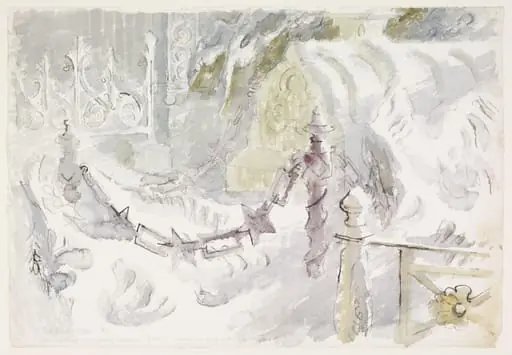
Ellis employed transparent watercolour washes to render the ironwork with delicate precision, allowing the paper’s texture to suggest light filtering through leaves. Soft gradients and minimal line work create a hazy, atmospheric effect, blurring the boundary between structure and surrounding vegetation. The technique prioritizes mood over detail, aligning with the project’s aim to convey emotional resonance rather than architectural documentation.
History & Provenance
Commissioned by the Recording Britain project between 1940 and 1943, the work was produced under the auspices of the Pilgrim Trust and the Committee for the Employment of Artists in Wartime. It was acquired by the Victoria and Albert Museum as part of the project’s archive, which now holds over 1,500 works. The painting’s survival reflects its role in preserving a visual record of England’s vernacular architecture during a period of national uncertainty.
Context
The Recording Britain initiative emerged as a cultural response to the threat of wartime destruction and rapid modernization. Artists were sent across the country to record landscapes, buildings, and details often overlooked. Ellis’s depiction of a private gate in Bath aligns with this mission, highlighting the quiet beauty of everyday structures that symbolized local identity and historical continuity.
Legacy
Ellis’s watercolour remains part of a significant archival collection that continues to inform studies of British architectural heritage. While the artist’s broader oeuvre is not widely known, this work endures as a quiet testament to the project’s goal: to preserve the visual character of a nation’s lesser-known spaces during a time of profound change.
Artist & collection
Artist
This British artist left a quiet record of Bath in the early 1940s, painting watercolors of iron gates, gateways, and front doors.