Artwork
Fantasy on a Magnificent Triumphal Artch
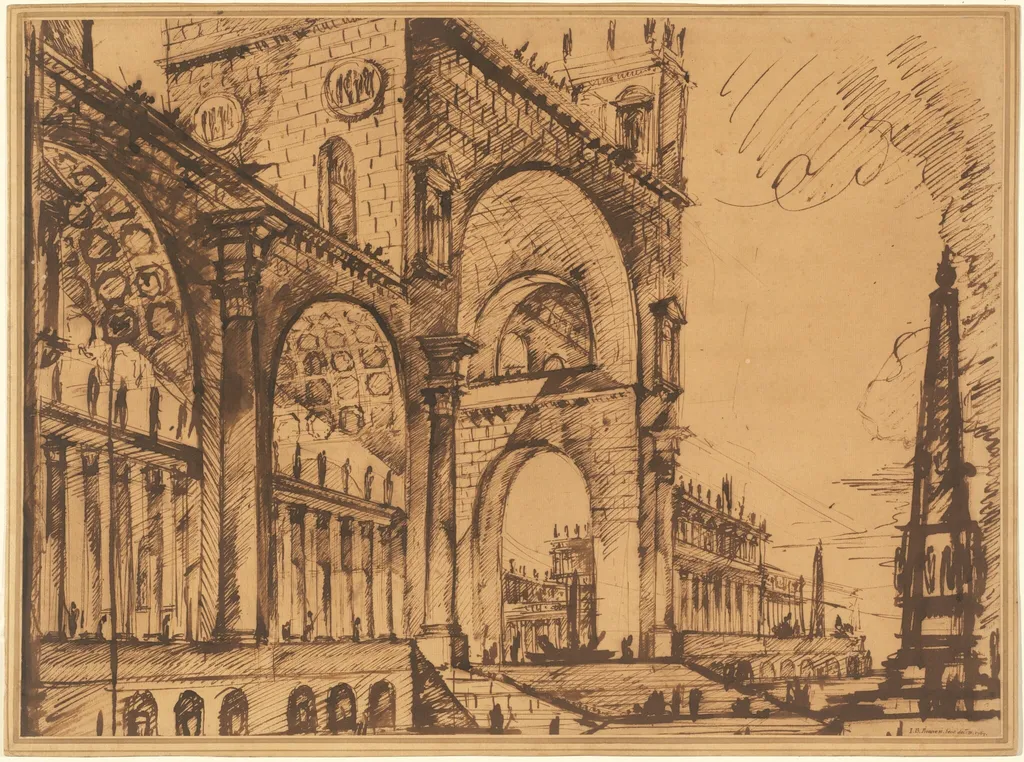
Fantasy on a Magnificent Triumphal Artch is an ink drawing by the Romanticist artist Giovanni Battista Piranesi. It dates from 1765 and is held in the collection of the National Gallery of Art.
About this work
Overview
It reflects Piranesi’s fascination with monumental form, blending observed Roman architecture with imaginative expansion beyond historical precedent.
Created in 1765, this drawing by Giovanni Battista Piranesi is a highly detailed architectural fantasy rendered in pen and brown ink, enhanced with reed pen lines and subtle washes on an eighteenth-century card. Unlike his published etchings, this work exists as a standalone sheet, emphasizing experimental draftsmanship. It reflects Piranesi’s fascination with monumental form, blending observed Roman architecture with imaginative expansion beyond historical precedent.
Subject & Meaning
The drawing presents a fictive triumphal arch, neither tied to any known Roman structure nor intended as a blueprint for construction. Its scale and ornamentation suggest a symbolic celebration of imperial power, yet the inclusion of small figures and a distant tower introduces human scale and narrative ambiguity. The structure functions as a visual meditation on memory, ruin, and the enduring allure of antiquity, rather than a literal representation.
Technique & Style
Piranesi employed fine pen strokes to define architectural details, using reed pen for bolder contours and washes to suggest depth and shadow. The texture of the ink, layered across the card’s surface, creates a sense of weathered stone and atmospheric haze. His meticulous linework conveys both structural logic and expressive freedom, balancing precision with a romantic sense of decay and grandeur.
History & Provenance
The drawing was produced during Piranesi’s mature period in Rome, when he was actively engaged in documenting ancient monuments while developing his own architectural fantasies. It remained in private hands for much of its history, likely collected by patrons drawn to his imaginative interpretations of antiquity. Its survival on original eighteenth-century card suggests careful preservation, though its early ownership remains undocumented.
Context
In mid-eighteenth-century Europe, antiquarian interest in Rome was intensifying, fueled by archaeological discoveries and Grand Tour travel. Piranesi’s work responded to this climate by reimagining classical forms beyond their historical limits. While contemporaries documented ruins, he expanded them—transforming fragments into vast, impossible monuments that questioned the boundaries between fact and invention.
Legacy
This drawing exemplifies Piranesi’s influence on later architectural imagination, particularly in Romantic and Neo-Gothic movements. His fusion of archaeological study with creative liberty inspired architects and artists to treat historical forms as malleable symbols rather than fixed templates. Though not widely exhibited in his lifetime, such works became touchstones for those seeking to reconcile antiquity with modern fantasy.
Artist & collection

Artist
Giovanni Battista (or Giambattista) Piranesi (Italian pronunciation: ; also known as simply Piranesi; 4 October 1720 – 9 November 1778) was an Italian classical archaeologist, architect, and artist, famous for his…

![Designs for Palatial Staircases [recto], by Lorenzo Sacchetti](https://artifactworldgallery.com/img/lorenzo-sacchetti--designs-for-palatial-staircases-recto--e49f5f8955b9d67b-w320.webp) Designs for Palatial Staircases [recto]
Designs for Palatial Staircases [recto] Design for a Vaulted Hall
 Drawing
![Designs for Palatial Arches [verso], by Lorenzo Sacchetti](https://artifactworldgallery.com/img/lorenzo-sacchetti--designs-for-palatial-arches-verso--07f8f4d11d000c62-w320.webp) Designs for Palatial Arches [verso]
Designs for Palatial Arches [verso] The "Canopus" of the Villa Adriana at Tivoli
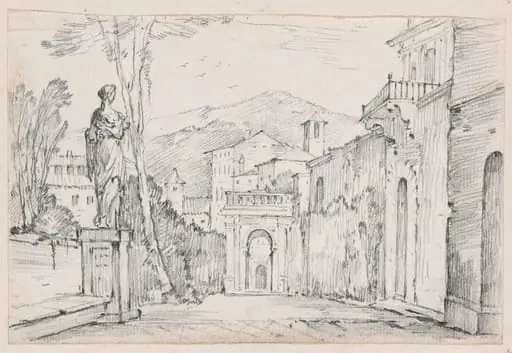 A Roman Street with Monte Cavo in the Distance
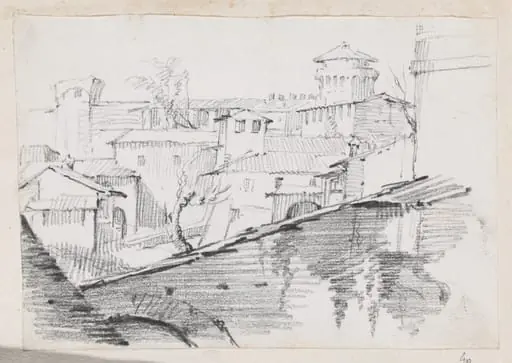 The Forno inside the Walls of the Vatican
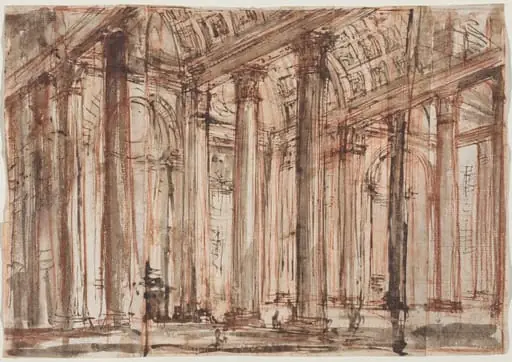 The Portico of the Pantheon
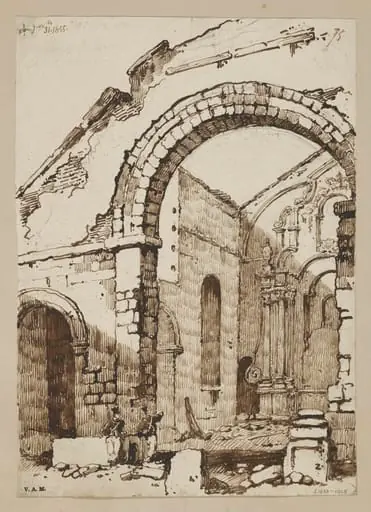 The ruins of St Paul's church, Macau, after the fire of 26 January 1835
 Entrance to Grand Canal
 A hurricane at South Kensington