Artwork
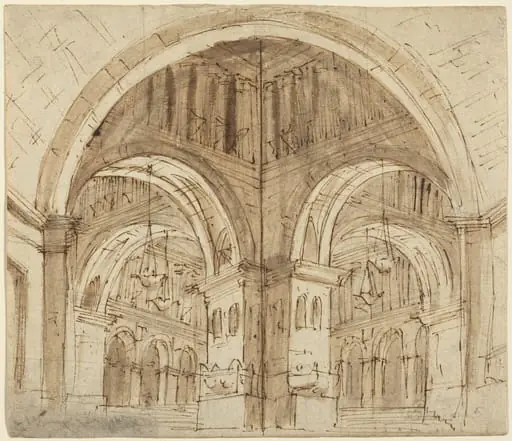
Designs for Palatial Arches [verso]
![Designs for Palatial Arches [verso], by Lorenzo Sacchetti, ink, 1800](https://artifactworldgallery.com/img/lorenzo-sacchetti--designs-for-palatial-arches-verso--07f8f4d11d000c62-w1024.webp)
Designs for Palatial Arches [verso] is an ink drawing by the Romanticist artist Lorenzo Sacchetti. It dates from 1800 and is held in the collection of the National Gallery of Art.
About this work
Overview
A sheet of wove paper, dated around 1800, bears ink and graphite drawings attributed to Lorenzo Sacchetti. The verso side contains architectural sketches likely intended as preparatory studies for monumental arches, possibly for grand urban or ceremonial settings. The medium suggests rapid, exploratory work rather than a finished presentation piece.
Subject & Meaning
The drawings depict variations of monumental arches, emphasizing structural rhythm and classical proportions. These are not specific commissions but rather conceptual explorations—testing forms that might suit imperial or civic architecture. The absence of inscriptions or context implies an internal studio exercise, focused on compositional possibilities rather than narrative.
Technique & Style
Sacchetti employed pen and brown ink for bold outlines, layered with graphite to suggest volume and shadow. Lines are confident yet fluid, indicating quick observation and revision. The style reflects late 18th-century academic draftsmanship, rooted in classical precedent but allowing for informal experimentation on paper.
History & Provenance
The drawing’s early history is undocumented, but its paper type and technique align with Italian architectural studies of the period. It likely remained within Sacchetti’s circle or academic milieu until entering a public collection. No records of its original commission or use have surfaced.
Context
Around 1800, Italian architects were reengaging with Roman antiquity amid shifting political landscapes. Sacchetti’s sketches reflect this revivalist impulse, though without overt political symbolism. Such studies circulated among practitioners as reference material, contributing to evolving neoclassical vocabularies in public architecture.
Legacy
The sheet survives as a modest but instructive example of architectural thought in early 19th-century Italy. It reveals how designers refined monumental forms through iterative sketching, preserving a quiet, personal dimension of a discipline often defined by grand finished works.
Artist & collection


![Designs for Palatial Staircases [recto], by Lorenzo Sacchetti](https://artifactworldgallery.com/img/lorenzo-sacchetti--designs-for-palatial-staircases-recto--e49f5f8955b9d67b-w320.webp)
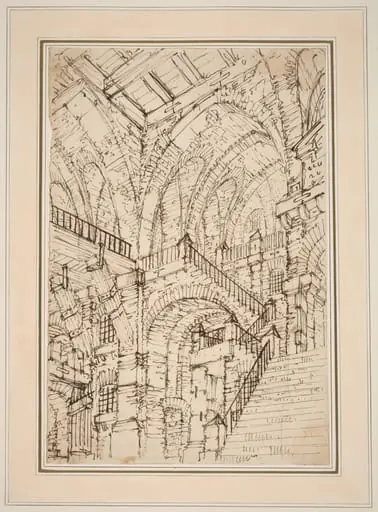 A Prison Interior with a Monumental Staircase
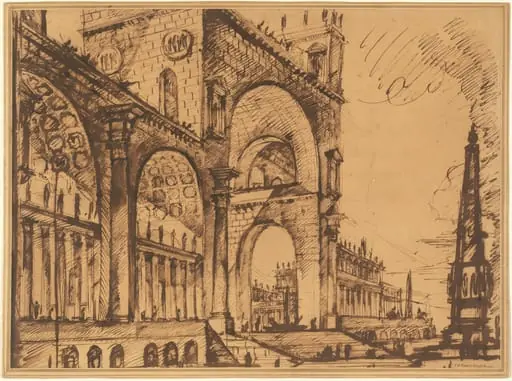 Fantasy on a Magnificent Triumphal Artch
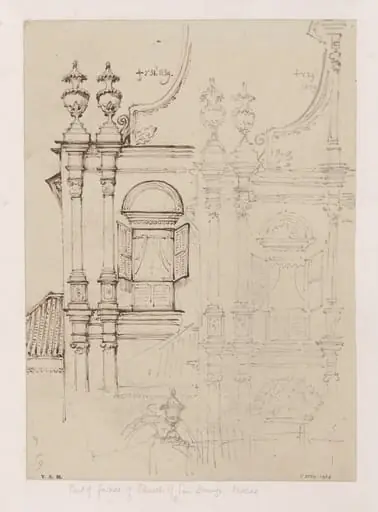 The church of S. Domingos, Macau
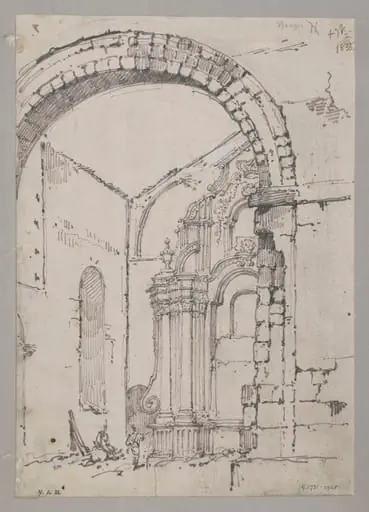 Large archway in the centre nave of St. Paul's Church, Macao, after it was burnt (December 1835)
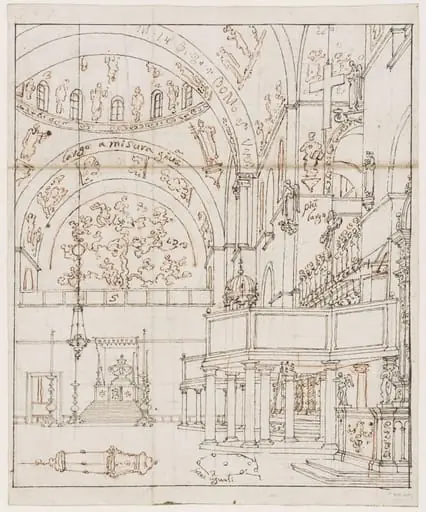 View of the interior of St. Mark's, Venice
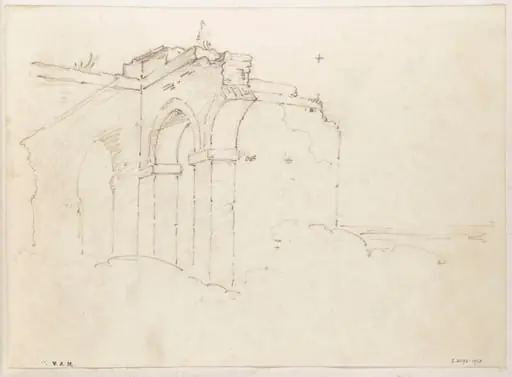 Ruins of an arcaded building
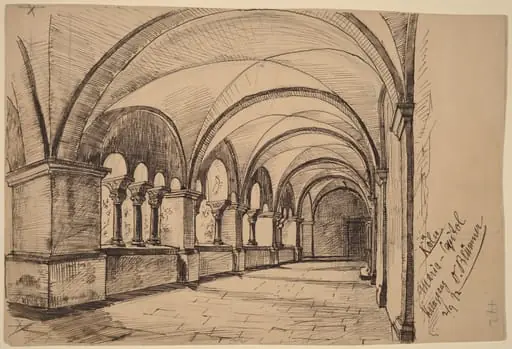 Koln, Maria-Capitol
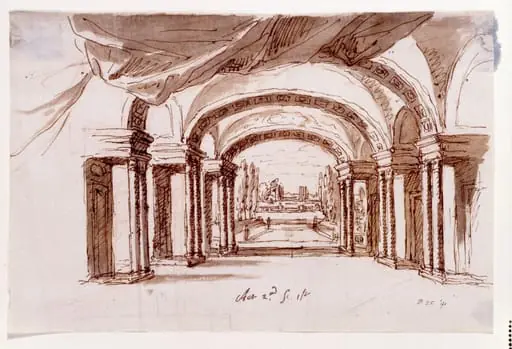 Drawing, Design for a stage set for Arsinoe, Queen of Cyprus at the Theatre Royal, London for Act II, scene 1, a great hall looking into a garden
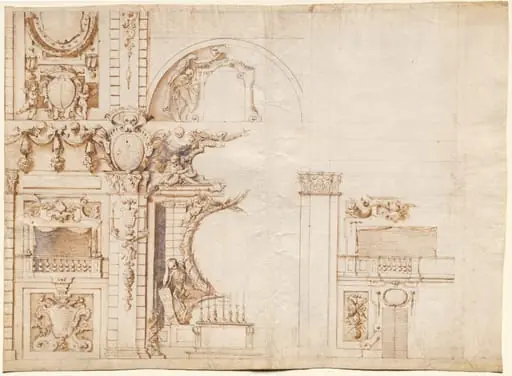 Study for the 'Essequie' Conducted in San Lorenzo, Florence, in 1637 in Honour of Holy Roman Emperor Ferdinand II
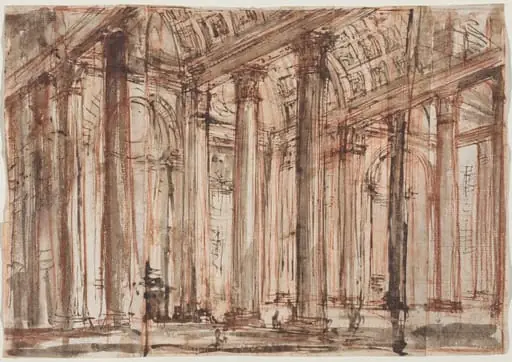 The Portico of the Pantheon