Artwork
Fragments of the Marble Plan of ancient Rome (from the Severan Marble Plan)
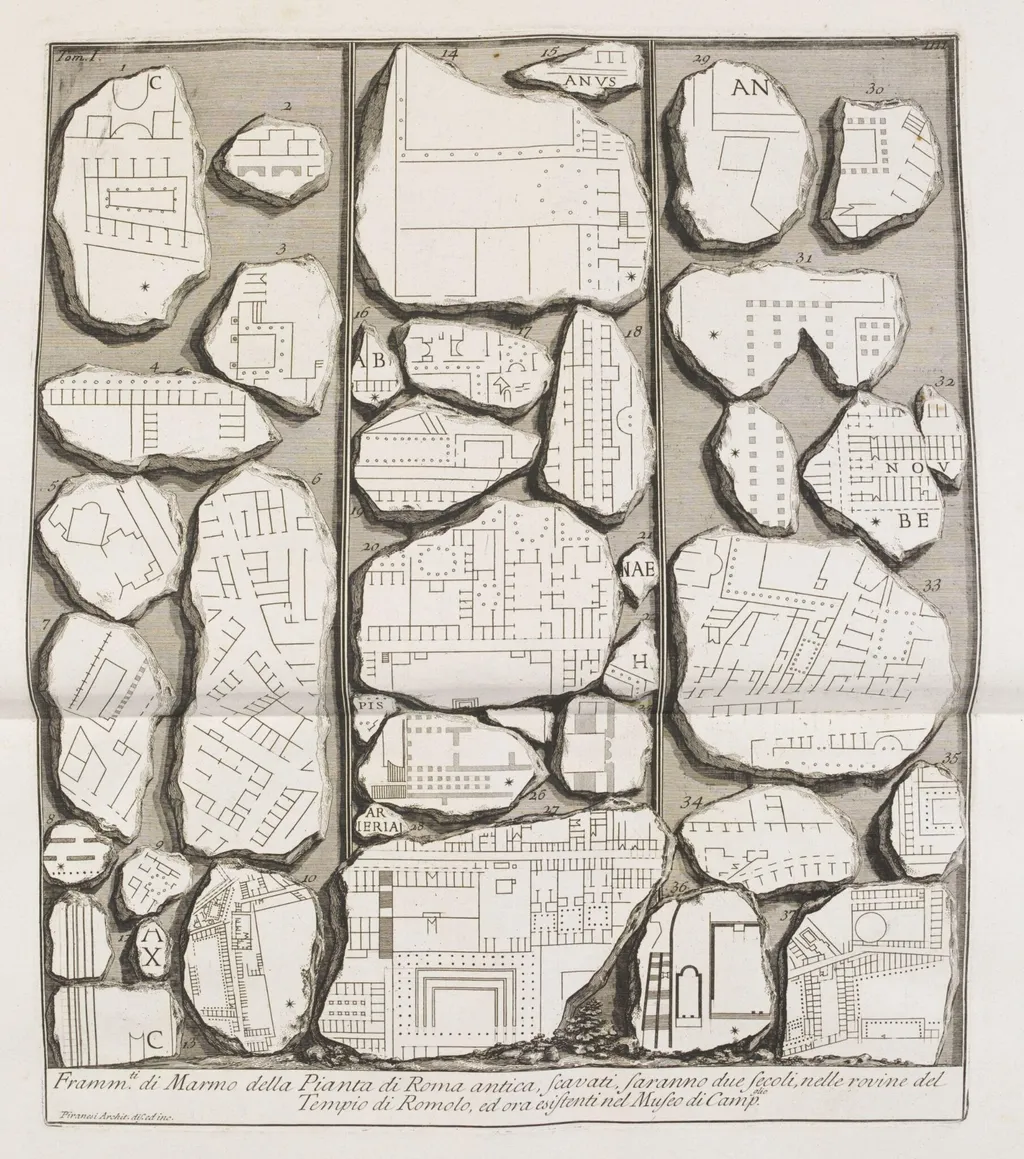
Fragments of the Marble Plan of ancient Rome (from the Severan Marble Plan) is a print by the Romanticist artist Giovanni Battista Piranesi. It dates from 1756 and is held in the collection of the Victoria and Albert Museum.
About this work
Overview
It reproduces a section of the Severan Marble Plan, an ancient Roman map carved on stone, reconstructed from surviving fragments.
This print is one of seventy-seven plates from the first volume of Le Antichità Romane, a monumental series published in Paris between 1800 and 1807 by the Calcographie des Piranesi frères. It reproduces a section of the Severan Marble Plan, an ancient Roman map carved on stone, reconstructed from surviving fragments. The image was etched onto copper by Giovanni Battista Piranesi’s sons using original plates held in Rome, preserving the intricate detail of the original survey.
Subject & Meaning
The print depicts a fragment of the Forma Urbis Romae, a detailed marble map of imperial Rome commissioned under Septimius Severus. It records the layout of streets, buildings, and public spaces with precise inscriptions. By reproducing these fragments, Piranesi sought to recover and systematize the physical memory of the ancient city, transforming scattered ruins into a coherent spatial record accessible to scholars and antiquarians.
Technique & Style
The image was produced through copperplate engraving, a technique Piranesi mastered to render fine architectural detail and minute lettering. His approach treated the marble fragments as a puzzle, aligning edges and reconstructing missing sections through scholarly inference. The result is a dense, linear composition where text and form merge, emphasizing precision over ornamentation and reflecting an archaeological rather than imaginative intent.
History & Provenance
The original copperplates were created by Giovanni Battista Piranesi for his 1756 publication of Le Antichità Romane, funded initially by Lord Charlemont, whose dedication was later removed due to unpaid fees. The plates remained in Rome and were later used by his sons to produce a new edition in Paris. Each print in the series was bound uniformly by Tessier, with the complete set now held in the British Museum under accession numbers E. 3958–4034-1908.
Context
In the 18th century, interest in Roman antiquity surged among European intellectuals. Piranesi’s work emerged amid growing archaeological efforts to document ancient sites with accuracy. His publication responded to a demand for authoritative visual records, distinguishing itself from speculative reconstructions by grounding its imagery in physical fragments, aligning with Enlightenment ideals of empirical study and systematic cataloging.
Legacy
Piranesi’s reproductions of the Severan Marble Plan became foundational for later studies of Roman urbanism. Though not the first to depict the fragments, his meticulous technique and scholarly rigor set a new standard. The plates remain key references for archaeologists and historians, preserving the visual language of ancient Rome’s spatial organization long after the original marble was lost to time.
Artist & collection

Artist
Giovanni Battista (or Giambattista) Piranesi (Italian pronunciation: ; also known as simply Piranesi; 4 October 1720 – 9 November 1778) was an Italian classical archaeologist, architect, and artist, famous for his…




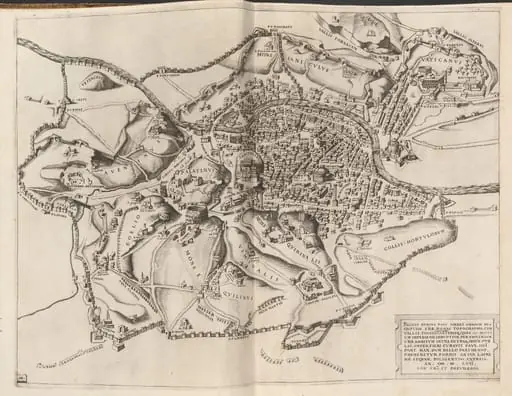 Topographical Map of Ancient Rome
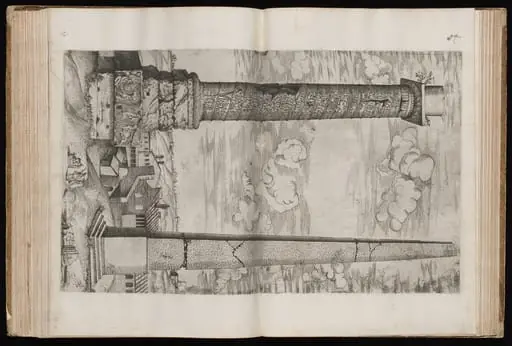 The Column of Marcus Aurelius with an Obelisk
 Landscape with Classical Ruins
 Description of Egypt: Memphis and Environs, Alexandria, Vol. V, Pl. 40
 Untitled
 The House with the Peristyle
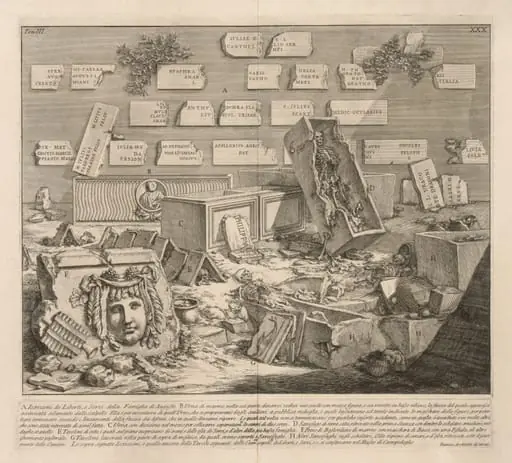 Iscrizioni de Liberti e Servi
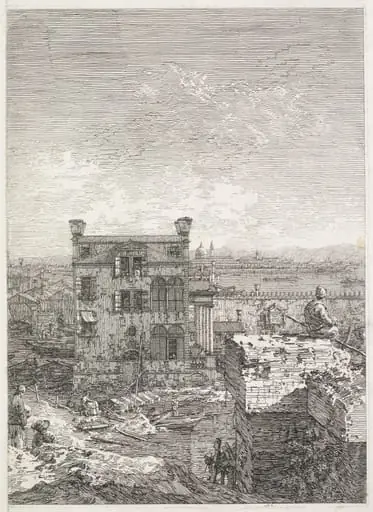 Views: A House Surrounded by Six Columns
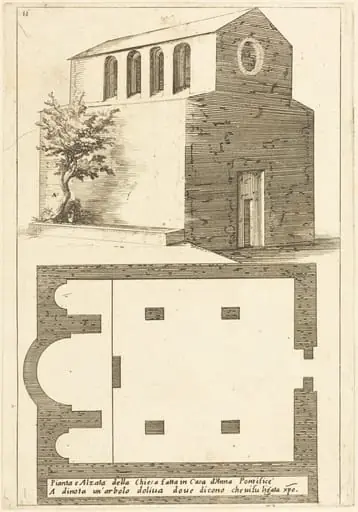 Plan and Elevation of the Church near the House of Annas
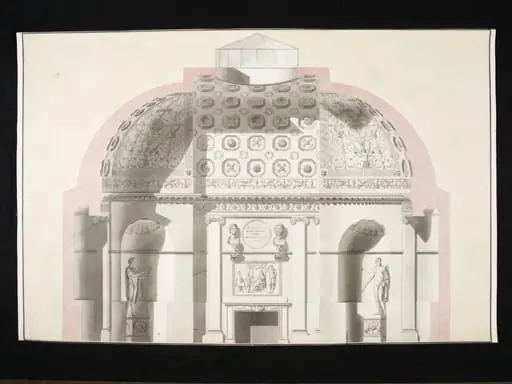 Design for an Antique Gallery