Artwork
Design for an Antique Gallery
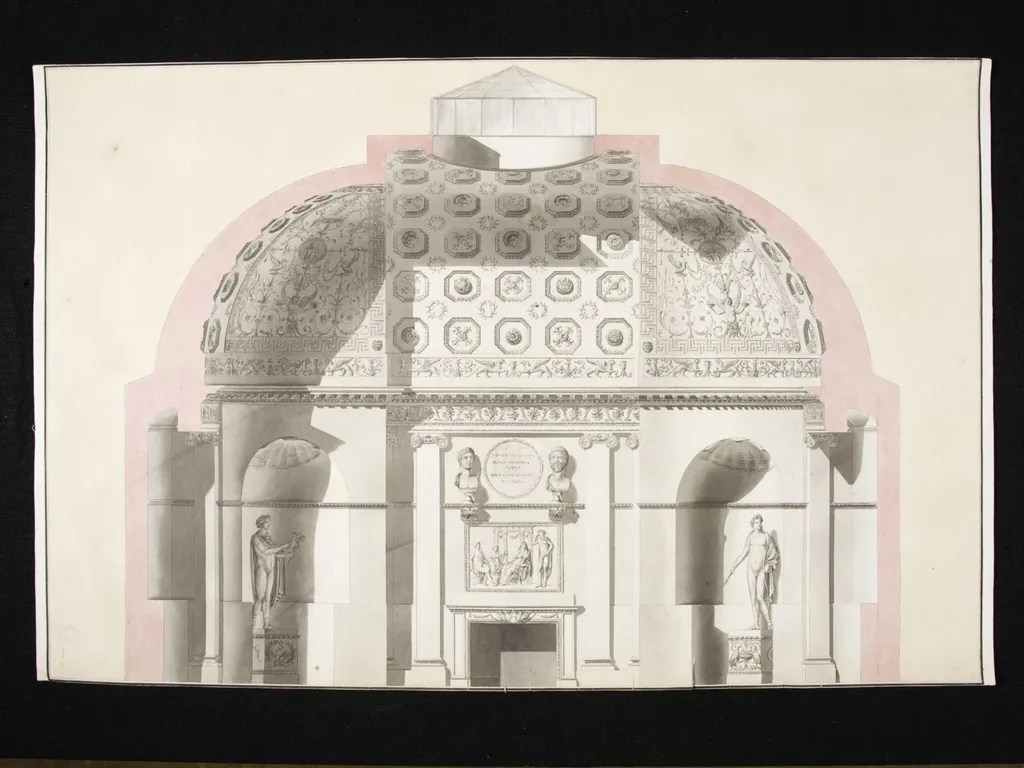
Design for an Antique Gallery is a drawing by Vincenzo Brenna. It dates from 1750 and is held in the collection of the Victoria and Albert Museum.
About this work
Overview
Executed in ink and watercolor on paper, it belongs to a larger set of 98 architectural studies compiled into two albums, now preserved in a museum collection.
This record drawing by Vincenzo Brenna, dated circa 1775, presents a sectional perspective of a proposed domed gallery intended for displaying classical antiquities. Executed in ink and watercolor on paper, it belongs to a larger set of 98 architectural studies compiled into two albums, now preserved in a museum collection. The work reflects Brenna’s engagement with ancient Roman and Greek forms, serving as a conceptual blueprint rather than a built design.
Subject & Meaning
The drawing envisions a sacred space for antiquities, modeled after Roman imperial interiors. A central niche holds a round plaque and two busts, flanked by statues on pedestals, while a coffered dome with a central skylight evokes the grandeur of ancient temples. The arrangement suggests a ritualized display of heritage, where architecture frames objects as cultural relics, reinforcing Enlightenment ideals of scholarly reverence for the classical past.
Technique & Style
Brenna employed precise ink linework and layered watercolor washes to model volume and texture. Cross-hatching defines the coffered ceiling’s recessed panels, while subtle shading gives depth to the columns and pedestals. The meticulous rendering of surface patterns—on the dome, floor, and niche—conveys a tactile sense of marble and stonework, aligning the drawing’s aesthetic with archaeological precision rather than imaginative fantasy.
History & Provenance
The drawing is one of 98 sheets originally bound in two albums assembled by Brenna during his early career, likely while studying Roman architecture in Italy. These records were later acquired by a European museum, where they remain as key documents of 18th-century antiquarian scholarship. Their preservation underscores their role as working materials for architects engaged in the revival of classical forms.
Context
Created during the height of neoclassicism, the drawing responds to a broader European interest in reconstructing ancient spaces for public display. Contemporary collectors and monarchs sought to emulate Roman villas and temples in their private galleries. Brenna’s design reflects this trend, translating archaeological knowledge into architectural proposals that balanced historical accuracy with functional display needs.
Legacy
Though never constructed, the drawing influenced later gallery designs in neoclassical museums across Europe. Its emphasis on axial symmetry, controlled lighting through the skylight, and hierarchical placement of artifacts became standard in 19th-century exhibition spaces. As a record of scholarly observation, it remains a vital artifact of how antiquity was reimagined in the age of Enlightenment.
Artist & collection
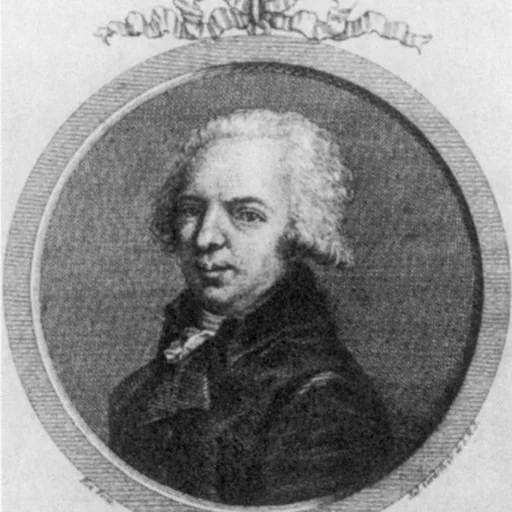
Artist
Vincenzo Brenna (August 20, 1747 – May 17, 1820) was an Italian architect and painter who was the house architect of Paul I of Russia.

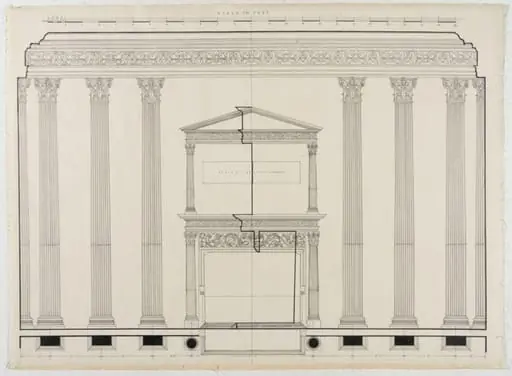 Elevation of wall showing mantelpiece.
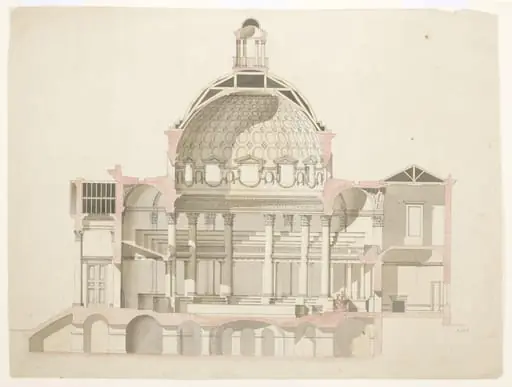 Design for St Mary's Church, St Marylebone
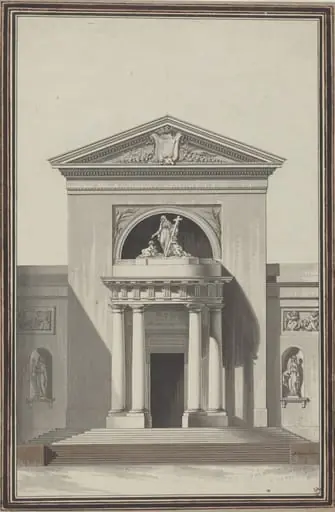 Facade for a Church with a Sculpture Representing Faith
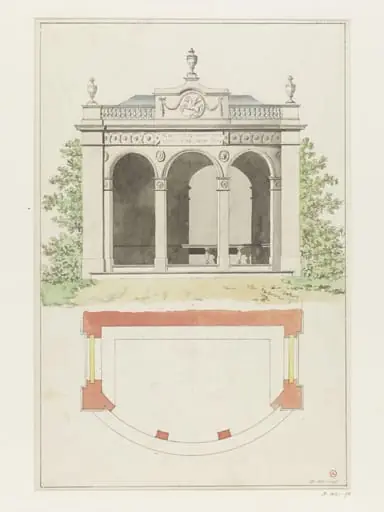 Drawing of a pavilion
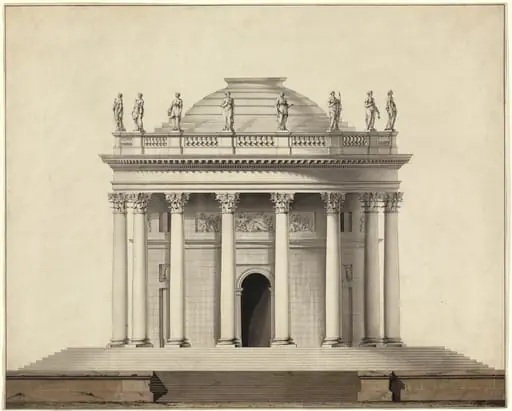 A Classical Temple
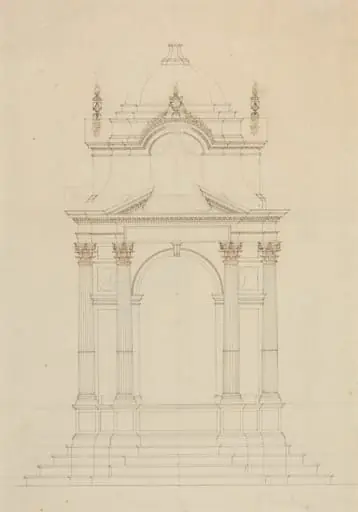 Design for a Baldaquin
 Villa Madama a Rome
 Design for a Wall with Two Doors and a Sculpture
 Elevation of wall showing niche.
 Arcade Decoration
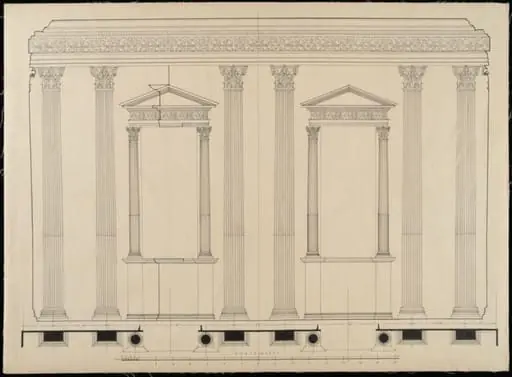 Elevation of wall showing windows.
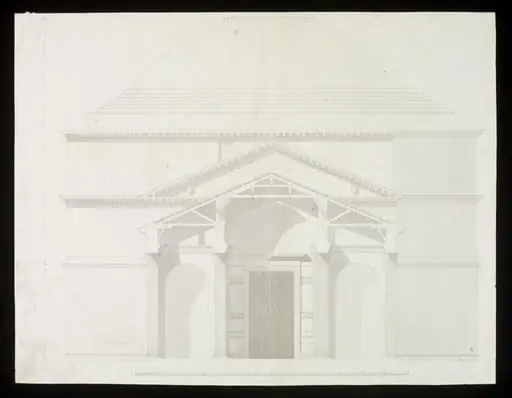 Longitudinal section through Pantheon portico