Artwork
Rovine d' antichi Edifizj
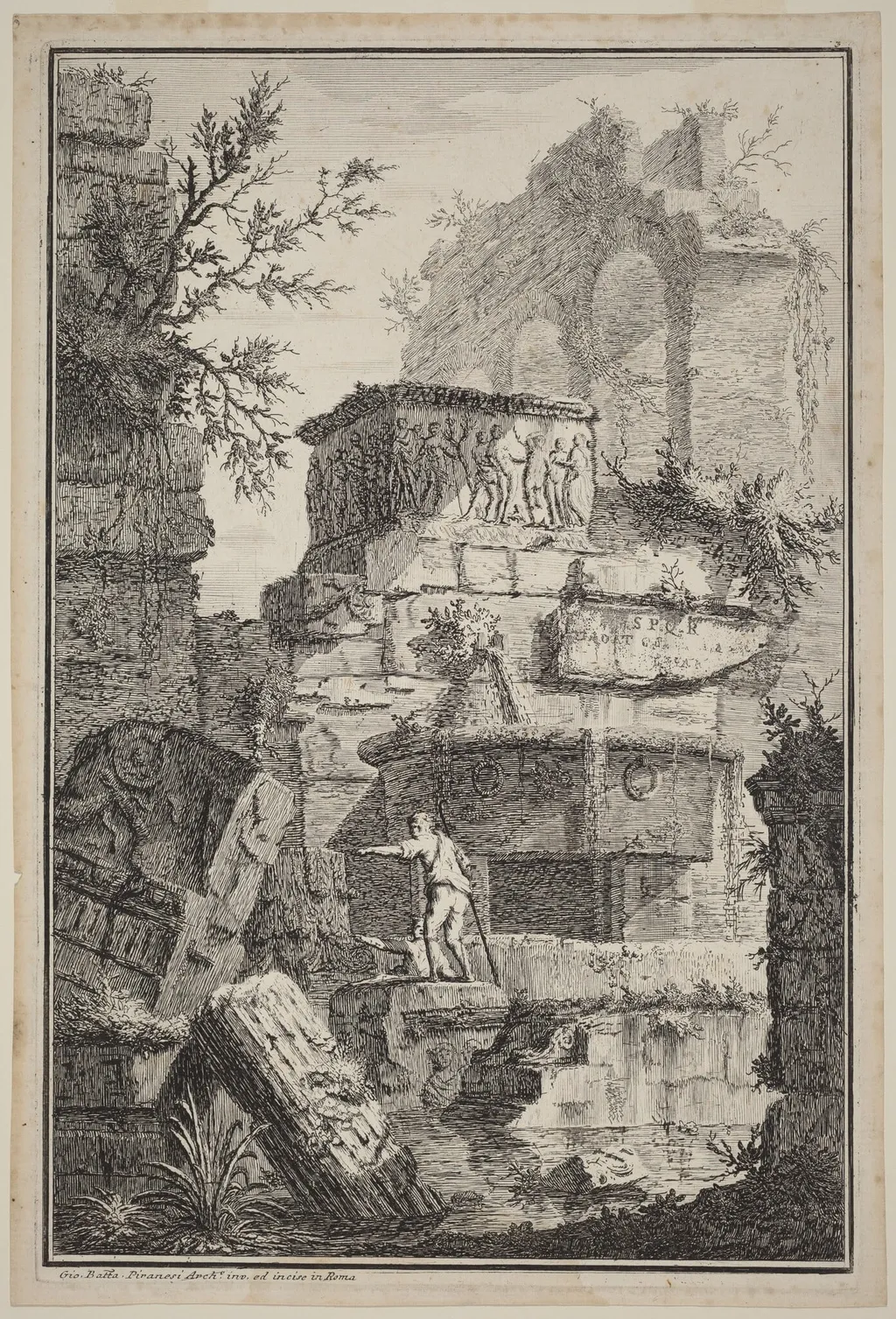
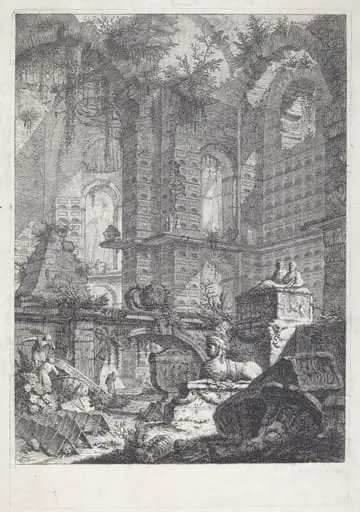
Rovine d' antichi Edifizj is an ink print by the Baroque artist Giovanni Battista Piranesi. It dates from 1744 and is held in the collection of the National Gallery of Art.
About this work
Overview
Rovine d' antichi Edifizj, created in 1744 by Giovanni Battista Piranesi, is a mixed-technique print combining etching, engraving, drypoint, and scratching. This work exemplifies Piranesi's signature blend of archaeological precision and imaginative flair.
Subject & Meaning
The print depicts a half-buried, crumbling temple ruin overgrown with vegetation. A solitary figure ascends the broken steps beneath a carved relief, evoking a sense of discovery and nostalgia for a bygone era. The scene conveys the contrast between nature's reclamation and the remnants of ancient architecture.
Technique & Style
Piranesi employed sharp lines and heavy shading to imbue the ruins with drama and mystery. The combined techniques of etching, engraving, drypoint, and scratching achieved deep shadows and textured effects, characteristic of his depictions of grand, decaying structures.
History & Provenance
Created in 1744 by Giovanni Battista Piranesi, a renowned Italian artist, architect, and archaeologist. As the patriarch of a family of engravers (including Francesco, Laura, and Pietro Piranesi), this work reflects his influence on the artistic traditions of his time.
Context
Rovine d' antichi Edifizj fits within Piranesi's broader oeuvre of capturing the essence of ancient Roman ruins and imaginative architectural vistas, appealing to 18th-century Europe's fascination with classical antiquity.
Legacy
This print contributes to Piranesi's lasting impact on the representation of ancient ruins in art, influencing subsequent generations with its unique blend of archaeological detail and atmospheric interpretation.
Artist & collection
Artist
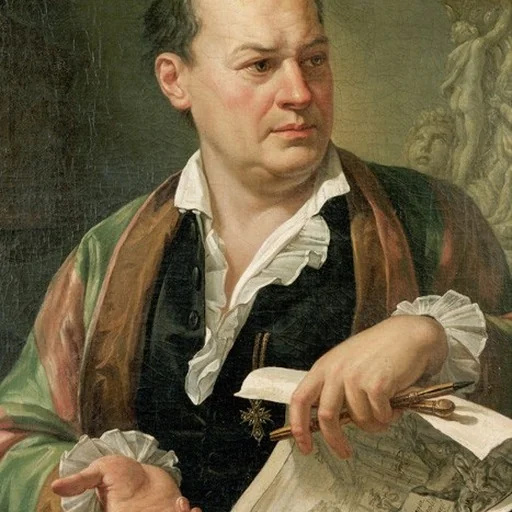
Giovanni Battista (or Giambattista) Piranesi (Italian pronunciation: ; also known as simply Piranesi; 4 October 1720 – 9 November 1778) was an Italian classical archaeologist, architect, and artist, famous for his…

 Camera sepolcrale
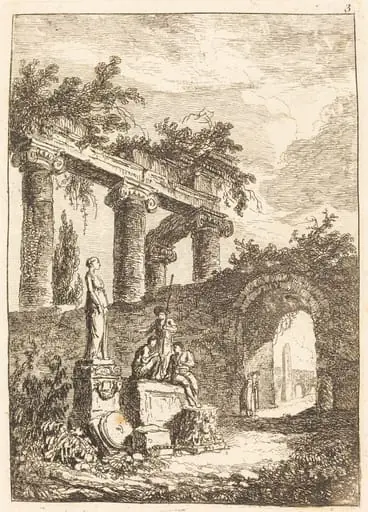 The Statue before the Ruins
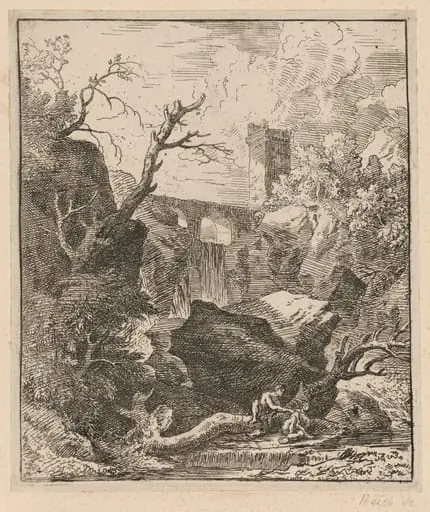 The Angler
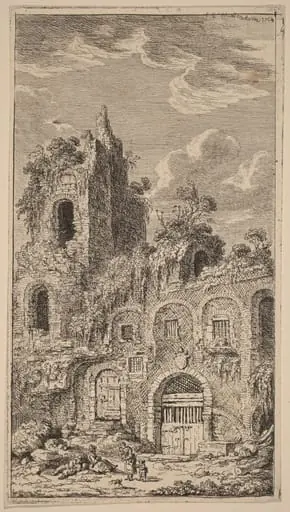 Fragment of the Old City Wall at San Giovanni Laterano
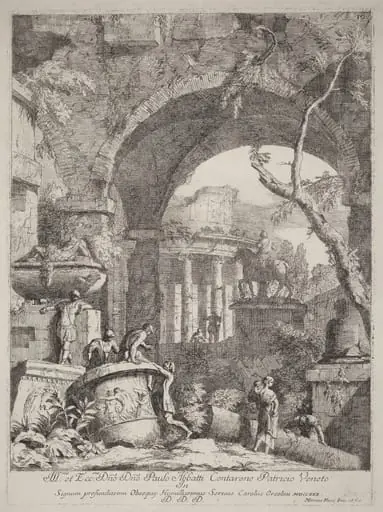 Capriccio: Ruins
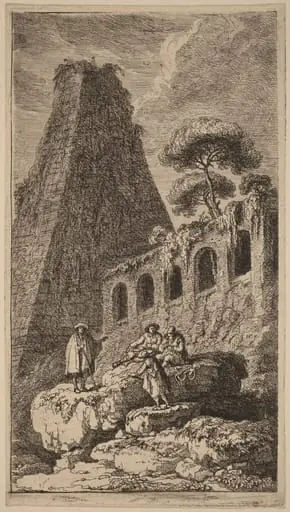 The Pyramid of Sesto near the Gates of St. Pauli in Rome
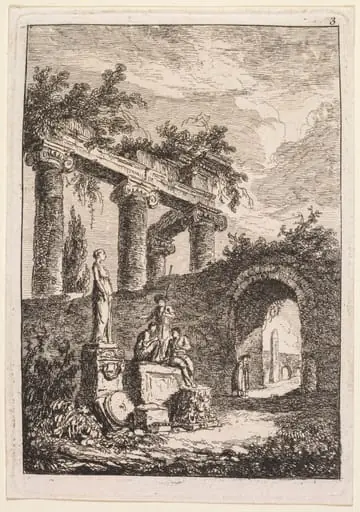 The Statue in Front of Ruins
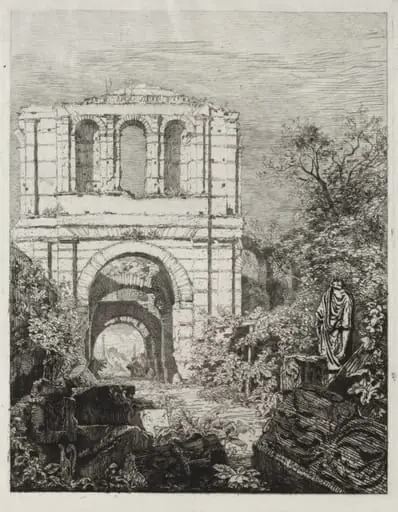 Ruins of the Palais Gallien in Bordeaux
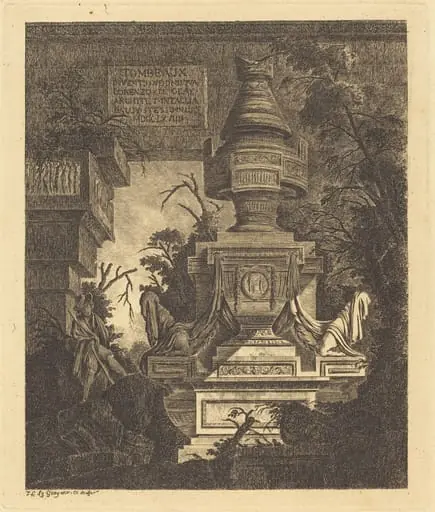 Frontispiece for "Views of Tombs"
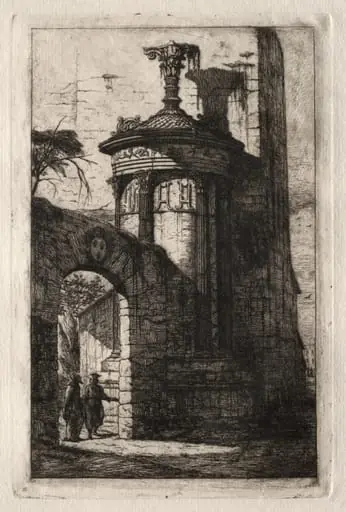 Entrance to the French Capuchin Convent at Athens
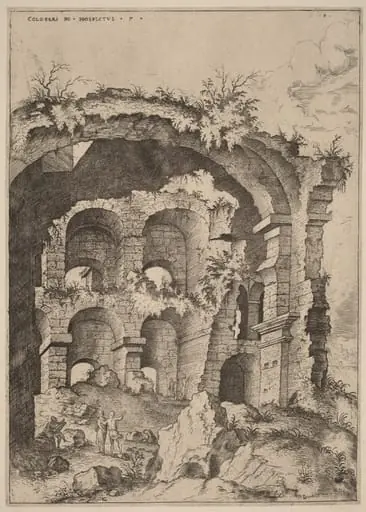 Seventh View of the Colosseum
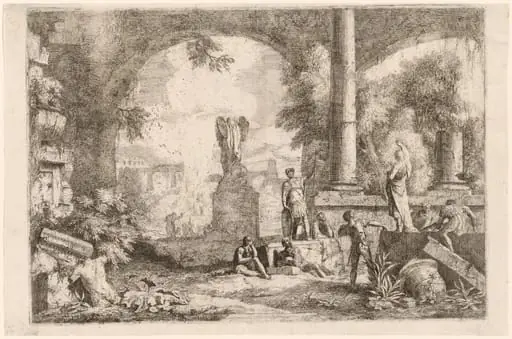 Capriccio of Antique Ruins with Men Gazing at a Classical Orator