Artwork
Two Workmen at Tables (recto)
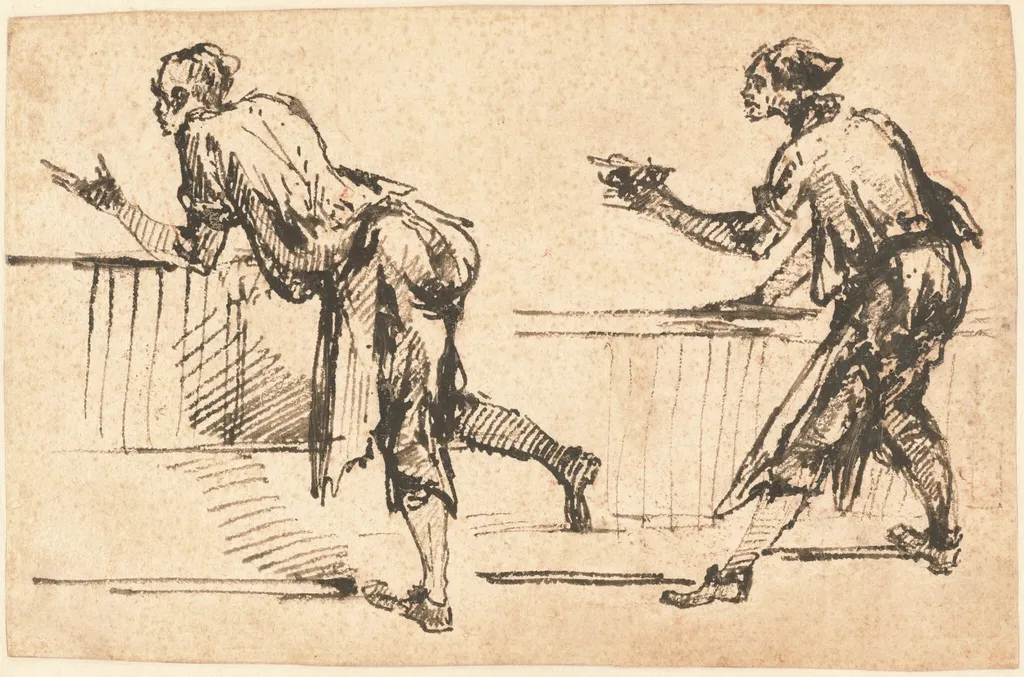
Two Workmen at Tables (recto) is an ink drawing by the Romanticist artist Giovanni Battista Piranesi. It dates from 1774 and is held in the collection of the National Gallery of Art.
About this work
Overview
Created around 1774, this drawing by Giovanni Battista Piranesi is executed in pen with black and brown ink on laid paper. It belongs to a series of observational sketches from his later years in Rome, where he documented everyday labor alongside his more monumental architectural studies. The work captures a quiet moment of craftsmanship, rendered with immediacy and minimal embellishment.
Subject & Meaning
Two laborers are shown at separate tables, absorbed in tasks requiring precision—likely drafting or inscribing.
Two laborers are shown at separate tables, absorbed in tasks requiring precision—likely drafting or inscribing. Their simple, loose garments and focused postures suggest skilled artisans at work, not idealized figures. The absence of narrative context shifts attention to the act of creation itself, reflecting Piranesi’s interest in the quiet dignity of manual labor within the urban fabric of Rome.
Technique & Style
Piranesi employed rapid, layered pen strokes to build form and texture, using cross-hatching to suggest shadow and volume without smooth gradation. The ink’s contrast against the warm, yellowed paper enhances the drawing’s tactile quality. Lines are deliberately uneven and energetic, conveying motion and the physicality of work, consistent with his broader graphic approach to capturing structure and movement.
History & Provenance
This drawing emerged during Piranesi’s mature period in Rome, when he produced numerous studies for his etchings and personal archives. Likely made as a preparatory sketch or independent observation, it was preserved within his collection and later entered institutional holdings. Its survival reflects the value placed on his working drawings, even those not destined for publication.
Context
In the late 18th century, Piranesi was deeply engaged with Rome’s antiquities and its living craft traditions. While known for grand etchings of ruins and prisons, his sketchbooks reveal a parallel interest in contemporary artisans. This drawing aligns with a broader European trend of documenting labor as a subject worthy of artistic attention, grounded in empirical observation rather than idealization.
Legacy
Though not widely exhibited, this work exemplifies Piranesi’s commitment to recording the unseen mechanics of his world. His sketches like this one influenced later artists and architects who valued process over finished form. The drawing remains a quiet testament to his belief that the tools and hands of laborers were as worthy of study as the monuments they preserved.
Artist & collection
Artist
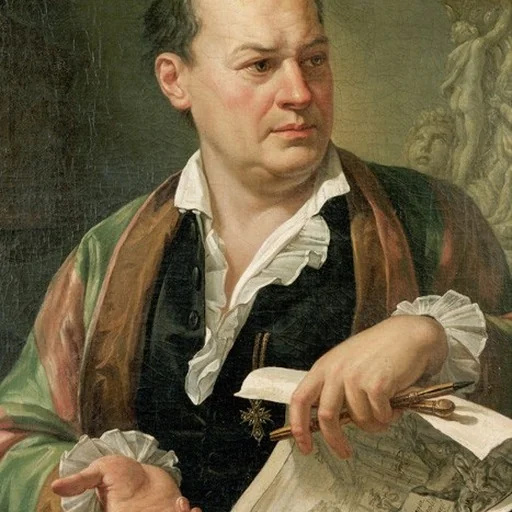
Giovanni Battista (or Giambattista) Piranesi (Italian pronunciation: ; also known as simply Piranesi; 4 October 1720 – 9 November 1778) was an Italian classical archaeologist, architect, and artist, famous for his…

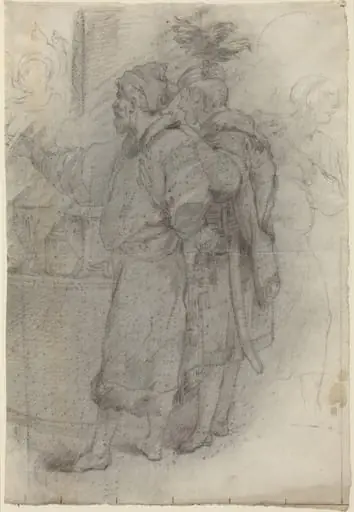 Two Standing Courtiers
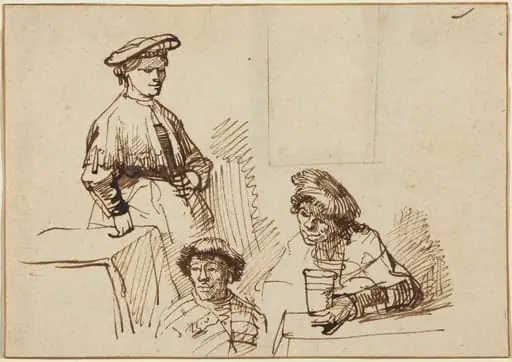 Sketches from a Tavern: Woman Standing and Two Men Seated
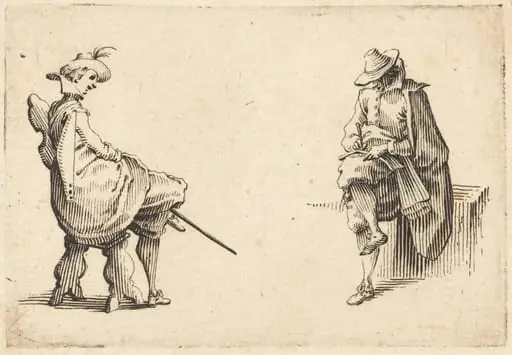 Two Seated Figures
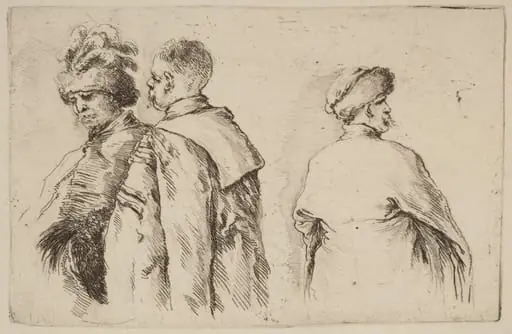 Three Hungarians
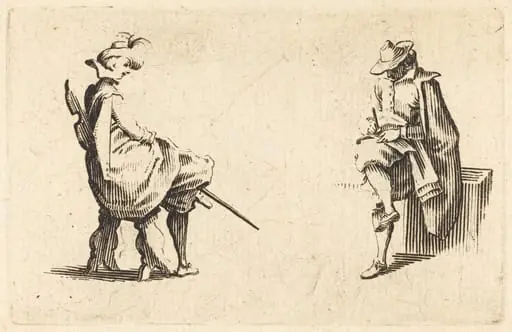 Two Seated Figures
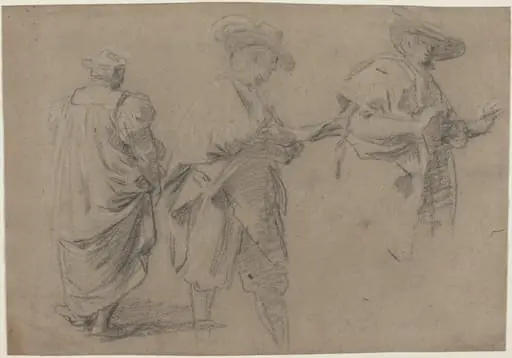 A Judge and Two Gentlemen Lawyers
![Two Elegant Couples [verso], by Francesco Guardi](https://artifactworldgallery.com/img/francesco-guardi--two-elegant-couples-verso--0eab87c3f2698c75-w320.webp) Two Elegant Couples [verso]
Two Elegant Couples [verso]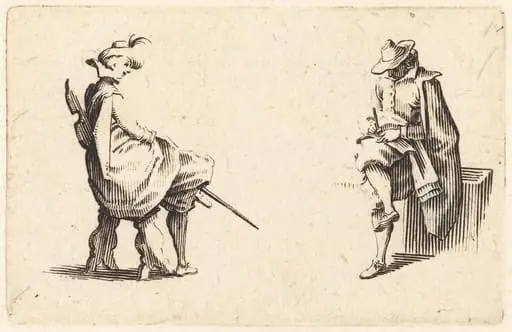 Two Seated Figures
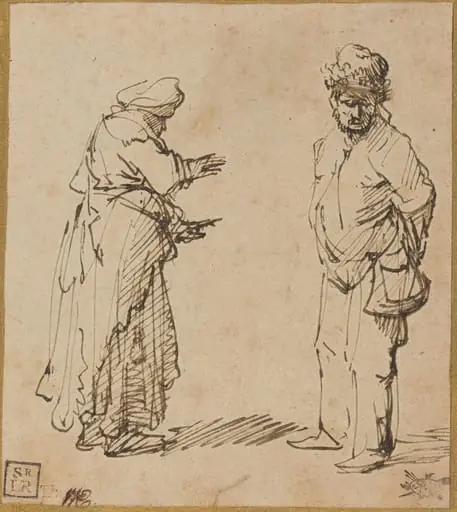 Beggar Man and Woman
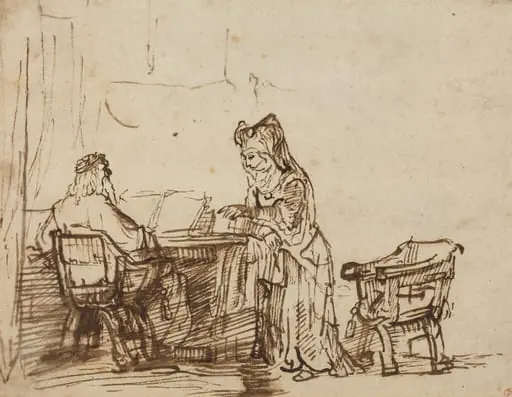 Hannah Rejecting the Reproaches of the Prophet Eli
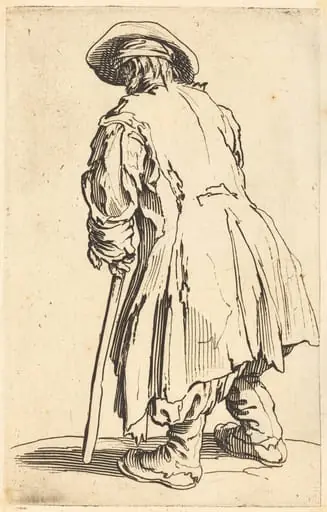 Old Beggar with One Crutch