Artwork
St. Cecilia
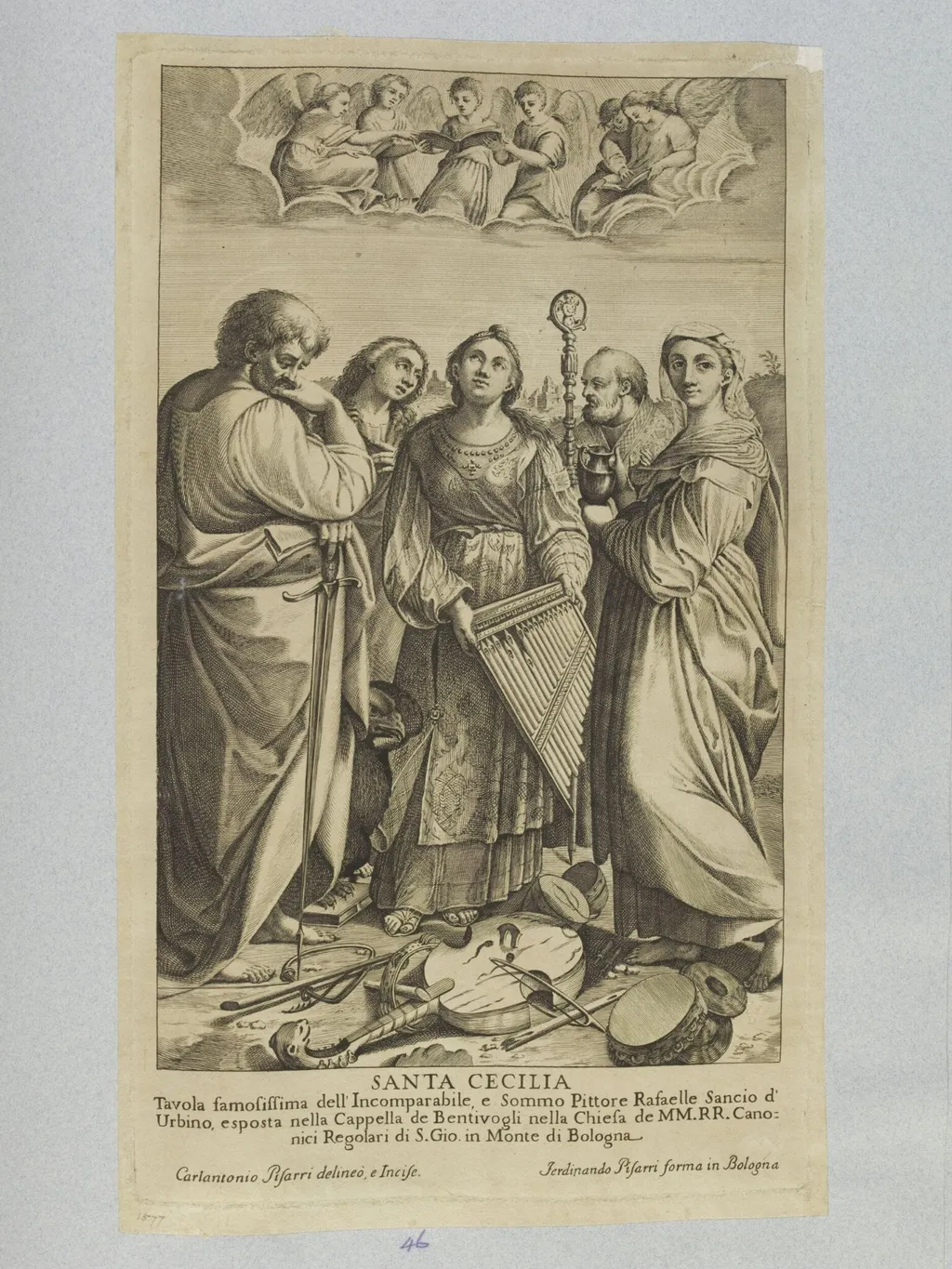
St. Cecilia is a print by Carlo Antonio Pisarri. It dates from 1750 and is held in the collection of the Victoria and Albert Museum.
About this work
Overview
Carlo Antonio Pisarri created this 1750 print depicting Saint Cecilia, drawing inspiration from Raphael’s earlier composition. Executed in ink on paper, the work belongs to a tradition of reproductive prints that disseminated renowned paintings to wider audiences. Its detailed line work and tonal contrasts reflect the technical precision typical of mid-18th-century engraving practices in Italy.
Subject & Meaning
The scene centers on Saint Cecilia, patron saint of music, shown standing amid a group of reverent figures. Around her, broken instruments lie on the ground, symbolizing her renunciation of worldly music in favor of divine harmony. Cherubs hover above, playing celestial instruments, reinforcing her spiritual connection to sacred sound. The figures’ contemplative gestures suggest awe and devotion.
Technique & Style
Pisarri employed fine, controlled engraving lines to model form and depth, with strong chiaroscuro enhancing the three-dimensionality of the figures. The composition is tightly organized, directing attention to Cecilia’s central position. Textural variation in fabrics and the delicate rendering of cherubs’ wings demonstrate the engraver’s mastery of detail and atmospheric effect.
History & Provenance
This print was produced in Rome during a period when reproductive engravings were widely circulated among collectors and religious institutions. Though the original Raphael painting is lost, Pisarri’s version preserves its compositional structure. The print entered the Victoria and Albert Museum’s collection through documented acquisitions of 18th-century Italian graphic art.
Context
In 18th-century Italy, Saint Cecilia remained a popular subject in religious art, especially in cities with strong musical traditions. Engravings like Pisarri’s served both devotional and educational purposes, making high art accessible beyond elite circles. The emphasis on musical symbolism aligned with contemporary interests in the moral power of sacred music.
Legacy
Pisarri’s print contributes to the enduring visual legacy of Saint Cecilia in Western art. While not an original composition, it reflects the continued influence of Renaissance models in later centuries. Its preservation in major collections underscores its value as a historical document of print culture and religious iconography in Enlightenment-era Europe.
Artist & collection
Artist
Carlo Antonio Pisarri had a knack for turning quiet saints into real people—no halo required.

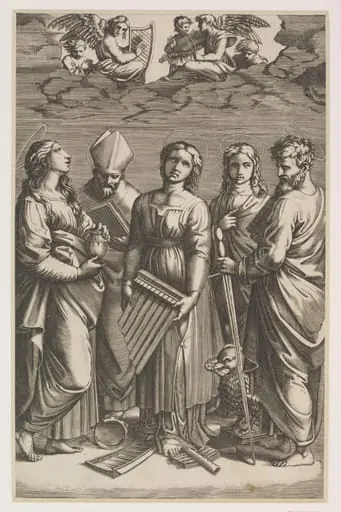 Saint Cecilia
 Hope (from the Tarocchi, series B: Cosmic Principles & Virtues, #39)
 Queen
Queen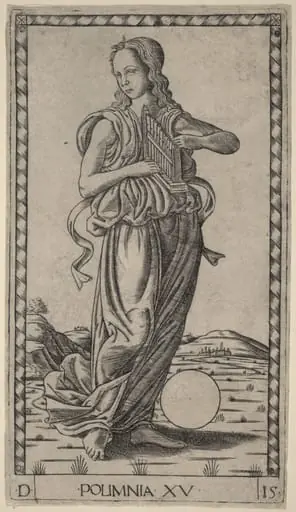 Polimnia (Polyhymnia)
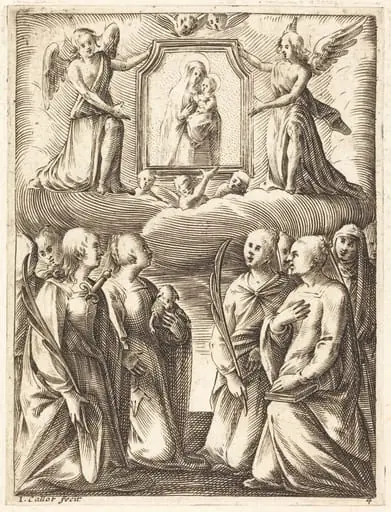 The Adoration of the Virgin and Child
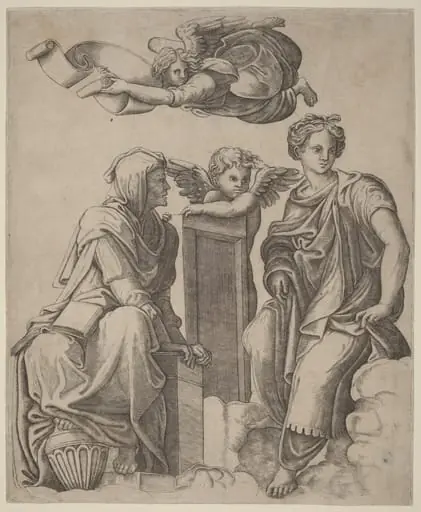 Two Sibyls and an Angel
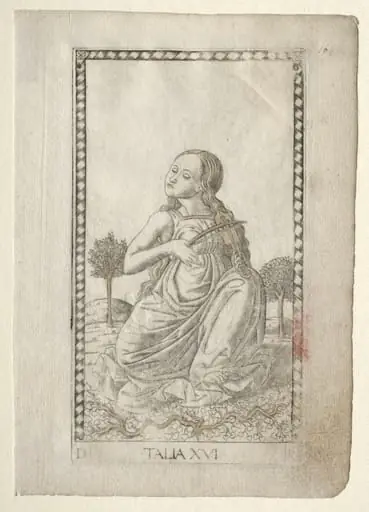 Thalia (comedy, pastoral poetry) (from the Tarocchi series D: Apollo and the Muses, #16)
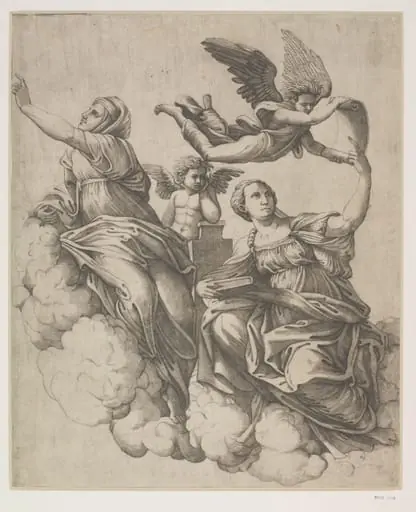 La Théologie et la Métaphysique
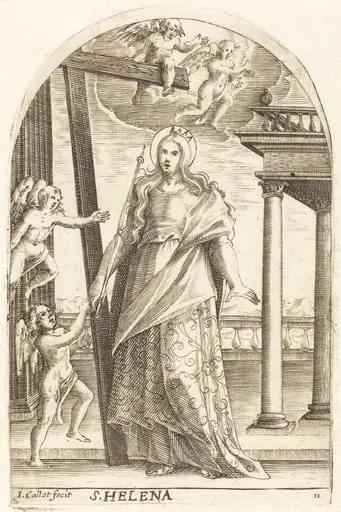 Saint Helen
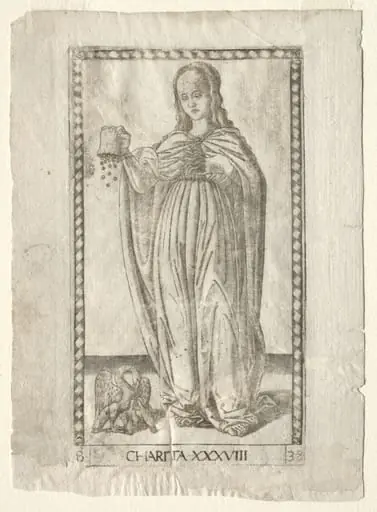 Charity (from the Tarocchi, series B: Cosmic Principles & Virtues, #38)