Artwork
Two Sibyls and an Angel
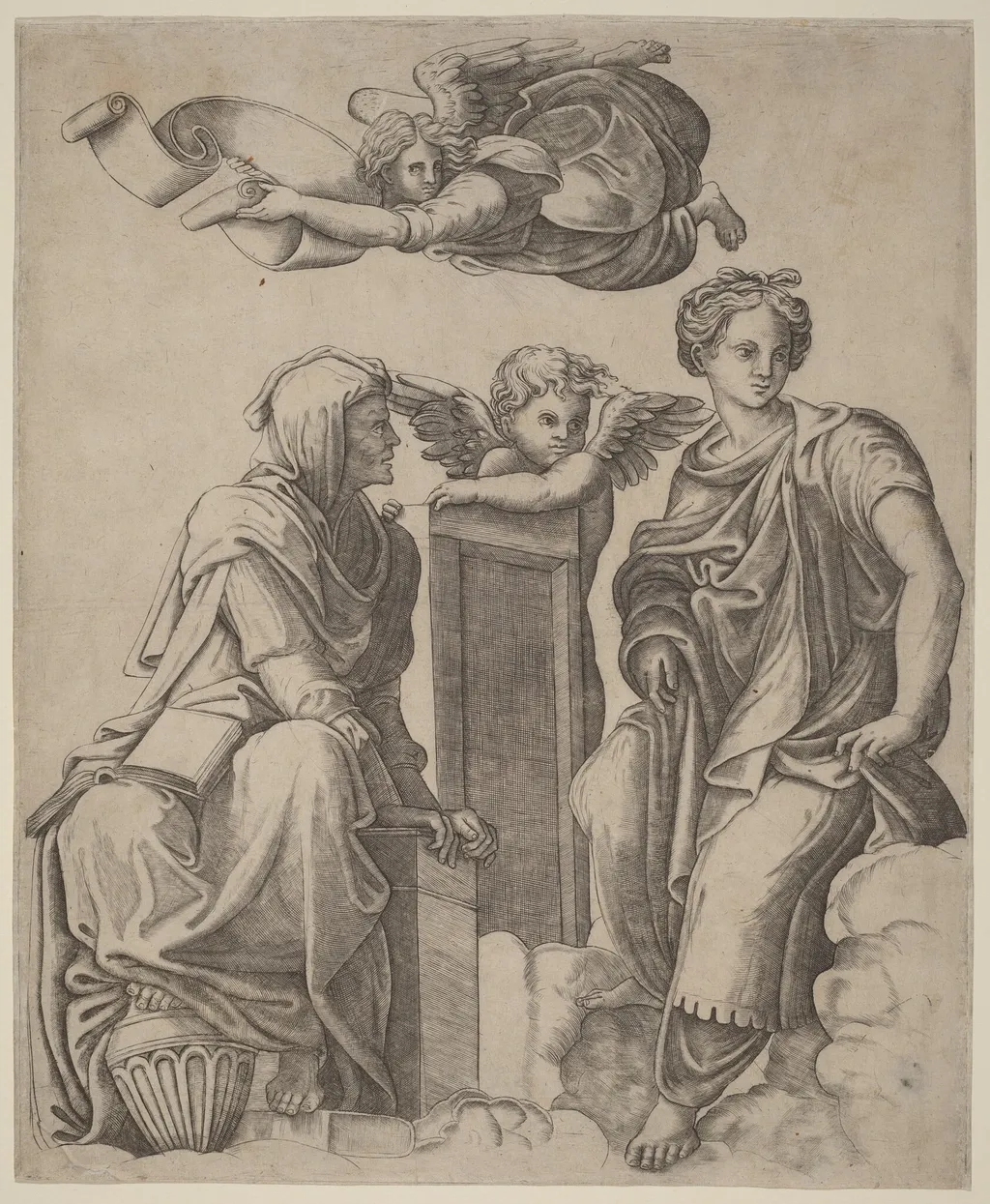
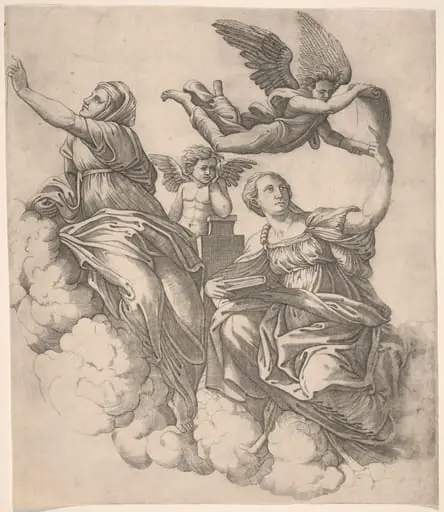
Two Sibyls and an Angel is an ink print by the Renaissance artist Giovanni Antonio da Brescia. It dates from 1522 and is held in the collection of the National Gallery of Art.
About this work
Overview
Created circa 1522, *Two Sibyls and an Angel* is an engraving by Giovanni Antonio da Brescia, an Italian printmaker active in the northern regions of Renaissance Italy. Executed on a metal plate, the work presents a compact composition of three figures—a seated woman, a standing man, and two winged angels—rendered with the fine line work characteristic of early 16th‑century engraving.
Subject & Meaning
The print juxtaposes two figures traditionally identified as sibyls, prophetic women from classical antiquity, with a celestial messenger.
The print juxtaposes two figures traditionally identified as sibyls, prophetic women from classical antiquity, with a celestial messenger. The seated woman, hooded and turned away, rests a hand on a slender column, while the upright male figure gazes toward her, suggesting a dialogue between earthly prophecy and divine revelation. The angels, one bearing a scroll and the other perched on a cloud, reinforce the theme of transmitted knowledge.
Technique & Style
Employing the intaglio process, da Brescia incised lines into a copper plate, achieving a delicate balance of light and shadow. The engraving displays the crisp, linear clarity typical of Renaissance printmaking, with careful attention to drapery folds, architectural detail, and the ethereal rendering of the angels’ wings. The composition’s dramatic contrasts reflect the period’s interest in narrative clarity and anatomical precision.
History & Provenance
Giovanni Antonio signed his early prints with the initials “Z.A.” before later adopting more elaborate monograms such as “IO.AN.BX.” This work bears the later signature style, situating it in the mature phase of his career. The print has circulated among private collections since the 16th century and entered museum holdings through a 19th‑century acquisition, though its exact ownership trail remains partially undocumented.
Context
The engraving belongs to a broader Renaissance fascination with merging classical prophecy and Christian symbolism. Sibyls were frequently incorporated into religious art as precursors to Christian revelation, and their depiction alongside angels aligns with contemporary theological interpretations that saw pagan foresight as a prelude to the gospel.
Artist & collection

Artist
Giovanni Antonio da Brescia was an Italian engraver of northern Italy, active in the approximate period 1490–1519, during the Italian Renaissance.

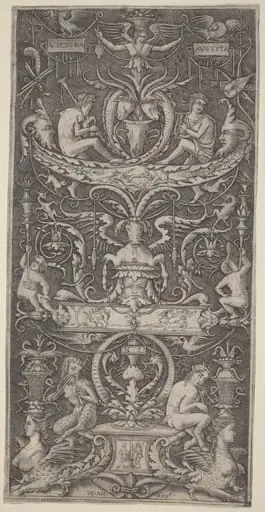
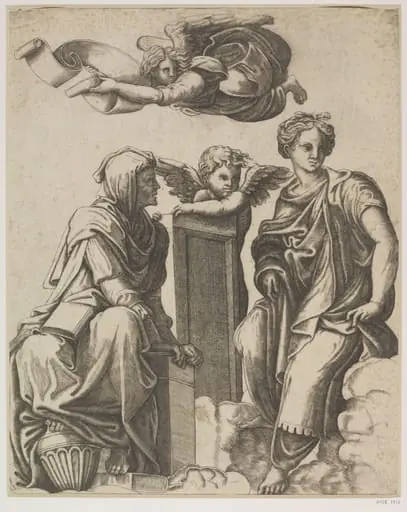 La Dialéctique et Logique
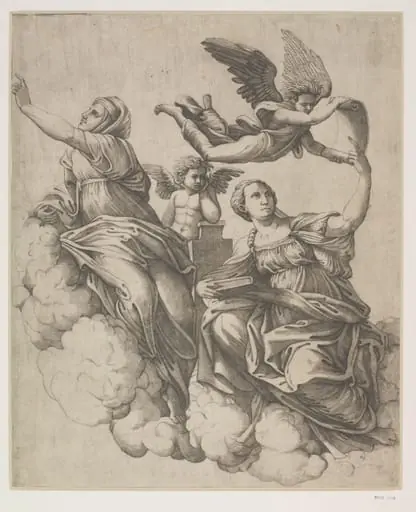 La Théologie et la Métaphysique
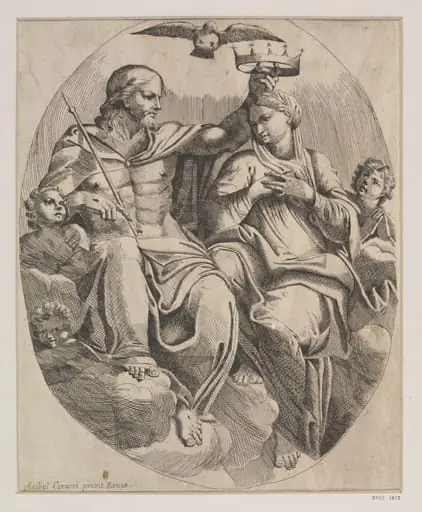 Coronation of the Virgin
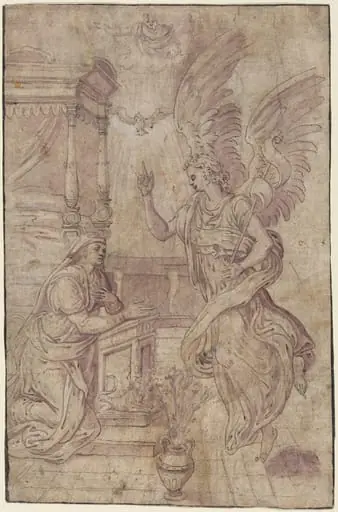 The Annunciation
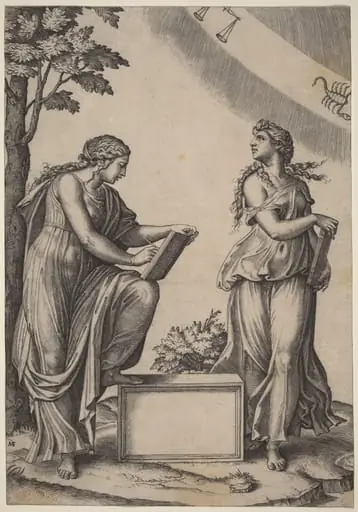 Two Women with the Zodiac
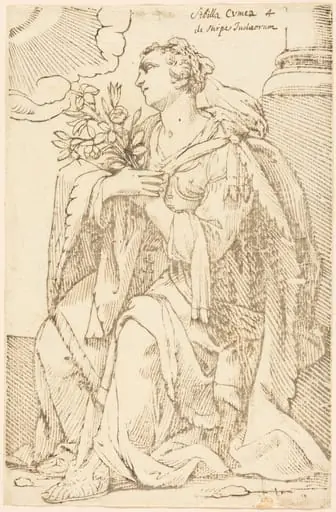 Sibylla Cimmeria
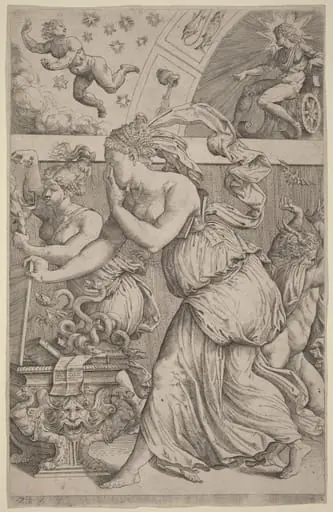 Pandora Opening Her Box
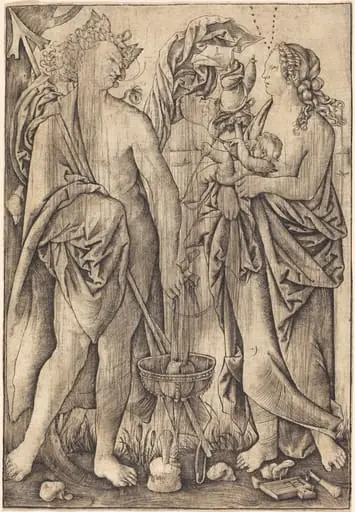 Mars and Venus (Mercury and Venus?)
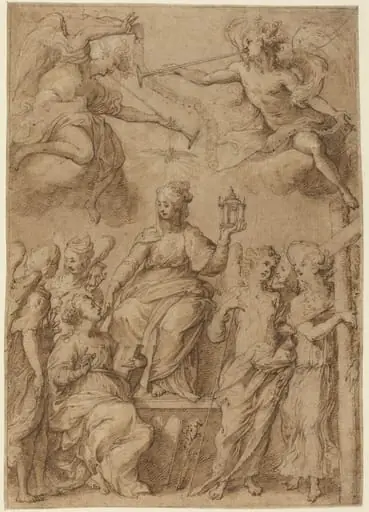 Ecclesia Surrounded by Angels Holding the Instruments of the Passion
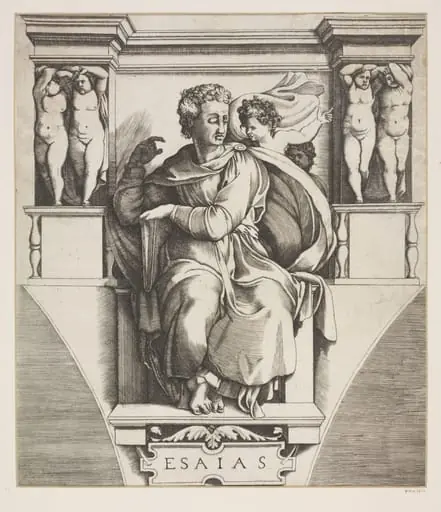 The Prophet Isaiah
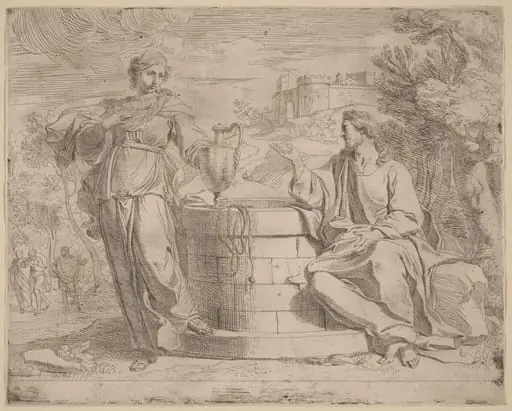 Christ and the Samaritan Woman
 Two Sibyls and an Angel