Artwork
Charity (from the Tarocchi, series B: Cosmic Principles & Virtues, #38)
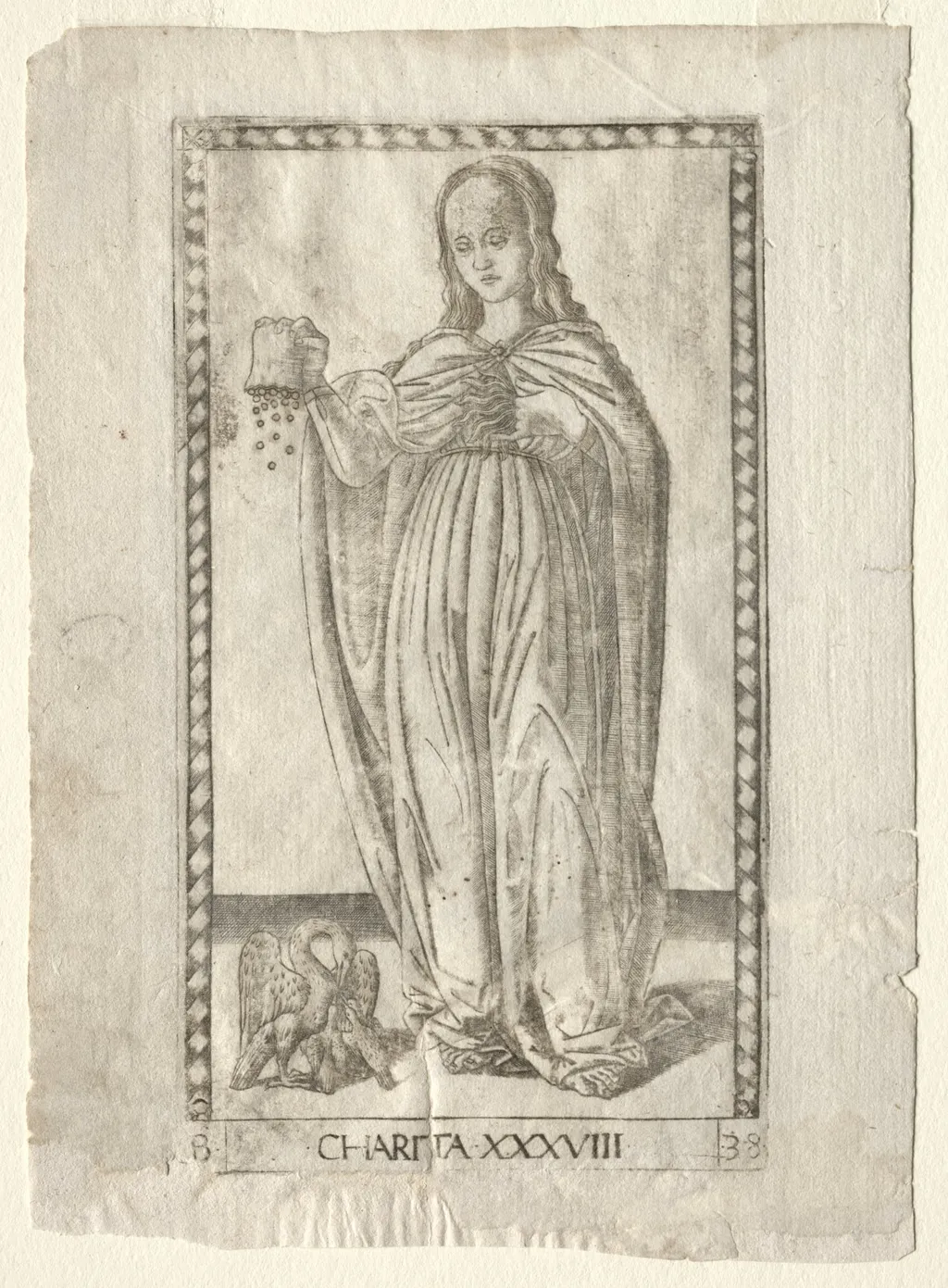
Charity (from the Tarocchi, series B: Cosmic Principles & Virtues, #38) is a print by the Renaissance artist Master of the E-Series Tarocchi. It dates from 1467 and is held in the collection of the Cleveland Museum of Art. This engraving is the third in a series of seven prints titled Cosmic Principles & Virtues, part of a larger group labeled ‘B.
About this work
Overview
The composition integrates Christian symbolism with allegorical representation, positioning the virtue within a framework of cosmic order.
This engraving is the third in a series of seven prints titled Cosmic Principles & Virtues, part of a larger group labeled ‘B.’ It depicts Charity, one of the three theological virtues, alongside Prudence, Temperance, Fortitude, and Justice. The composition integrates Christian symbolism with allegorical representation, positioning the virtue within a framework of cosmic order. The artist employs precise engraving to render subtle tonal contrasts and intricate textures, enhancing the quiet solemnity of the scene.
Subject & Meaning
Charity is portrayed as a woman cradling an infant, with three children gathered at her feet—one pulling her sleeve, another holding a book. Her gesture of offering coins from a purse signifies benevolence toward others, while her open cloak reveals a glowing heart, symbolizing divine love. The pelican at her side, traditionally associated with self-sacrifice, reinforces the theme of giving life through personal loss. Together, these elements merge earthly compassion with spiritual devotion.
Technique & Style
The artist used fine, controlled lines to model form and depth through chiaroscuro, creating a sense of volume without heavy shading. Delicate cross-hatching defines fabric folds, hair, and the pelican’s feathers, while the children’s poses and expressions are rendered with restrained detail. The background remains muted, directing focus to the central figures and their symbolic attributes. The print’s intimacy arises from this careful balance of clarity and subtlety.
History & Provenance
The print belongs to a mid-16th-century series attributed to an anonymous Northern Italian engraver, likely produced for a learned or devotional audience. It was part of a broader humanist interest in aligning classical and Christian virtues with cosmological order. No definitive record of its original commission survives, but its iconography aligns with contemporary moral treatises and emblem books circulating in Renaissance Italy.
Context
During the Renaissance, theological virtues were frequently visualized to reinforce moral instruction, especially amid religious reform movements. Charity’s dual representation—divine love and social generosity—reflected theological debates around grace and good works. The inclusion of the pelican, a symbol drawn from medieval bestiaries, shows the persistence of allegorical traditions even as humanist ideals gained ground in visual culture.
Legacy
This engraving contributed to a lasting visual language for Charity in Northern European art, influencing later depictions in prints and religious paintings. Its synthesis of spiritual symbolism with domestic intimacy offered a model for portraying virtue as both transcendent and accessible. Though not widely reproduced, its iconographic precision ensured its relevance in collections focused on moral allegory and Renaissance printmaking.
Artist & collection
Artist
Master of the E-Series Tarocchi
Master of the E-Series Tarocchi (b. 1400) was an Italian artist.

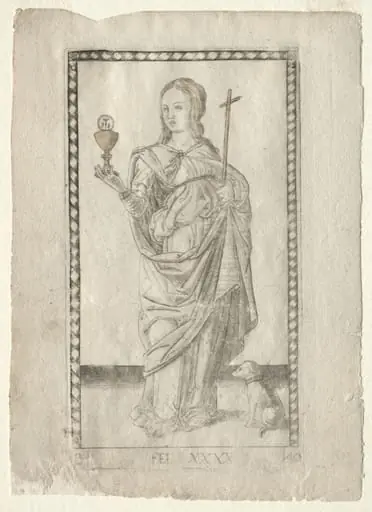 Faith (from the Tarocchi, series B: Cosmic Principles & Virtues, #40)
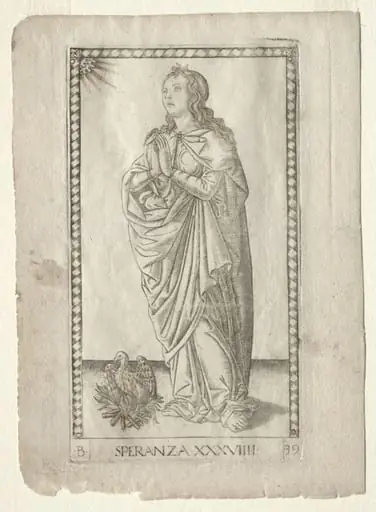 Hope (from the Tarocchi, series B: Cosmic Principles & Virtues, #39)
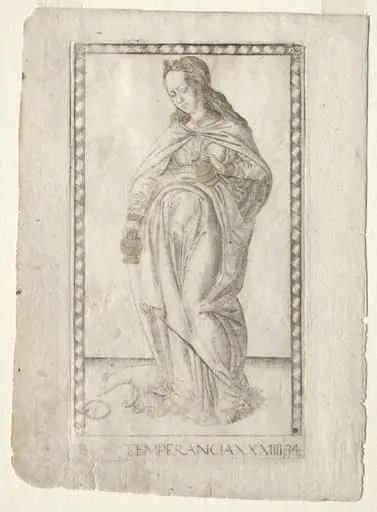 Temperance (from the Tarocchi, Series B: Cosmic Principles & Virtues, #34)
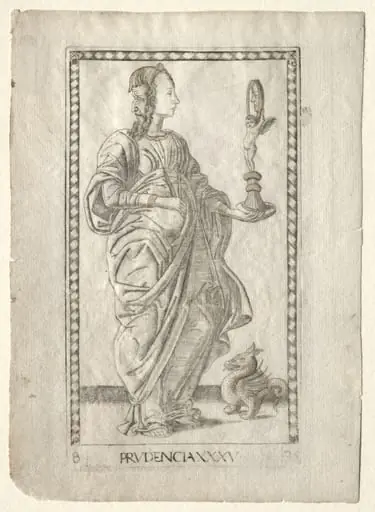 Prudence (from the Tarocchi, series B: Cosmic Principles & Virtues, #35)
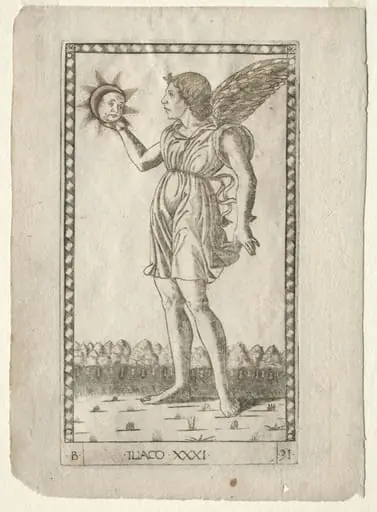 Genius of the Sun (from the Tarocchi, series B: Cosmic Principles & Virtues, #31)
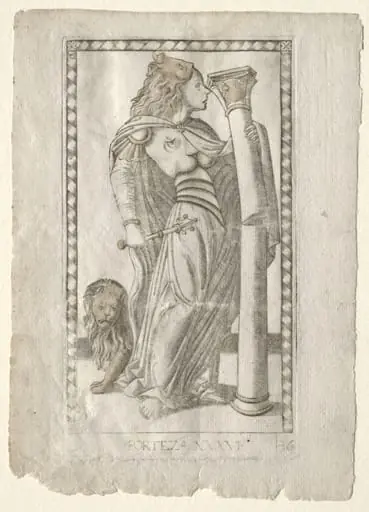 Forteza (from the Tarocchi, series B: Cosmic Principles & Virtues, #36)
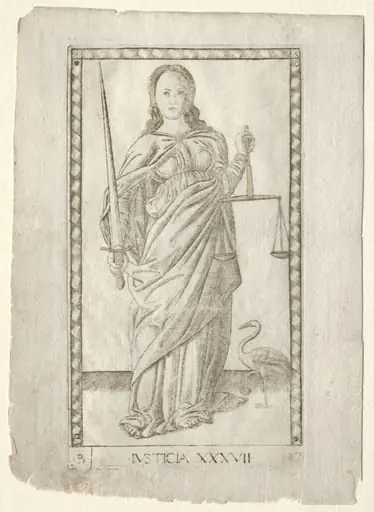 Justice (from the Tarocchi, series B: Cosmic Principles & Virtues, #37)