Artwork
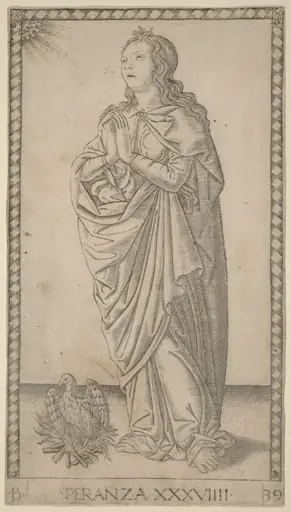
Hope (from the Tarocchi, series B: Cosmic Principles & Virtues, #39)
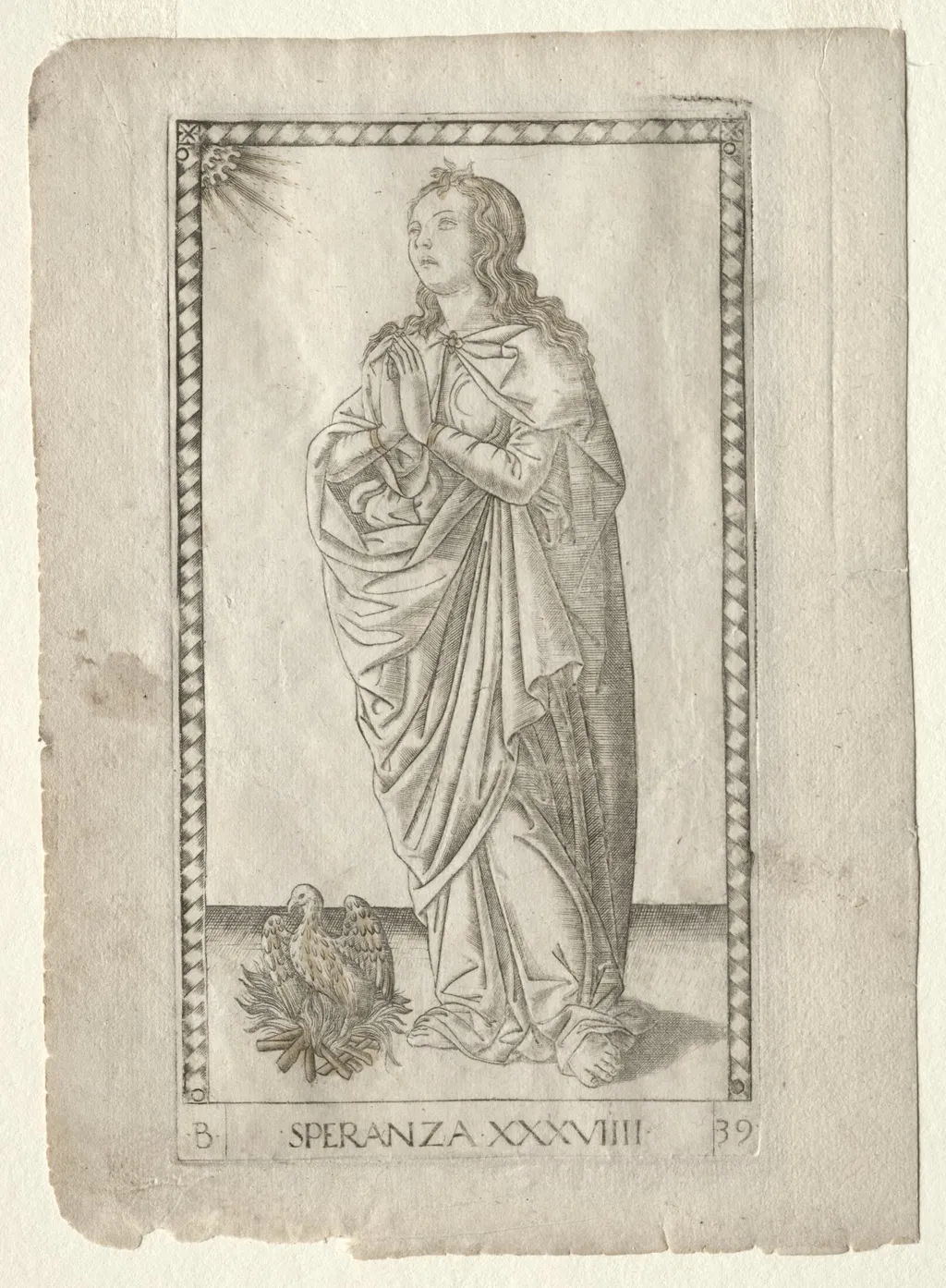
Hope (from the Tarocchi, series B: Cosmic Principles & Virtues, #39) is a print by the Renaissance artist Master of the E-Series Tarocchi. It dates from 1467 and is held in the collection of the Cleveland Museum of Art. This engraving, 'Hope', is part of a series known as the Tarocchi, specifically series B, which explores Cosmic Principles and Virtues.
About this work
You see a woman standing, dressed in flowing robes.
She's holding an anchor, which is a symbol of hope.
This painting is interesting because it's part of a series that personifies virtues like hope and faith.
The series is based on Christian concepts from the Bible.
These concepts were important to people in the 15th century.
Check out the work of the Master of the E-Series Tarocchi.
Overview
This engraving, 'Hope', is part of a series known as the Tarocchi, specifically series B, which explores Cosmic Principles and Virtues. It is one of a set of prints that personify abstract concepts.
Subject & Meaning
The print depicts a female figure representing Hope, shown with an anchor, a symbol associated with the virtue. A phoenix rising from flames is also present, signifying Hope's cyclical renewal. The figure's pose, with hands raised and gaze upwards, conveys a sense of prayer and aspiration towards a heavenly light.
Technique & Style
The work is an engraving, a technique that allows for detailed and intricate designs. The flowing robes and the detailed depiction of the phoenix and anchor suggest a high level of craftsmanship.
Context
The Tarocchi series draws on Christian concepts, including the theological virtues of Faith, Hope, and Charity, which are rooted in the Bible, specifically 1 Corinthians 13:13. These themes were significant in the 15th century, reflecting the period's cultural and religious values.
Artist & collection
Artist
Master of the E-Series Tarocchi
Master of the E-Series Tarocchi (b. 1400) was an Italian artist.

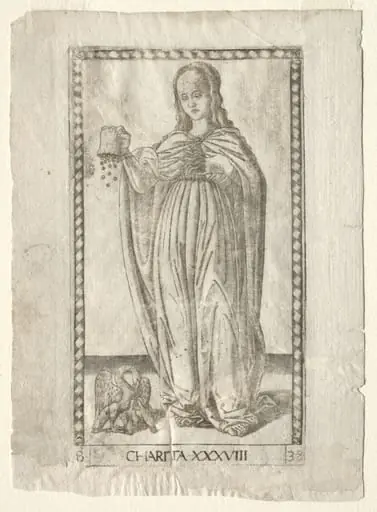 Charity (from the Tarocchi, series B: Cosmic Principles & Virtues, #38)
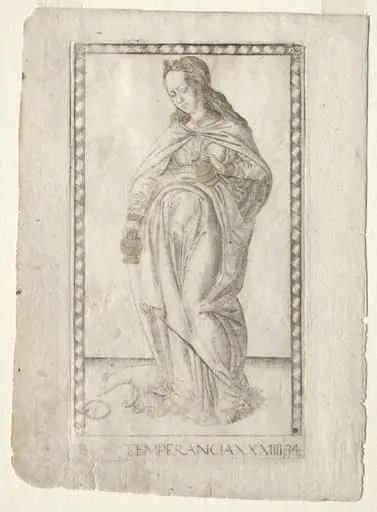 Temperance (from the Tarocchi, Series B: Cosmic Principles & Virtues, #34)
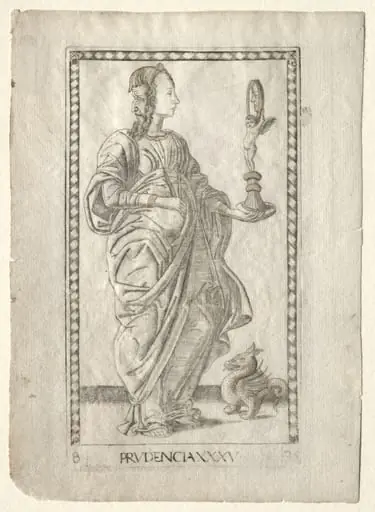 Prudence (from the Tarocchi, series B: Cosmic Principles & Virtues, #35)
 Speranza (Hope)
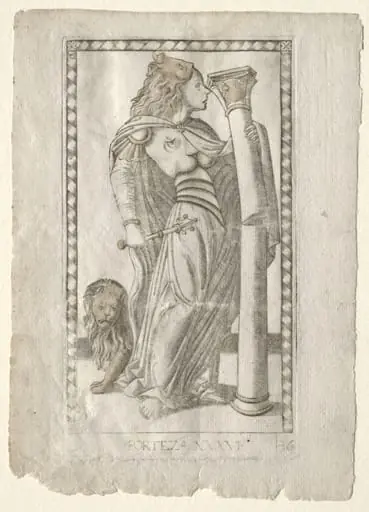 Forteza (from the Tarocchi, series B: Cosmic Principles & Virtues, #36)
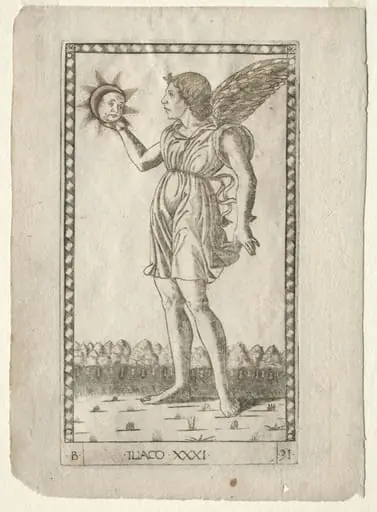 Genius of the Sun (from the Tarocchi, series B: Cosmic Principles & Virtues, #31)
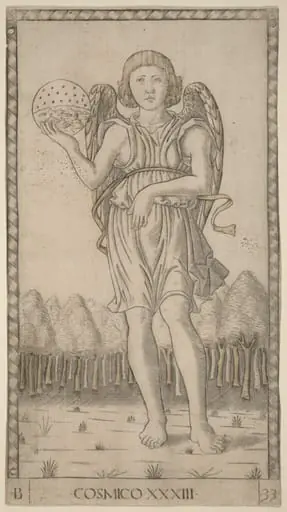
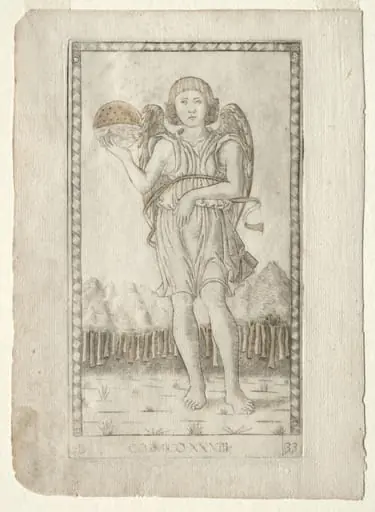 Genius of the World (from the Tarocchi, series B: Cosmic Principles & Virtues, #33)