Artwork
Cavalier Galopant (Galloping Horseman)
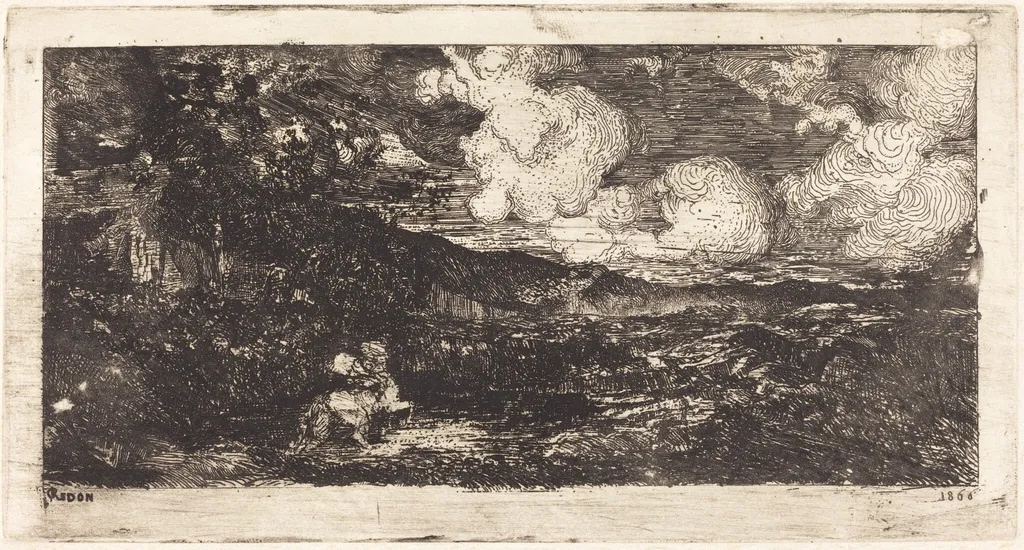
Cavalier Galopant (Galloping Horseman) is an ink print by the Impressionist artist Odilon Redon. It dates from 1866 and is held in the collection of the National Gallery of Art.
About this work
Overview
The medium’s capacity for delicate line work allows for nuanced contrasts between the figure and the surrounding terrain.
Cavalier Galopant is an etching by Odilon Redon, completed in 1866. Unlike his later symbolic works, this early piece reflects a more literal engagement with equestrian imagery. Rendered in fine linear strokes, the print captures a rider in motion across a vast, atmospheric landscape. The medium’s capacity for delicate line work allows for nuanced contrasts between the figure and the surrounding terrain.
Subject & Meaning
The figure is a solitary horseman, leaning forward as his mount surges forward in a gallop. There is no narrative context—no battle, hunt, or destination indicated. The focus lies in the raw energy of motion itself. The rider’s anonymity and the empty horizon suggest introspection or existential movement, themes Redon would later explore more abstractly.
Technique & Style
Redon employed etching to achieve fine gradations of tone and texture. The horse’s musculature and the rider’s cloak are rendered with precise, incised lines, while the background fades into soft, atmospheric washes. The contrast between the sharp foreground and hazy distance enhances the sense of depth, characteristic of 19th-century printmaking traditions.
History & Provenance
Created during Redon’s early career, before his association with Symbolism, this work emerged from his training in academic draftsmanship. It was likely made as an independent print, not part of a published series. Its survival in private and institutional collections attests to its quiet significance in tracing his artistic evolution.
Context
In 1866, Redon was immersed in the realism and romanticism of French landscape and equestrian art, influenced by artists like Delacroix and Daumier. Etching was a common medium for artists seeking to explore tone and movement outside oil painting. This work reflects a transitional phase, before Redon turned toward dreamlike imagery and color.
Legacy
Cavalier Galopant stands as an early indicator of Redon’s enduring interest in motion, solitude, and the sublime. Though not widely exhibited, it informed his later prints, where figures and animals became metaphors rather than literal subjects. The piece remains a quiet bridge between his academic roots and his eventual symbolic vision.
Artist & collection
Artist
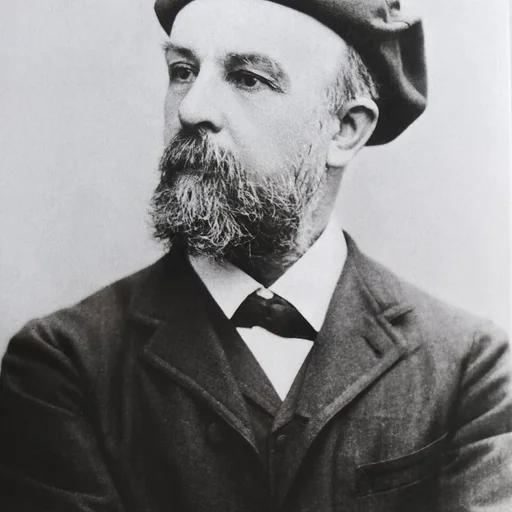
Born Bertrand-Jean Redon on 20 April 1840 in Bordeaux, the artist adopted the name Odilon from his mother, Marie-Odile.

![Landscape [Paesaggio], by Carlo Paolo Agazzi](https://artifactworldgallery.com/img/carlo-paolo-agazzi--landscape-paesaggio--e606f4ada87d2052-w320.webp) Landscape [Paesaggio]
Landscape [Paesaggio]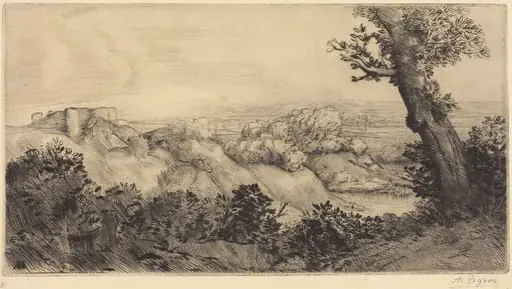 Top of the Hill (Le haut de la colline)
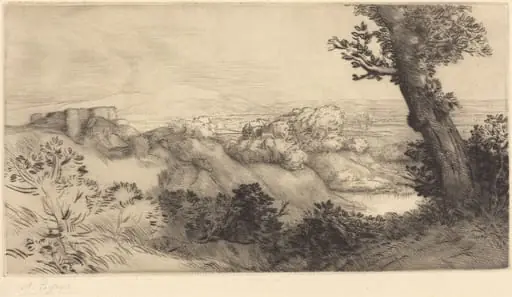 Top of the Hill (Le haut de la colline)
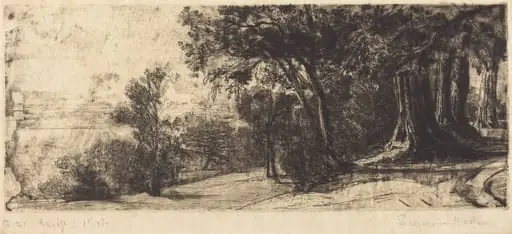 Early Morning - Richmond
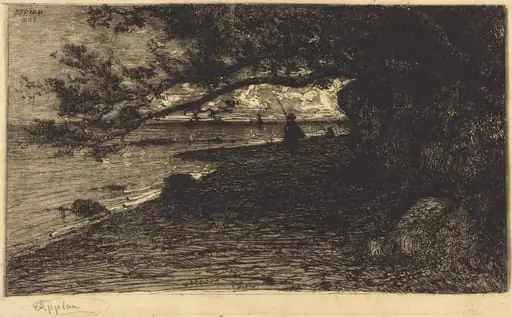 A Villefranche-sur-Mer
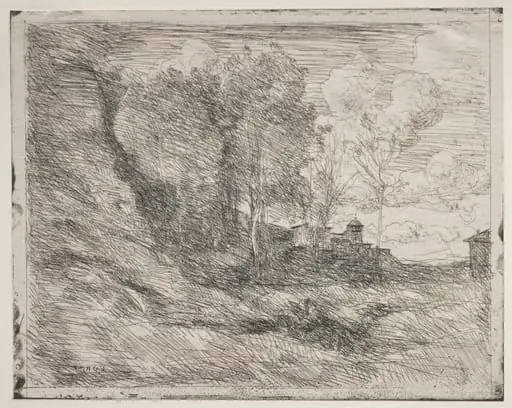 A Souvenir of Ostia
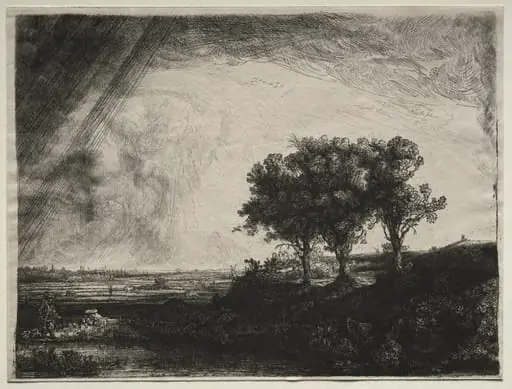 The Three Trees
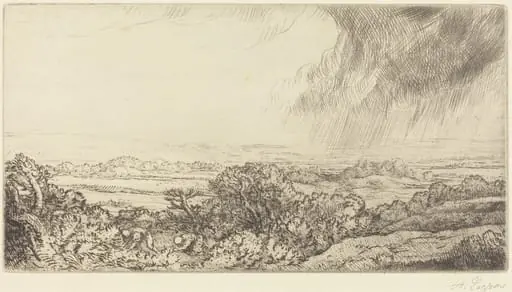 Mushroom Gatherers (Les ramasseurs de champignons)
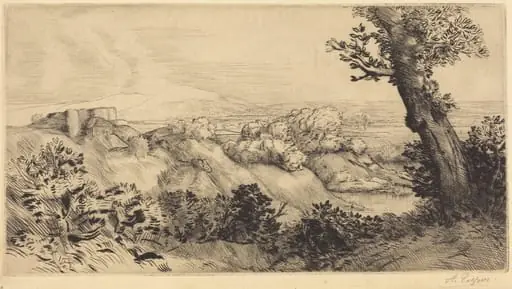 Top of the Hill (Le haut de la colline)
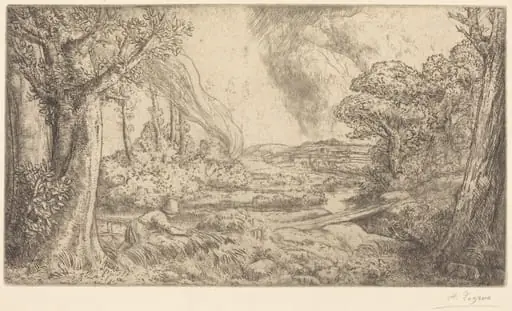 Landscape (Paysage)
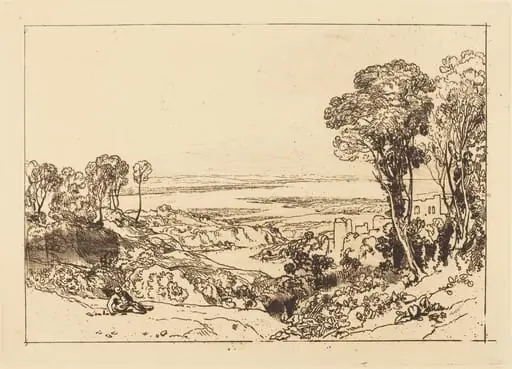 Junction of Severn and Wye
 Valley in Bourgogne (Une vallee en Bourgogne)