Artwork
Williamsburg from the Bridge (Sketch)
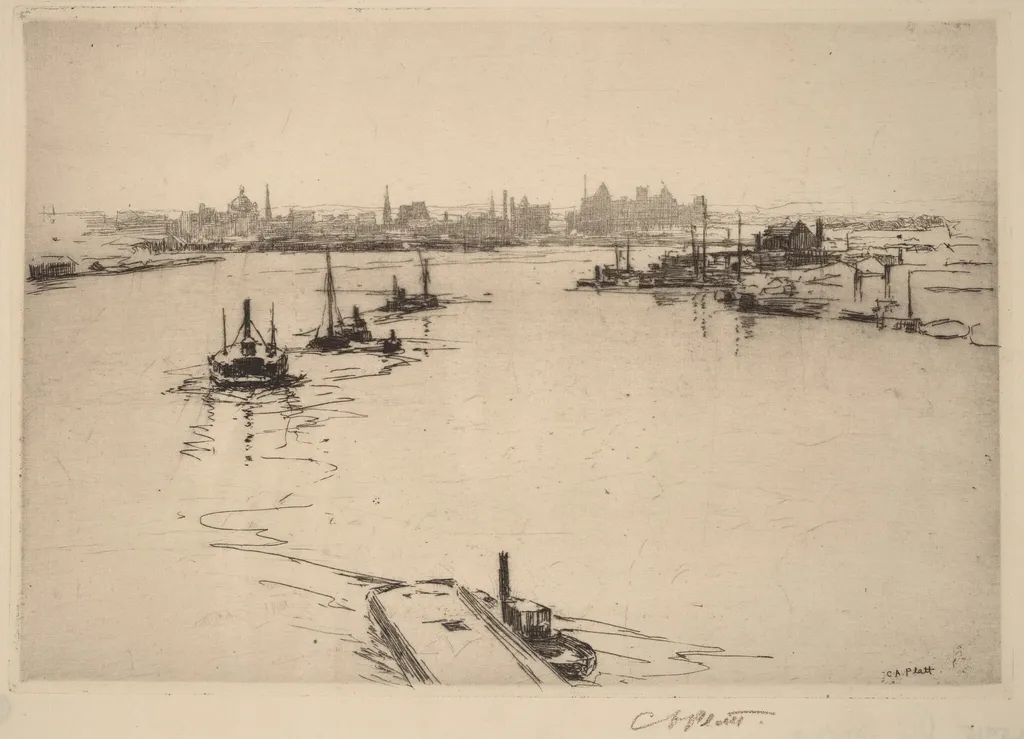
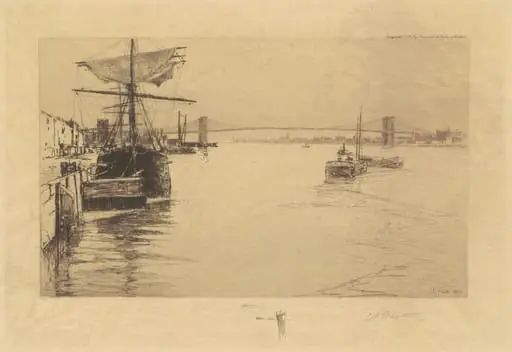
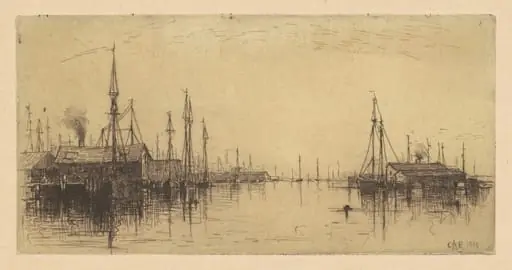
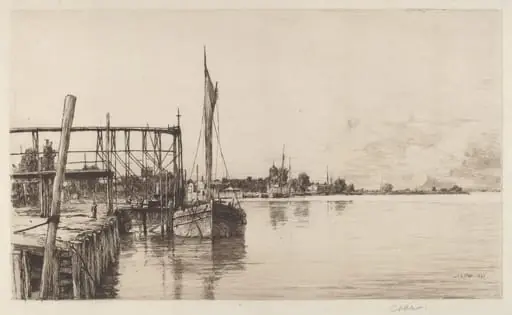
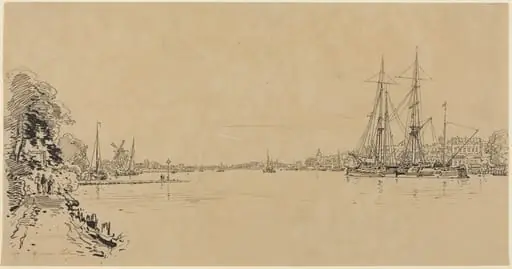
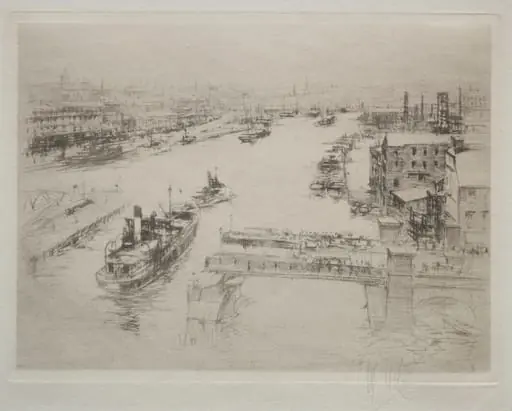
Williamsburg from the Bridge (Sketch) is an ink print by the Impressionist artist Charles A. Platt. It dates from 1889 and is held in the collection of the National Gallery of Art. Charles A.
About this work
Overview
Charles A. Platt created this 1889 etching as a spontaneous study of the Williamsburg skyline viewed from a bridge. The work captures a tranquil riverscape with minimal detail, emphasizing atmosphere over precision. Its small scale and informal composition suggest it was made on-site, likely as a preparatory observation rather than a finished piece for exhibition.
Subject & Meaning
Platt’s focus on the horizon line and distant forms suggests an interest in urban expansion and its quiet integration with natural space.
The scene depicts the Brooklyn waterfront in the late 19th century, with modest buildings and architectural silhouettes—domes and spires—rising along the far shore. The quiet water and sparse boats convey stillness, reflecting a moment of pause in an industrializing landscape. Platt’s focus on the horizon line and distant forms suggests an interest in urban expansion and its quiet integration with natural space.
Technique & Style
Platt employed fine, fluid lines to suggest light and form, using the etching needle to create a sketchlike effect on the metal plate. The marks are deliberate yet rapid, resembling ink drawings, with varying pressure producing subtle tonal shifts. This approach aligns with late 19th-century practices that valued immediacy and expressive line over polished finish, prioritizing observation over detail.
History & Provenance
Created during Platt’s early career, this etching belongs to a series of urban and architectural studies he made while traveling in the northeastern United States. It was likely produced for personal use or as part of his architectural training, reflecting his interest in capturing spatial relationships. No documented exhibition history exists for this specific work, indicating its role as a private study.
Context
In the 1880s, American artists and architects increasingly turned to direct observation of urban and natural environments. Platt, trained as an architect, used etching to explore composition and light in real time. This work reflects a broader trend among his peers to document the changing American landscape through intimate, hand-made prints rather than grand formal renderings.
Legacy
Though not widely exhibited, this etching exemplifies Platt’s commitment to sketching as a tool for architectural understanding. It contributes to a body of work that helped bridge fine art and architectural practice in America. Later generations of architects and printmakers recognized such studies as vital records of place, valued for their honesty and immediacy.
Own this work as a print
Artist & collection