Artwork
Oxford
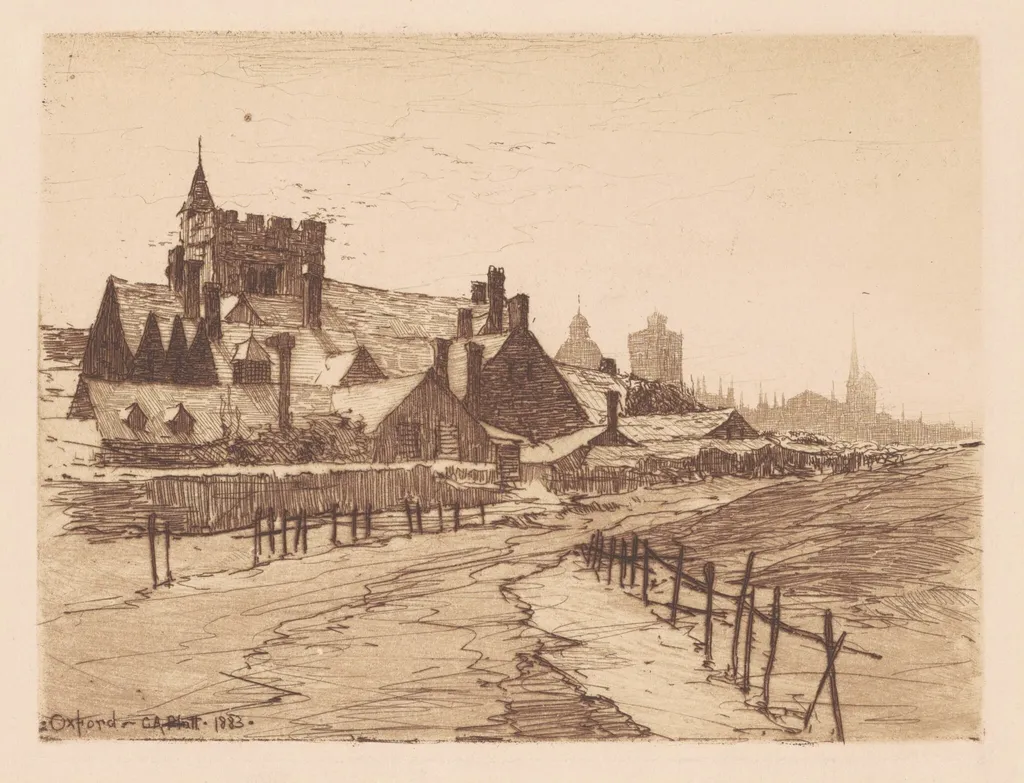
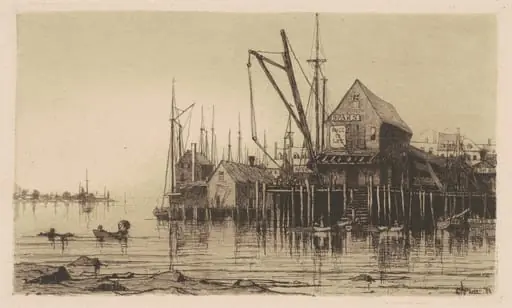
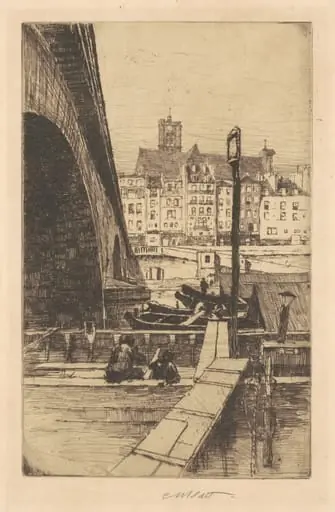
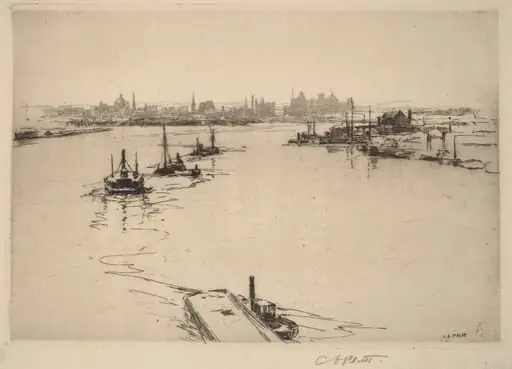
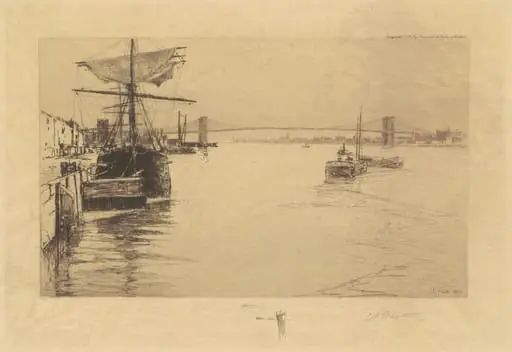
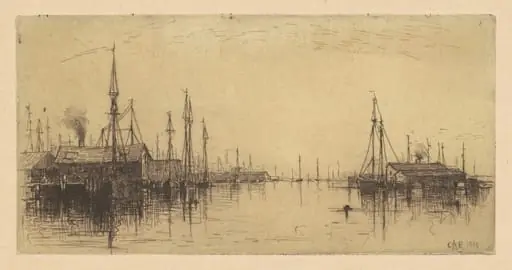
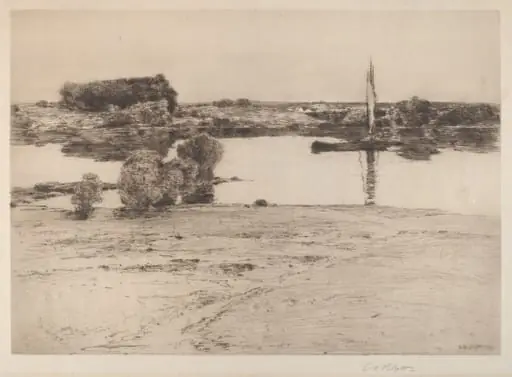
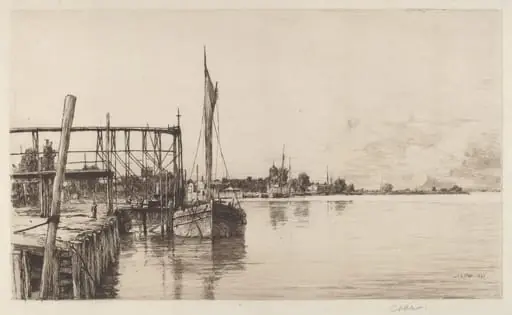
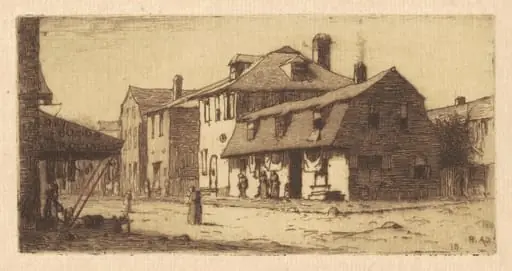
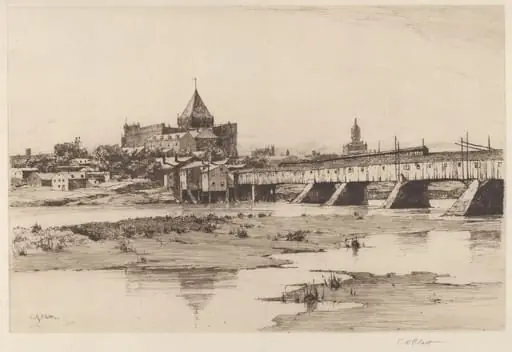
Oxford is an ink print by the Impressionist artist Charles A. Platt. It dates from 1883 and is held in the collection of the National Gallery of Art.
About this work
Overview
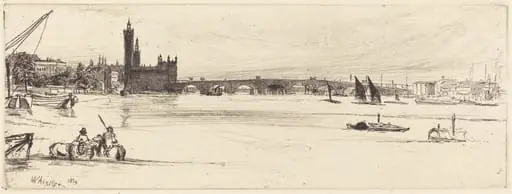
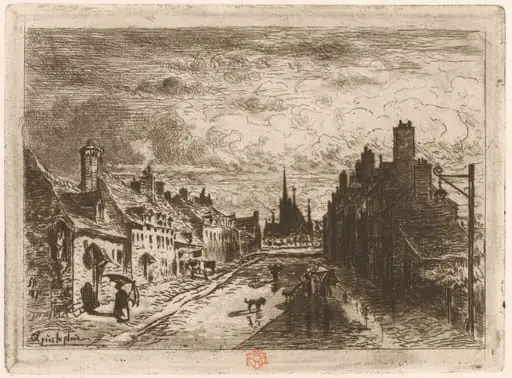
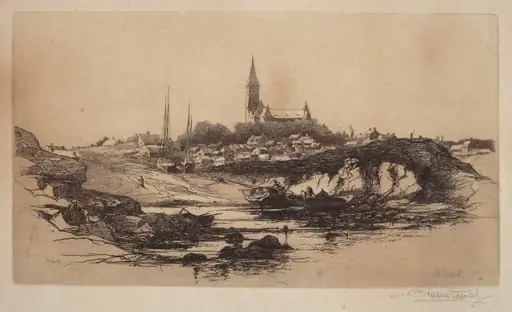
Oxford is an 1883 landscape etching by American architect‑artist Charles A. Platt. Executed on wove paper with a brown ink, the work presents a compact riverbank scene rendered in a single print. Its modest dimensions and monochrome palette give the image a documentary quality, typical of Platt’s early interest in capturing everyday environments.
Subject & Meaning
The composition depicts a quiet stretch of river flanked by a line of modest wooden houses whose steep, snow‑capped roofs suggest a winter setting. A tall church tower rises behind the dwellings, anchoring the view, while a low fence runs along the bank and the water appears swift and turbulent. The scene emphasizes ordinary architecture and the subtle drama of light on snow and water.
Technique & Style
The brown tone and slightly rough paper surface reinforce the impression of a quick study rather than a finished, polished print.
Platt employed the traditional etching process, incising lines into a metal plate and using acid to bite the design, then printing with brown ink onto wove paper. The marks are loose and sketch‑like, favoring rapid, gestural strokes that convey light and shadow rather than precise detail. The brown tone and slightly rough paper surface reinforce the impression of a quick study rather than a finished, polished print.
History & Provenance
Created early in Platt’s artistic career, the print reflects his training in architectural drawing and his interest in topographical subjects. While specific ownership records are limited, the work has been catalogued among Platt’s prints from the 1880s and is occasionally referenced in surveys of American etchers of the period.
Artist & collection