Artwork
Brooklyn Bridge
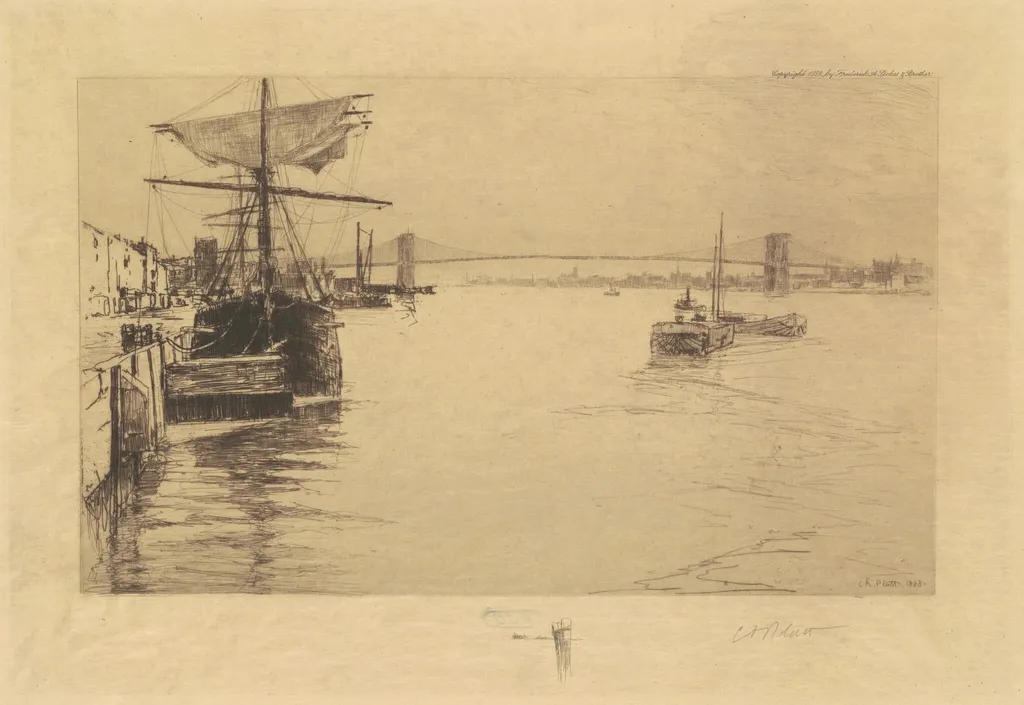
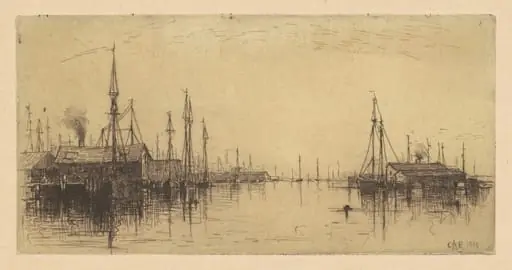
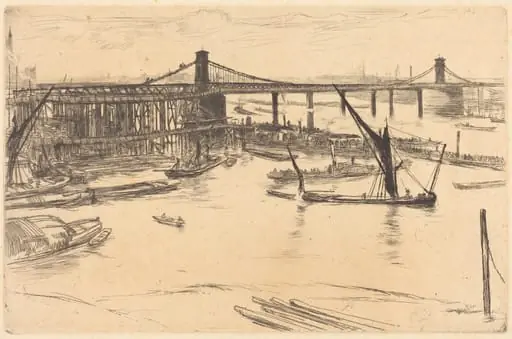
Brooklyn Bridge is an ink print by the Impressionist artist Charles A. Platt. It dates from 1888 and is held in the collection of the National Gallery of Art. Charles A.
About this work
Overview
Platt’s use of fine, expressive lines conveys motion and atmosphere rather than precise detail, emphasizing the transitional character of the urban waterfront.
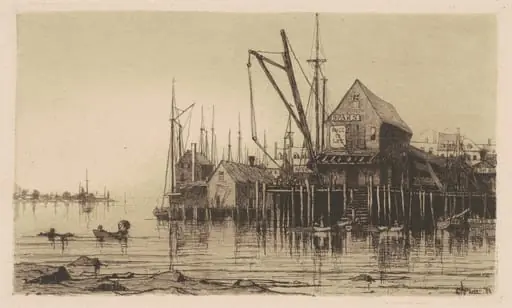
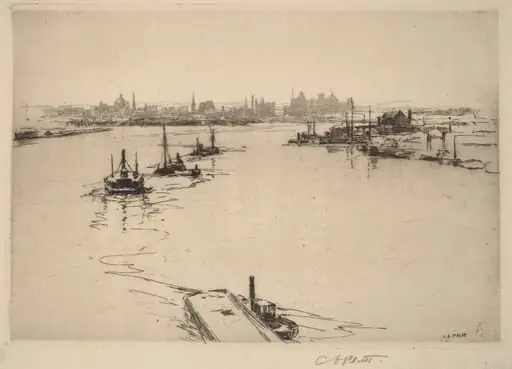
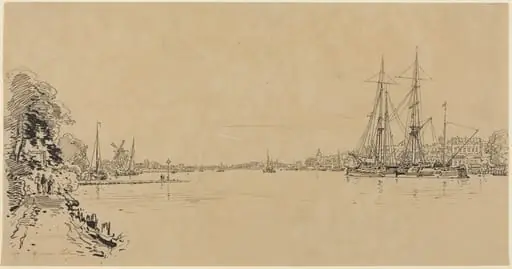
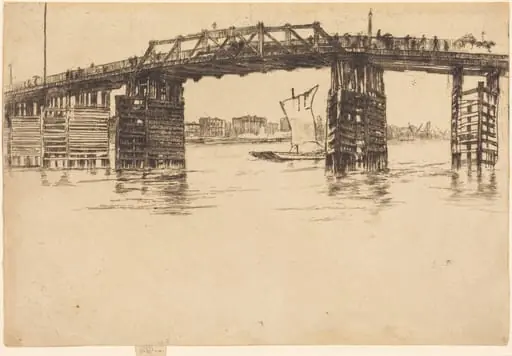
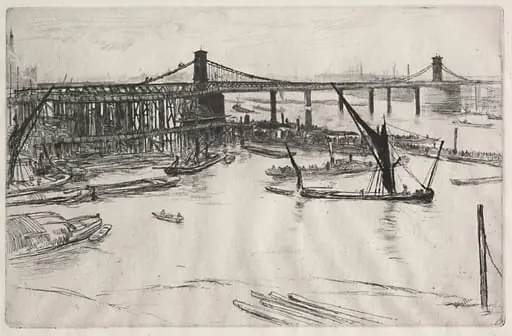
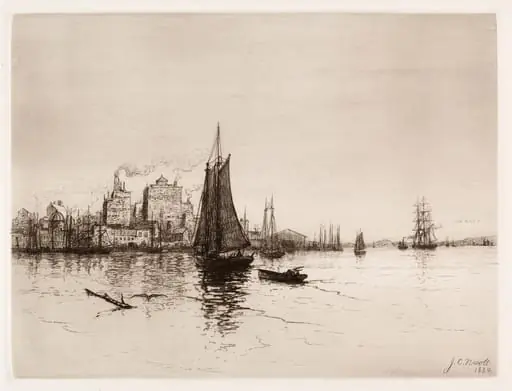
Charles A. Platt created this 1888 etching on wove paper, capturing the Brooklyn Bridge during its early years. The work presents a harbor scene with two vessels—a large sailing ship moored at the dock and a smaller steamboat nearby—set against the bridge’s elongated span. Platt’s use of fine, expressive lines conveys motion and atmosphere rather than precise detail, emphasizing the transitional character of the urban waterfront.
Subject & Meaning
The scene juxtaposes old and new modes of transport: a wind-powered sailing vessel, with tangled rigging, rests beside a steam-powered boat, symbolizing technological change. The bridge, still a relatively new structure, looms as a silent, unifying force across the water. The composition suggests the harbor as a working space, neither idealized nor monumental, but grounded in the rhythms of daily commerce and labor.
Technique & Style
Platt employed etching to achieve delicate tonal variations through acid-bitten lines on a metal plate. His brushwork-like strokes are loose and rapid, suggesting wind, water, and movement without fixed contours. The warm, textured paper enhances the gritty, atmospheric quality of the scene, reinforcing the tactile sense of a bustling, industrial harbor. The print’s intimacy reflects a sketchbook sensibility rather than formal grandeur.
History & Provenance
Created in 1888, just a few years after the bridge’s completion, the etching reflects Platt’s interest in contemporary American infrastructure. It was likely made during his time in New York, where he documented urban and maritime subjects. The work remained in private hands for much of the 20th century before entering institutional collections, where it is now studied as an early example of American printmaking focused on modernization.
Context
In the late 19th century, American artists increasingly turned to industrial and urban themes, moving away from pastoral ideals. Platt’s etching aligns with this shift, capturing the harbor as a site of transition—where sail gave way to steam and the bridge redefined spatial relationships. The work resonates with contemporaneous efforts by painters and printmakers to record the changing face of American cities through direct observation.
Legacy
Platt’s etching stands as a quiet but significant record of Brooklyn Bridge’s early presence in the urban landscape. While not widely exhibited, it contributes to the broader canon of American printmaking that valued nuance over spectacle. Its focus on everyday maritime activity and architectural scale influenced later artists interested in the poetic potential of industrial subjects.
Artist & collection