Artwork
Saints Peter and Paul under a Canopy
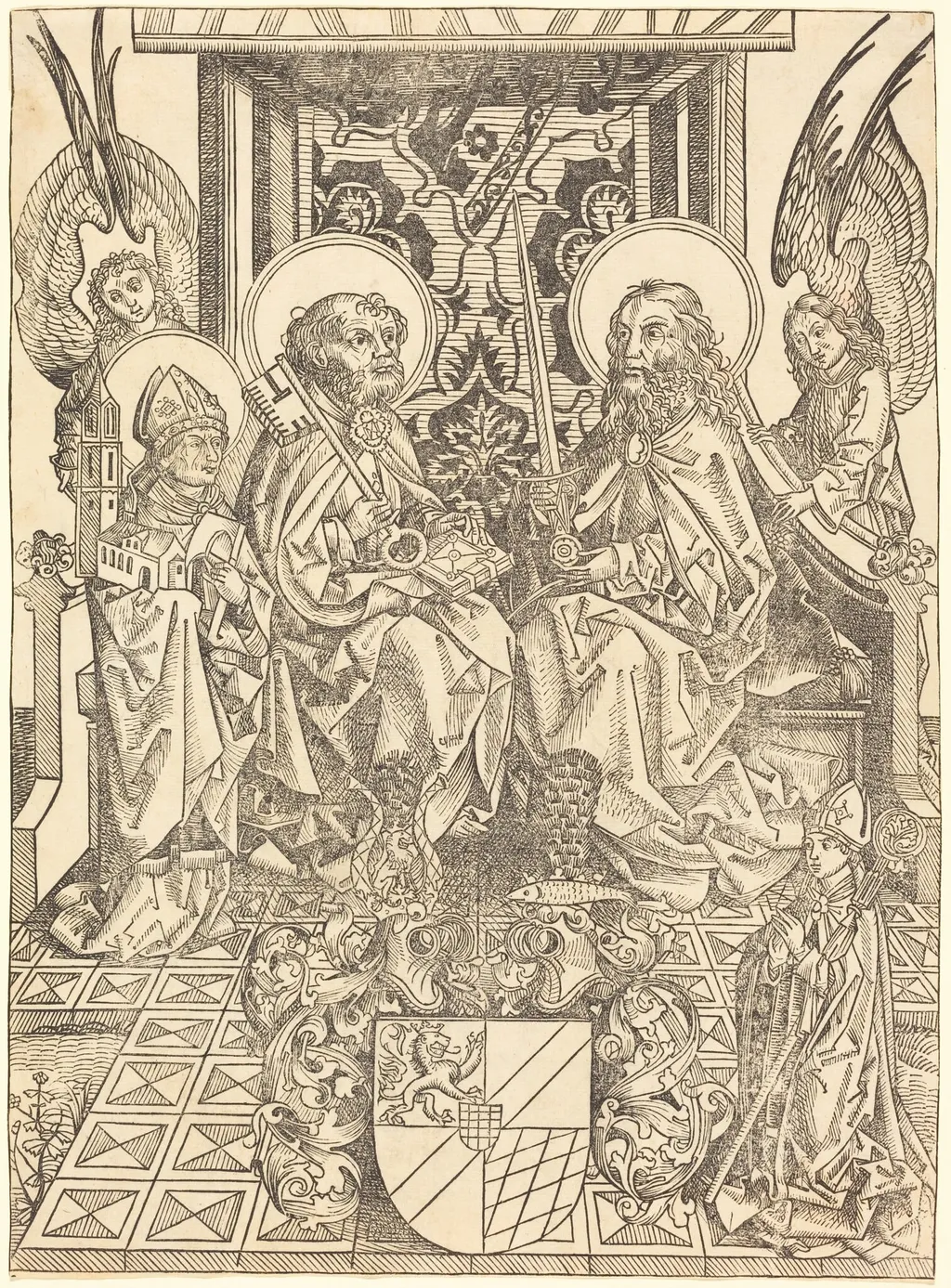
Saints Peter and Paul under a Canopy is an ink print by the Renaissance artist Wilhelm Pleydenwurff. It dates from 1476 and is held in the collection of the National Gallery of Art.
About this work
Overview
Created in 1476 by Wilhelm Pleydenwurff, this woodcut portrays Saints Peter and Paul beneath a richly detailed architectural canopy.
Created in 1476 by Wilhelm Pleydenwurff, this woodcut portrays Saints Peter and Paul beneath a richly detailed architectural canopy. As a print made from carved wooden blocks, the work reflects the technical precision of late medieval German printmaking. The composition centers the two apostles in solemn repose, framed by hovering angels, emphasizing their spiritual authority through structured symmetry and decorative elements.
Subject & Meaning
Saints Peter and Paul are depicted with traditional iconographic attributes: Peter holds the keys to heaven, symbolizing his role as the foundation of the Church, while Paul bears a sword, representing his martyrdom and the power of divine truth. Surrounding angels, one holding a book, reinforce the sacredness of the scene. The canopy suggests heavenly protection, positioning the saints as intermediaries between the divine and the faithful.
Technique & Style
Executed in woodcut, the image relies on bold, incised lines to define forms and textures. The robes of the saints feature finely carved patterns, and the canopy’s arches are rendered with rhythmic repetition, showcasing the artist’s command of linear detail. The style blends late Gothic intricacy with early Renaissance spatial awareness, where figures are arranged with deliberate balance rather than naturalistic depth.
History & Provenance
The woodcut originates from Nuremberg, a center of early print production in the late 15th century. Pleydenwurff, active in the region, collaborated with publishers to disseminate religious imagery. While the original print run is undocumented, surviving impressions suggest it was used for private devotion or liturgical instruction, reflecting the growing demand for affordable sacred art in pre-Reformation Germany.
Context
In the decades before the Reformation, devotional prints like this served as accessible tools for spiritual reflection. The emphasis on apostolic authority aligned with Church teachings reinforcing hierarchical structure. Pleydenwurff’s work responds to a broader trend of combining textual piety with visual symbolism, bridging the gap between manuscript illumination and mass-produced imagery.
Legacy
This woodcut exemplifies the transition from medieval to early Renaissance print culture in Northern Europe. Though Pleydenwurff’s name faded after his death, his technical approach influenced later artists like Dürer. Surviving copies in institutional collections preserve its role as a quiet but significant artifact of devotional practice in the decades preceding major religious upheaval.
Artist & collection


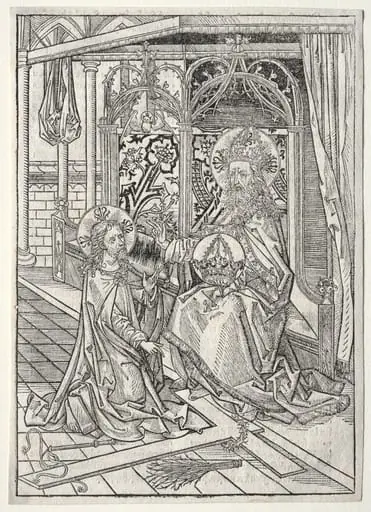 Der Schatzbehalter: The Trinity
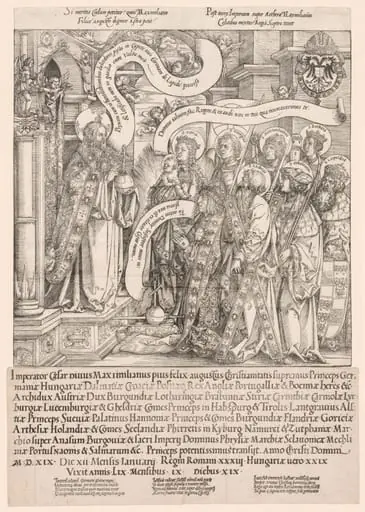 Maximilian Presented by His Patron Saints to the Almighty
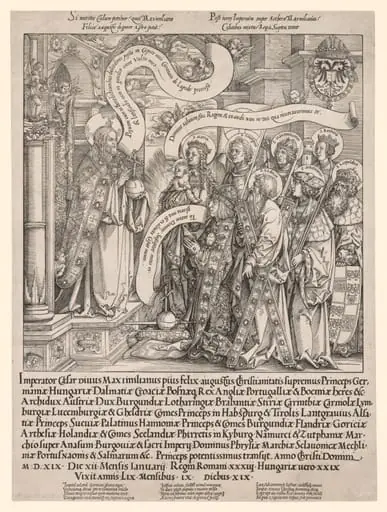 The Emperor Maximilian Presented by His Patron Saints to the Almighty
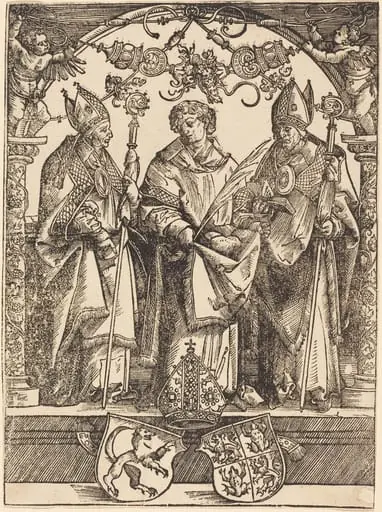 Saints Maximilian, Stephen, and Valentine
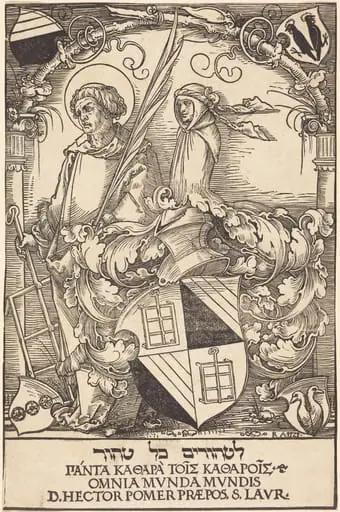 Coat of Arms of Hector Pömer
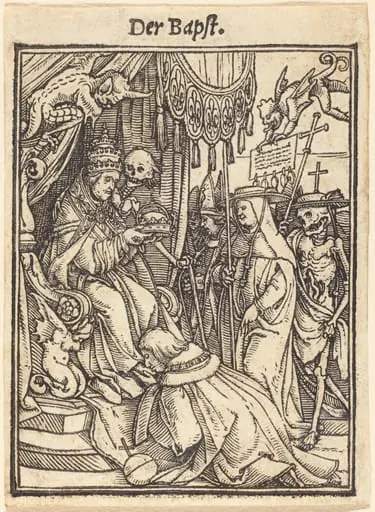 Der Bapst (The Pope)
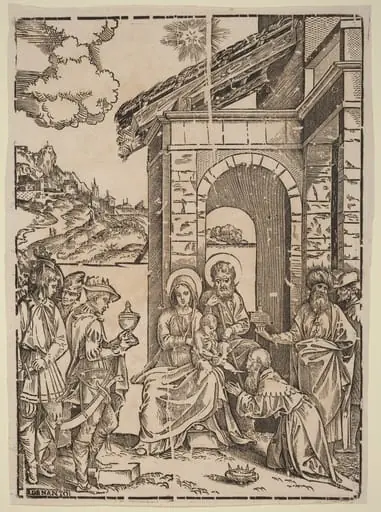 The Adoration of the Magi
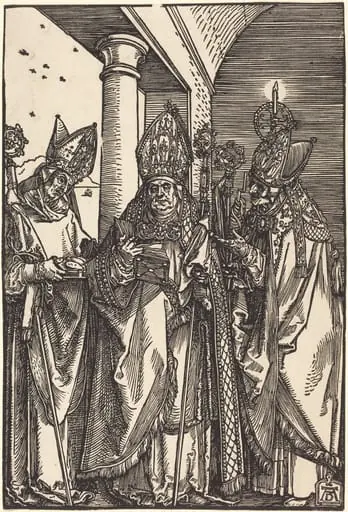 Saints Nicholas, Ulrich, and Erasmus
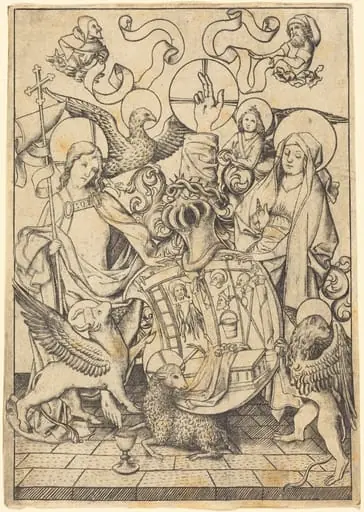 Coat of Arms of the Passion
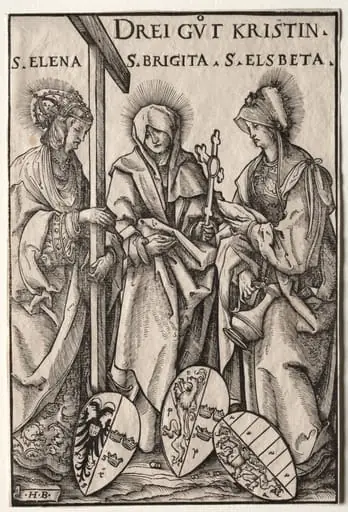 The Three Christian Heroines: Saints Helen, Bridget and Elizabeth
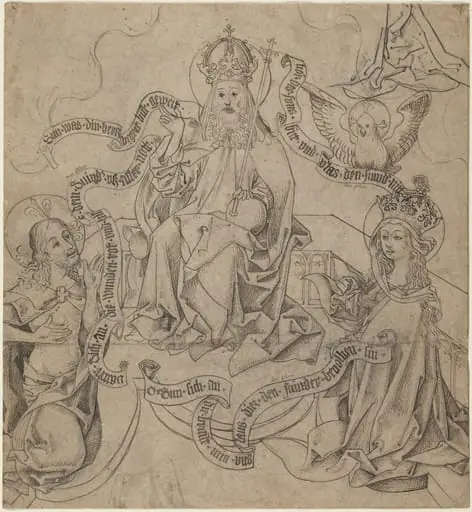 Christ and Mary Interceding with God the Father
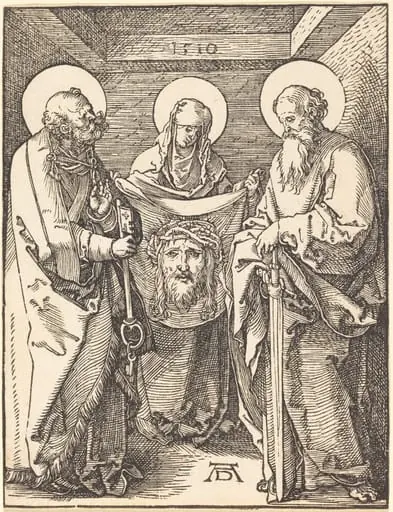 Saint Veronica between Saints Peter and Paul