Artwork
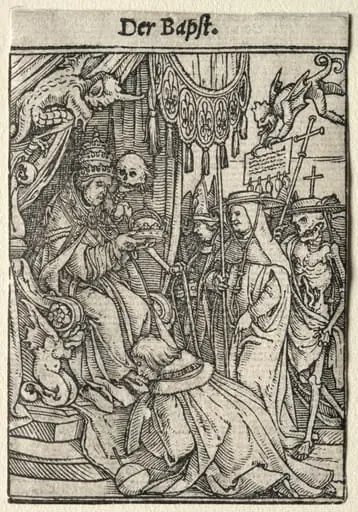
Der Bapst (The Pope)
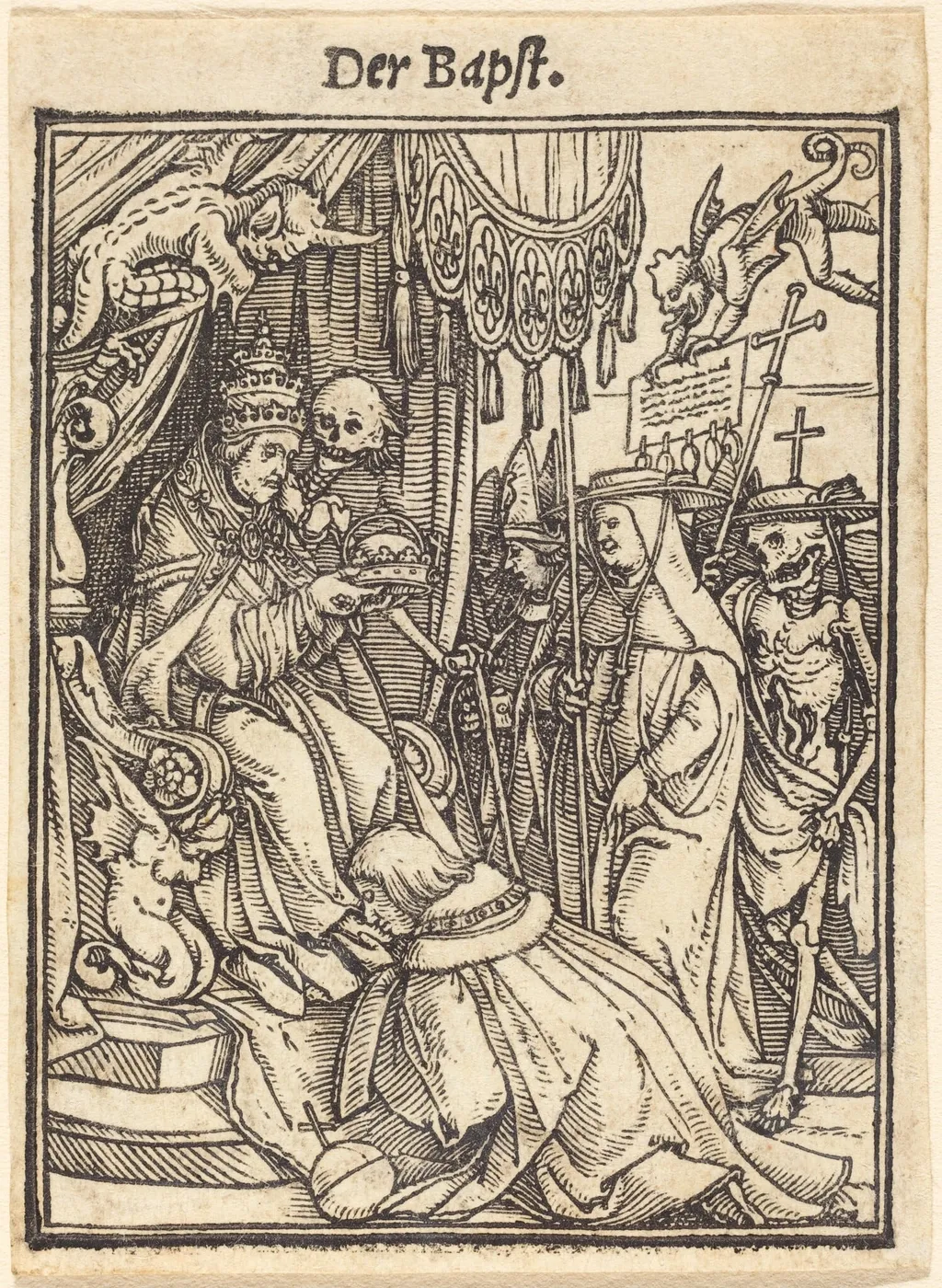
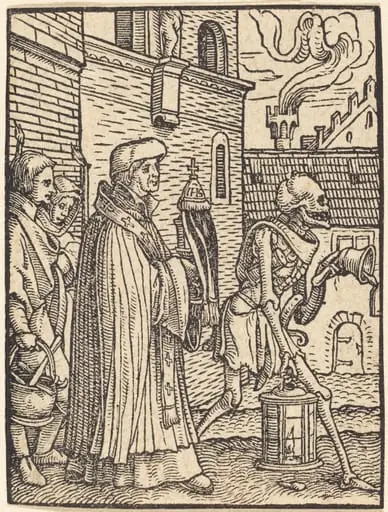
Der Bapst (The Pope) is an ink print by the Renaissance artist Hans Lützelburger. It dates from 1526 and is held in the collection of the National Gallery of Art.
About this work
Overview
The print was left incomplete at Lützelburger’s death in 1526, part of a larger project that remained unfinshed.
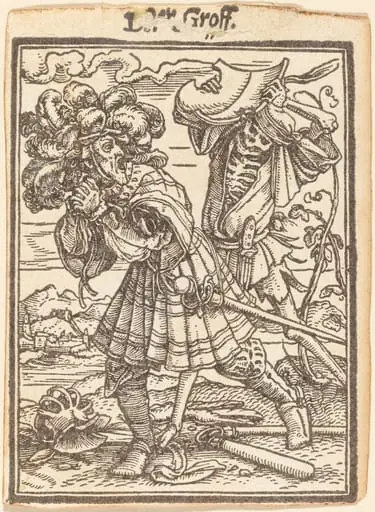
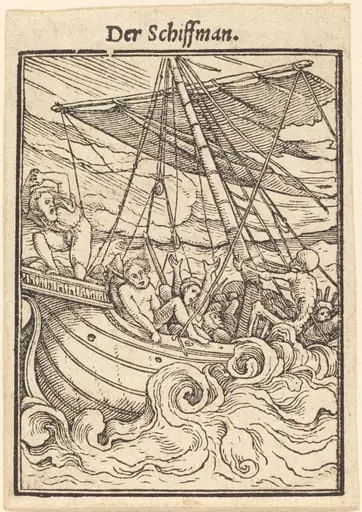
Der Bapst (The Pope) is a black-and-white woodcut from a series illustrating the Dance of Death, executed by Hans Lützelburger, a skilled blockcutter in Augsburg. Though Lützelburger carved the woodblock, the composition was designed by Hans Holbein the Younger. The print was left incomplete at Lützelburger’s death in 1526, part of a larger project that remained unfinshed. Its small scale and intricate detail reflect the precision expected in early 16th-century printmaking.
Subject & Meaning
The image centers on the pope, clutching a skull, surrounded by figures in ecclesiastical and royal attire—some holding crosses, scrolls, or crowns. Their postures suggest tension or accusation, implying a critique of clerical authority. The skull, a traditional memento mori, underscores the inevitability of death, even for the highest religious figure. The crowded composition and swirling background amplify a sense of moral chaos, questioning the permanence of earthly power.
Technique & Style
Lützelburger employed fine, controlled lines typical of high-quality woodcut carving, achieving remarkable detail in small format. The dense arrangement of figures and background patterns relies on contrasting black and white areas to create depth and movement. The style is linear and expressive, with minimal shading, emphasizing contour and symbolic gesture over naturalism. This technique allowed mass reproduction, aligning with the Reformation-era demand for accessible visual narratives.
History & Provenance
The woodcut was produced between 1524 and 1526 as part of Holbein’s Dance of Death series, commissioned for publication. Lützelburger, renowned for his craftsmanship, was responsible for cutting the blocks but died before completing the set. The unfinished state of Der Bapst and other plates reflects the abrupt halt to the project. Surviving impressions were later printed from the original blocks, preserving the design despite the interruption.
Context
Created during the early Reformation, the image responds to widespread criticism of papal authority and ecclesiastical wealth. Holbein’s series, though not overtly polemical, aligned with reformist sentiments by depicting death as the great equalizer. The pope’s isolation amid accusatory figures and the presence of symbols like the crown and scroll suggest a commentary on the corruption of spiritual and temporal power in the face of mortality.
Legacy
Though incomplete, Lützelburger’s contribution to Holbein’s Dance of Death series influenced later satirical and moralizing print cycles. His technical precision set a standard for woodcut craftsmanship in Northern Europe. The series, including Der Bapst, became a reference point for visual critiques of religious authority, circulating widely and contributing to the visual language of Protestant reform.
Artist & collection

Artist
Hans Lützelburger (died June 1526), also known as Hans Franck, was a German blockcutter ("formschneider") for woodcuts, regarded as one of the finest of his day.

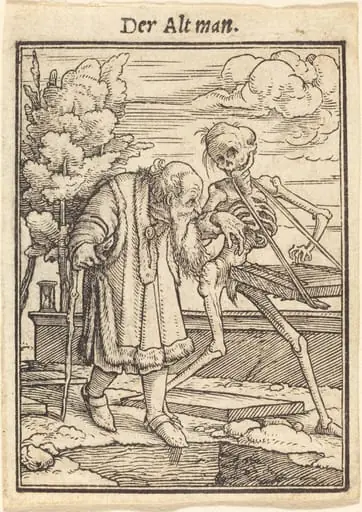
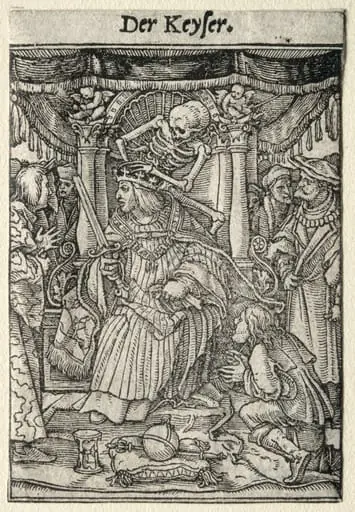 Dance of Death: The Emperor
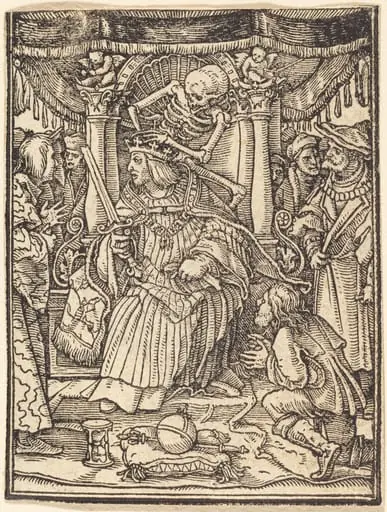 The Emperor
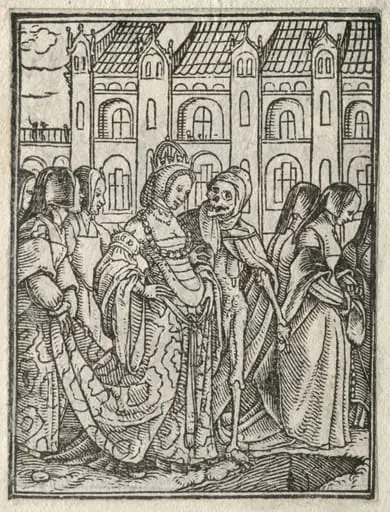 The Dance of Death: The Cardinal; The Empress
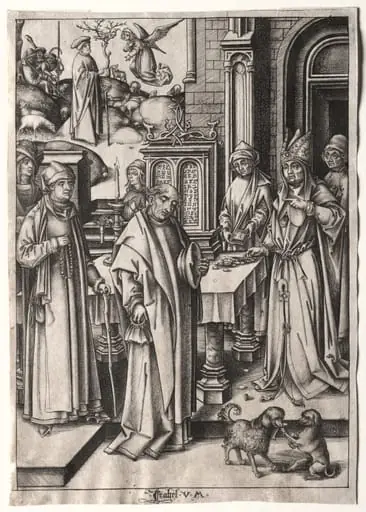 Life of the Virgin: High Priest Rejecting the Offering of Joachim
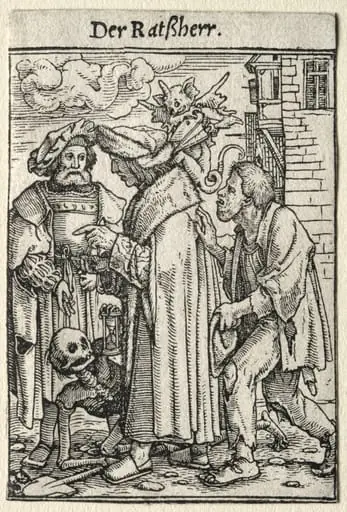 Dance of Death: The Councillor
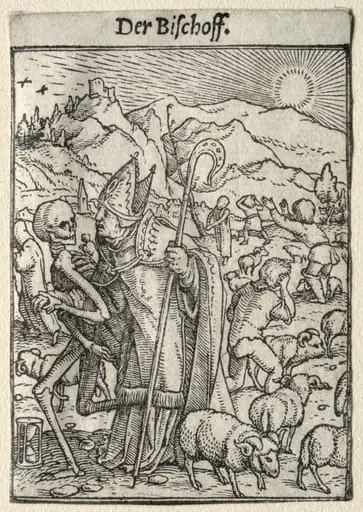 Dance of Death: The Bishop
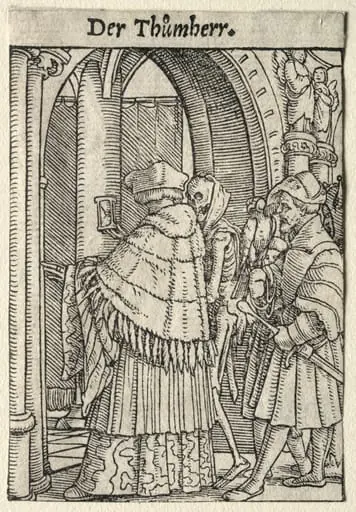 Dance of Death: The Canon
 Der Schatzbehalter: The Trinity
 The Duke
 Saints Nicholas, Ulrich, and Erasmus
 Dance of Death: The Pope
 The Parish Priest