Artwork
The Death of the Blessed Buonagiunta Manetti
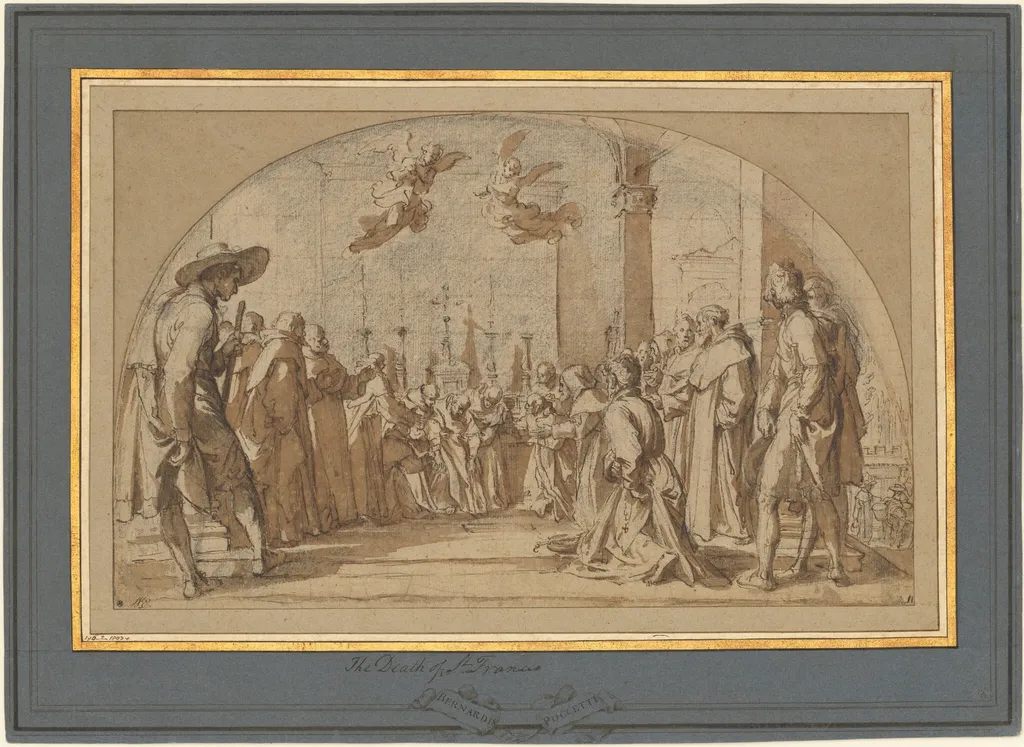
The Death of the Blessed Buonagiunta Manetti is a chalk drawing by the Baroque artist Bernardino Poccetti. It dates from 1612 and is held in the collection of the National Gallery of Art.
About this work
Overview
Created circa 1612, this drawing by Italian artist Bernardino Poccetti records the moment of death of the Blessed Buonagiunta Manetti, a Franciscan tertiary. Executed on light brown laid paper, the work combines pen, brown ink, a brown wash, and black chalk, with a preparatory red‑chalk grid for transferring the composition.
Subject & Meaning
The composition centers on a lifeless figure on the ground, surrounded by a multitude of mourners—some kneeling, others standing, a few clutching candles or crosses. Above, ethereal angels observe the scene, underscoring the spiritual significance of the saint’s passing.
Technique & Style
Poccetti employs a rapid, sketch‑like line quality, layering cross‑hatching to model volume and create depth. The brown wash over black chalk adds tonal variation, while the red‑chalk squares indicate a careful transfer method. The crowded arrangement and dynamic gestures reflect his Mannerist sensibility.
History & Provenance
Bernardino Poccetti, also known as Barbatelli, was active during the late Renaissance, producing both paintings and prints. This drawing, a preparatory or devotional study, has remained associated with his oeuvre and is documented as part of collections that focus on early 17th‑century Italian drawing.
Context
Buonagiunta Manetti, venerated as a blessed figure within the Franciscan tradition, was celebrated for his piety. Depicting his death aligns with contemporary Counter‑Reformation interests in saintly exemplars, and the inclusion of angels reflects the period’s emphasis on divine intercession.
Artist & collection
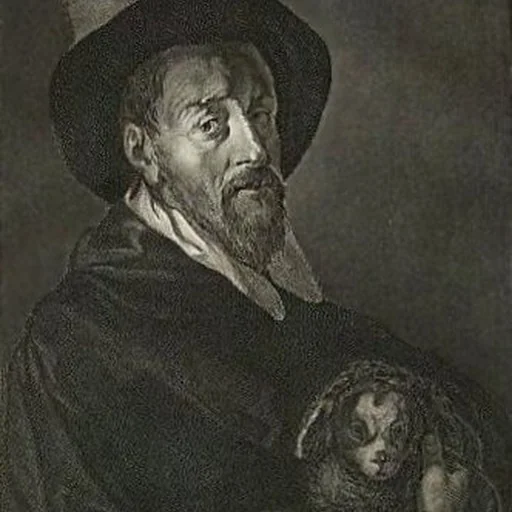
Artist
Bernardino Poccetti (26 August 1548 – 10 October 1612), also known as Barbatelli, was an Italian Mannerist painter and printmaker of etchings.

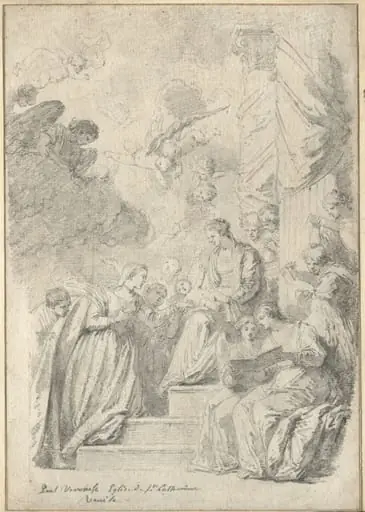 The Mystic Marriage of Saint Catherine
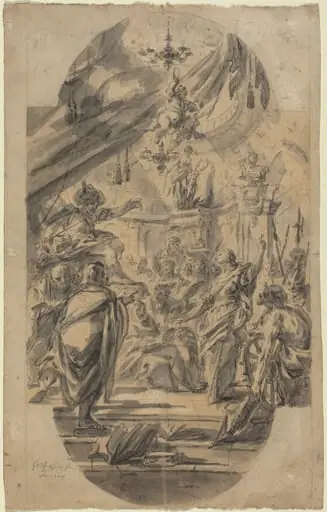 The Disputation of Saint Catherine of Alexandria
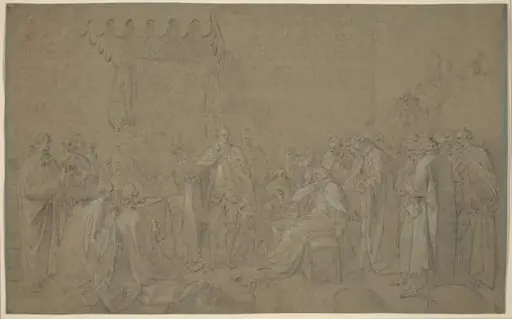 Study for "The Death of the Earl of Chatham"
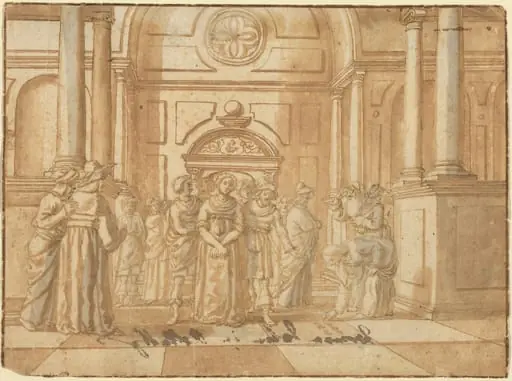 Christ and the Woman Taken in Adultery
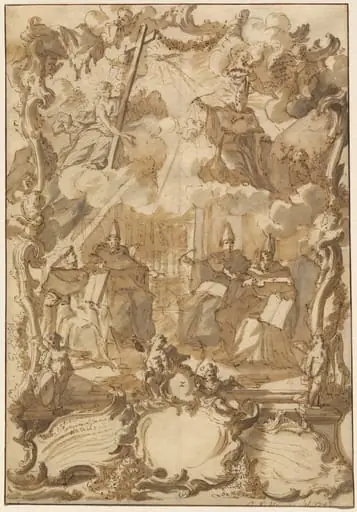 A Thesis Design with Doctors of the Church
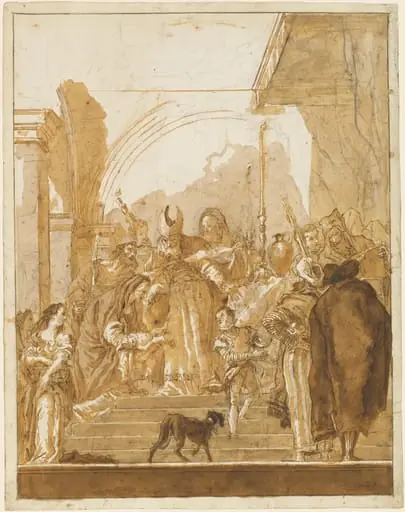 The Presentation in the Temple
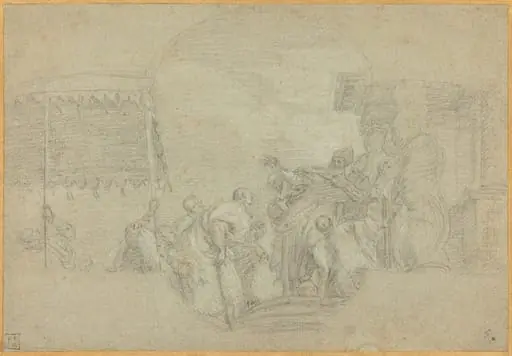 A Bishop Blessing a King
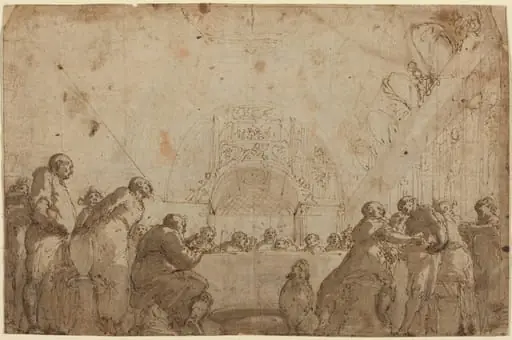 The Last Supper
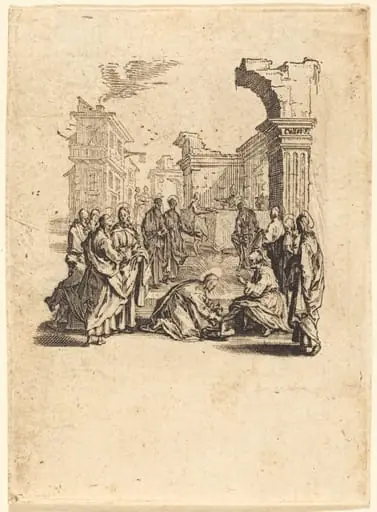 Christ Washing the Feet of the Apostles
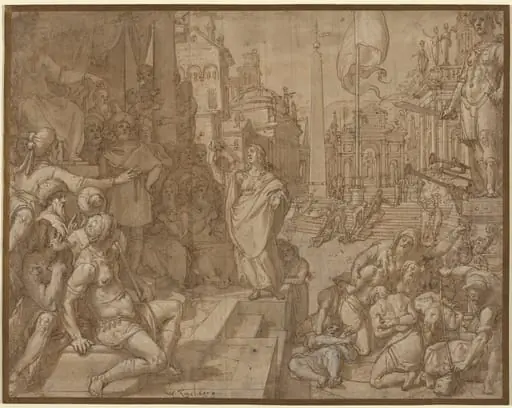 Disputation of Saint Catherine of Alexandria
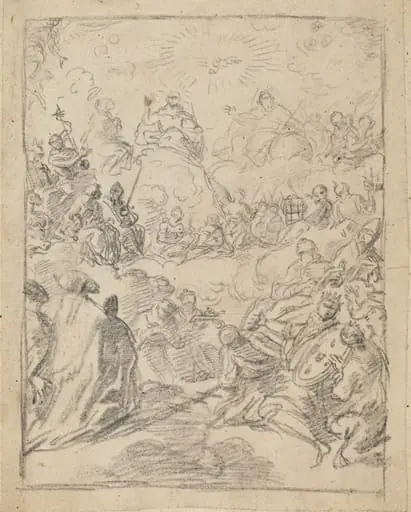 The Triumph of the Trinity (The Gloria)
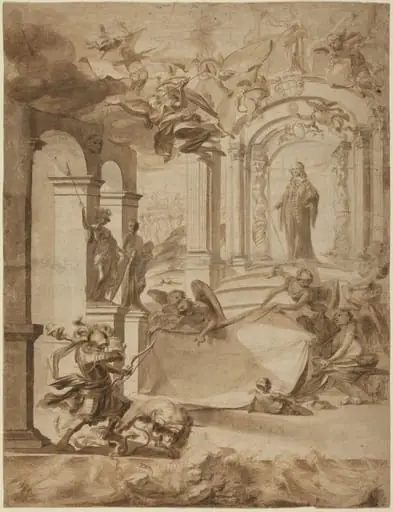 Allegory in Honor of a Gentleman