Artwork
The Crucifixion
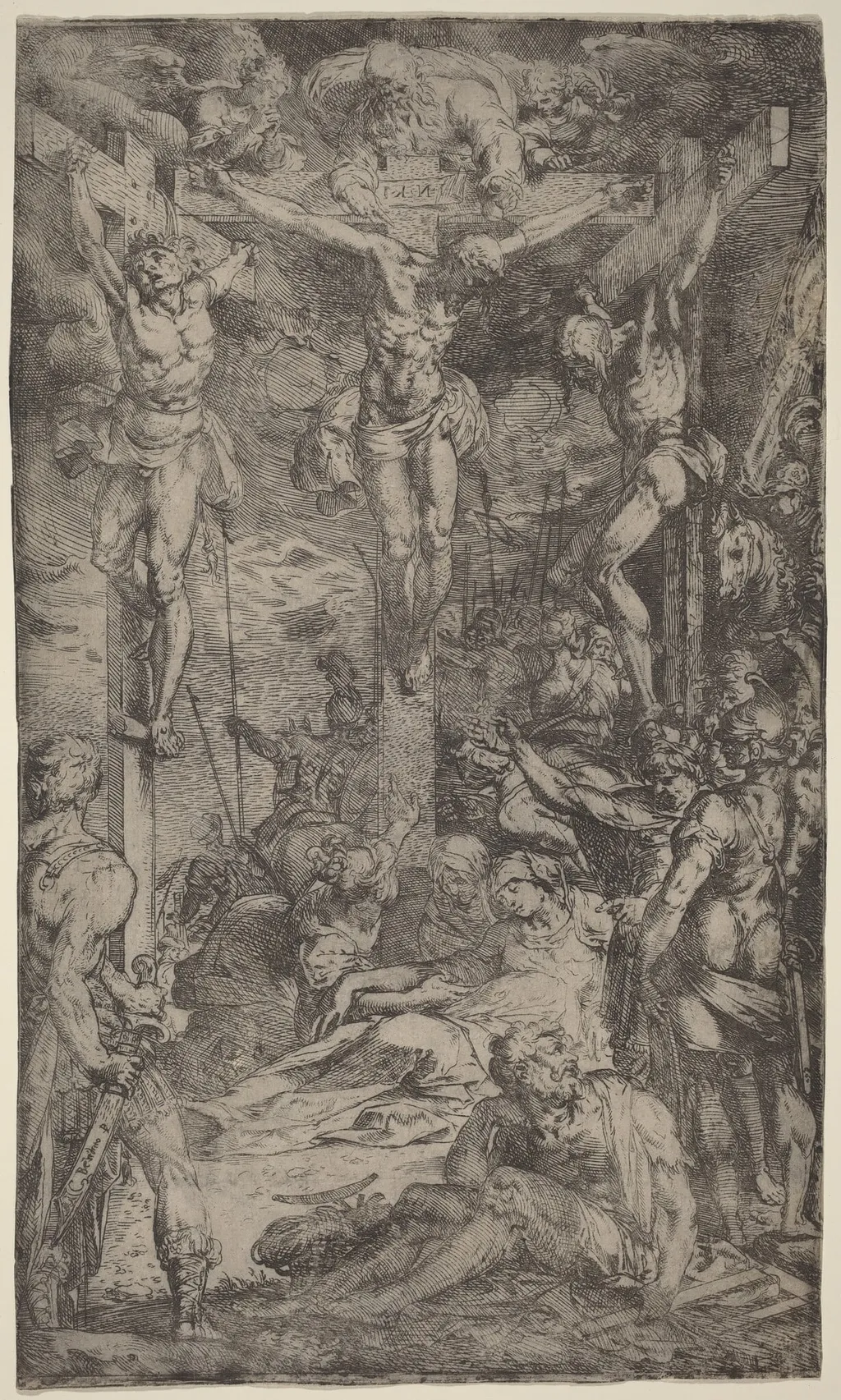
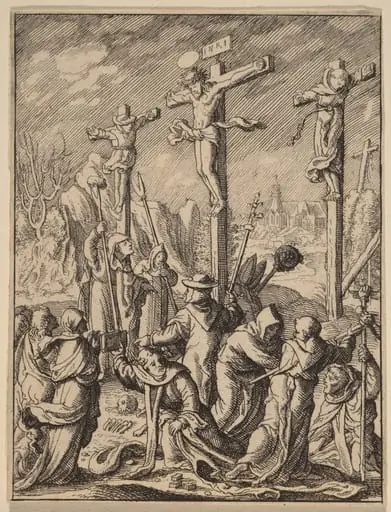
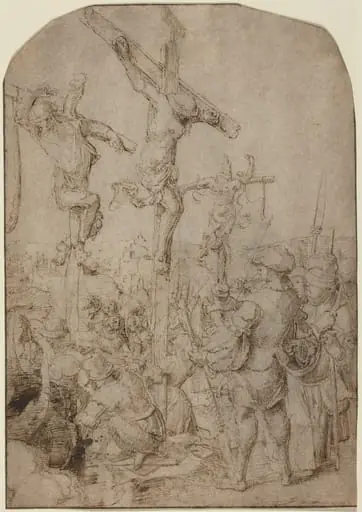
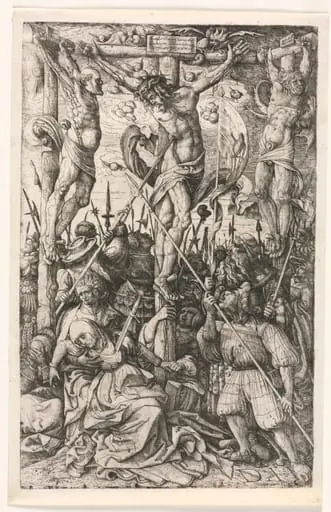
The Crucifixion is an ink print by the Renaissance artist Bernardino Poccetti. It dates from 1580 and is held in the collection of the National Gallery of Art.
About this work
Overview
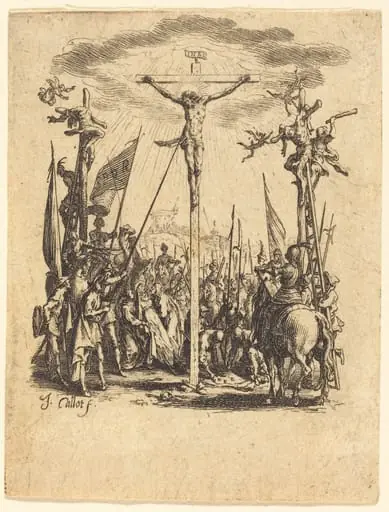
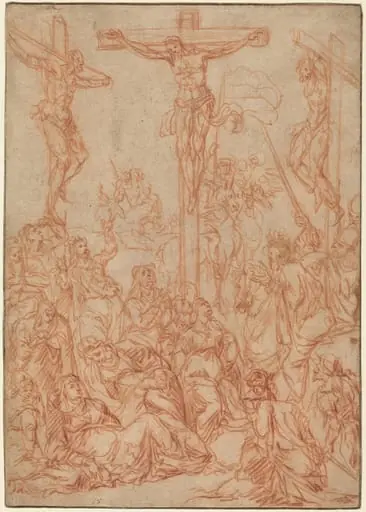
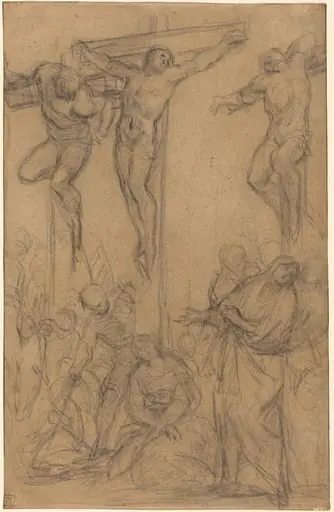
Created in 1580, this black‑and‑white etching presents a densely populated depiction of the crucifixion. The central figure of Christ hangs on the cross, surrounded by a tumult of soldiers and onlookers whose gestures convey a scene of intense activity and disorder.
Subject & Meaning
The composition focuses on the pivotal Christian event of Jesus’ death, emphasizing the emotional turmoil of the surrounding figures. Soldiers in armor and flowing robes appear startled or indifferent, while kneeling figures below turn their faces toward the cross, reflecting a range of devotional responses.
Technique & Style
Executed through etching, the work relies on sharp, uneven lines and rapid, sketch‑like strokes to render musculature and drapery. The rough textures and jagged contours generate a sense of immediacy, characteristic of the Mannerist tendency toward expressive distortion.
History & Provenance
The piece was produced by Bernardino Poccetti, an Italian artist active in the late Renaissance who was also known by the name Barbatelli. Poccetti’s output included both paintings and prints, with religious subjects forming a significant part of his oeuvre.
Context
Emerging during the late sixteenth century, the print reflects the period’s heightened interest in dramatic religious imagery, aligning with Counter‑Reformation efforts to evoke emotional engagement through vivid visual narratives.
Artist & collection
Artist
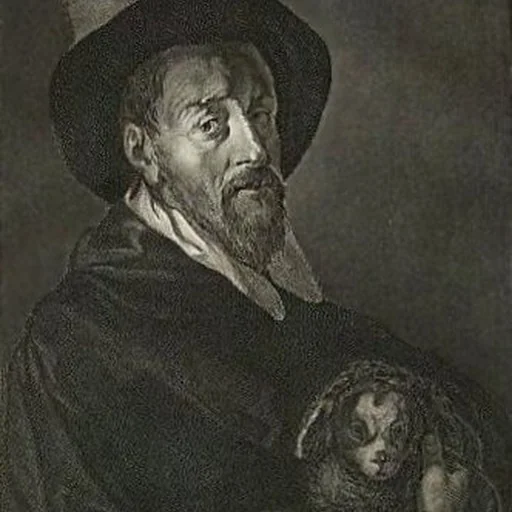
Bernardino Poccetti (26 August 1548 – 10 October 1612), also known as Barbatelli, was an Italian Mannerist painter and printmaker of etchings.

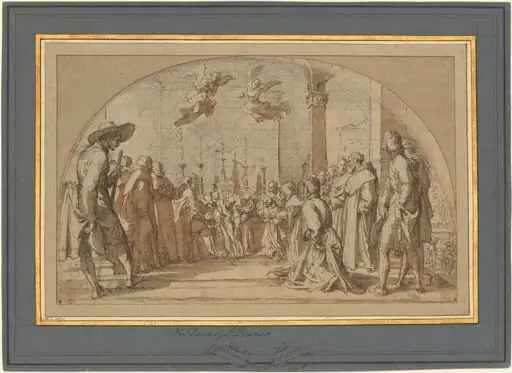 The Death of the Blessed Buonagiunta Manetti
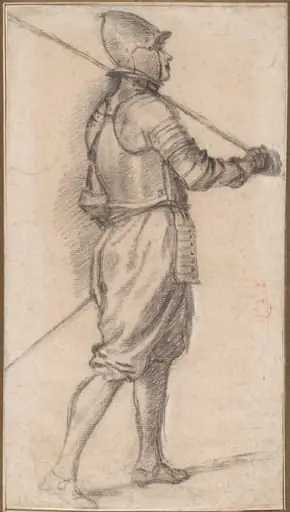 Standing Soldier, Facing Right
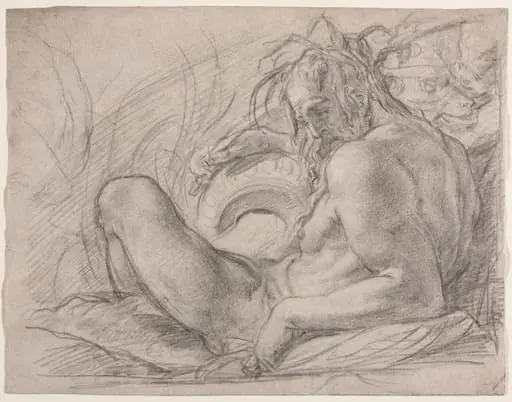 The River God Tiber (Study for a fresco, Miracle of the Snow, or the Foundation of Santa Maria Maggiore, Rome in the Canigiani chapel of S. Felicita, Florence)
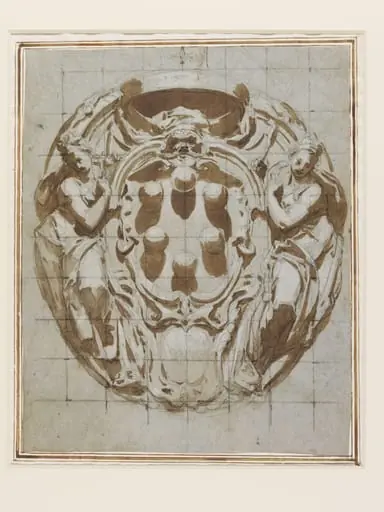 An elaborate cartouche with the Medici Arms flanked by Justice and Prudence