Artwork
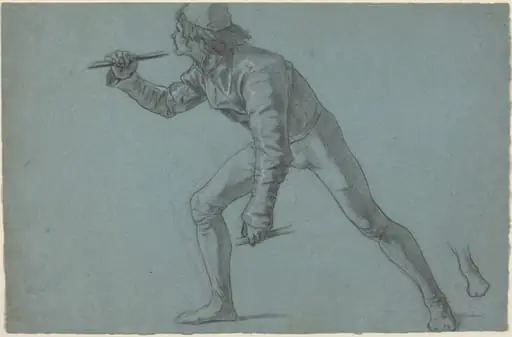
Standing Soldier, Facing Right
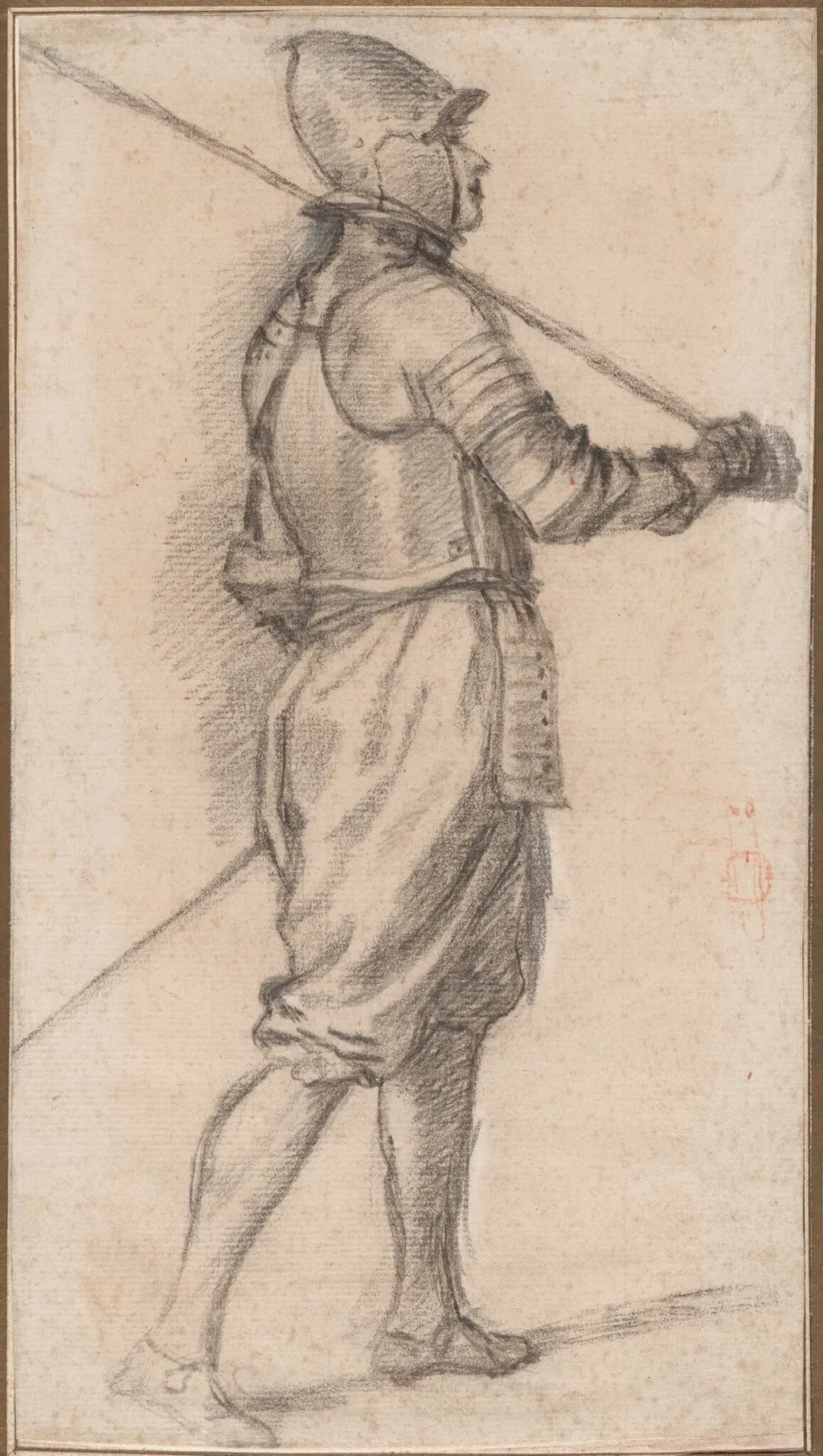
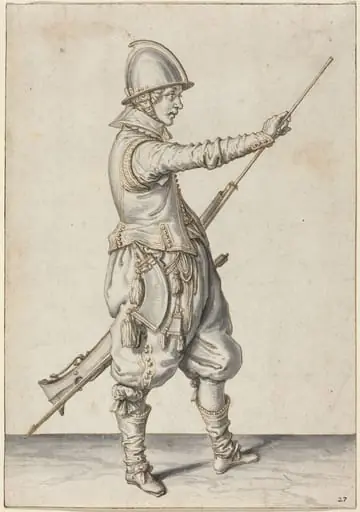
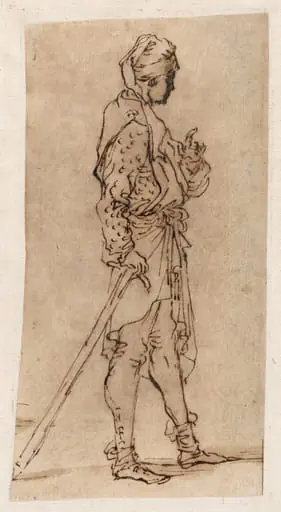
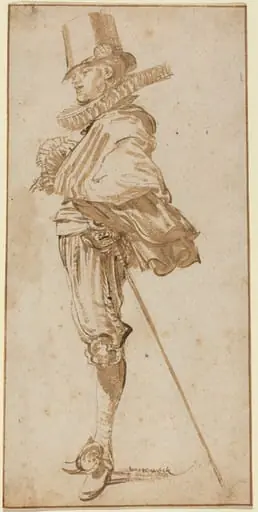
Standing Soldier, Facing Right is a chalk drawing by the Renaissance artist Bernardino Poccetti. It dates from 1594 and is held in the collection of the National Gallery of Art.
About this work
Overview
Created circa 1594 by Bernardino Poccetti, this drawing depicts a soldier in profile, rendered in black and red chalk on laid paper. Mounted on an older support, it resides in the National Gallery of Art’s collection. The work exemplifies Poccetti’s skill as a draftsman during the late Italian Renaissance, emphasizing controlled line and anatomical precision without overt embellishment.
Subject & Meaning
The armor, detailed with crossing straps and articulated plates, implies military function rather than ceremonial display.
The figure is a standing soldier, viewed from behind, gripping a sword and a long pole. His posture suggests readiness—weight shifted, one leg bent—as if poised for movement. The armor, detailed with crossing straps and articulated plates, implies military function rather than ceremonial display. The drawing’s immediacy points to its role as a preparatory study, capturing a moment of latent action.
Technique & Style
Poccetti employed black chalk for structural definition and red chalk for subtle tonal modeling, particularly along the contours of the torso and limbs. The lines are swift yet deliberate, conveying form through economy rather than detail. The textured, off-white paper enhances the chalk’s contrast, while the red accents on the mount hint at earlier compositional adjustments, reinforcing its function as a working sketch.
History & Provenance
The drawing has been preserved on its original mount, suggesting early institutional or private ownership before entering the National Gallery of Art’s collection. Poccetti, known as Barbatelli, was active in Florence and known for his religious and military subjects. This piece aligns with his documented practice of producing figure studies for larger compositions, though the intended final work remains unidentified.
Context
In late 16th-century Italy, artists increasingly turned to life drawing to refine anatomical accuracy and dynamic pose. Poccetti’s work reflects this trend, influenced by Florentine traditions and the legacy of Michelangelo. Military figures were common subjects in preparatory drawings, serving both practical and symbolic roles in narrative art of the period.
Legacy
Though not widely exhibited, this drawing contributes to the understanding of Poccetti’s draftsmanship and the broader practice of study drawing in Mannerist workshops. It illustrates how artists translated observation into structured form, bridging direct study and finished compositions, and remains a quiet testament to the discipline of Renaissance artistic training.
Artist & collection
Artist
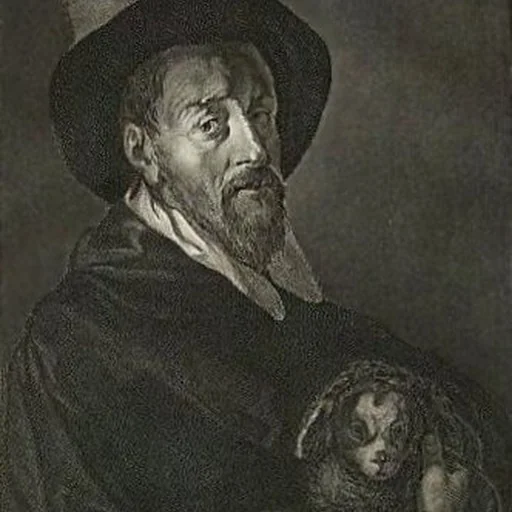
Bernardino Poccetti (26 August 1548 – 10 October 1612), also known as Barbatelli, was an Italian Mannerist painter and printmaker of etchings.

![A Turk [recto], by Giovanni Battista Cipriani](https://artifactworldgallery.com/img/giovanni-battista-cipriani--a-turk-recto--12cde5f9bac9a966-w320.webp)
![Man Leaning on a Rail [verso], by Matteo Rosselli](https://artifactworldgallery.com/img/matteo-rosselli--man-leaning-on-a-rail-verso--c9936b6777df930d-w320.webp)