Artwork
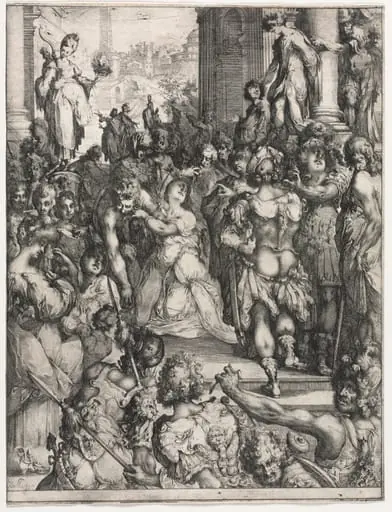
Martyrdom of Saint Lucy
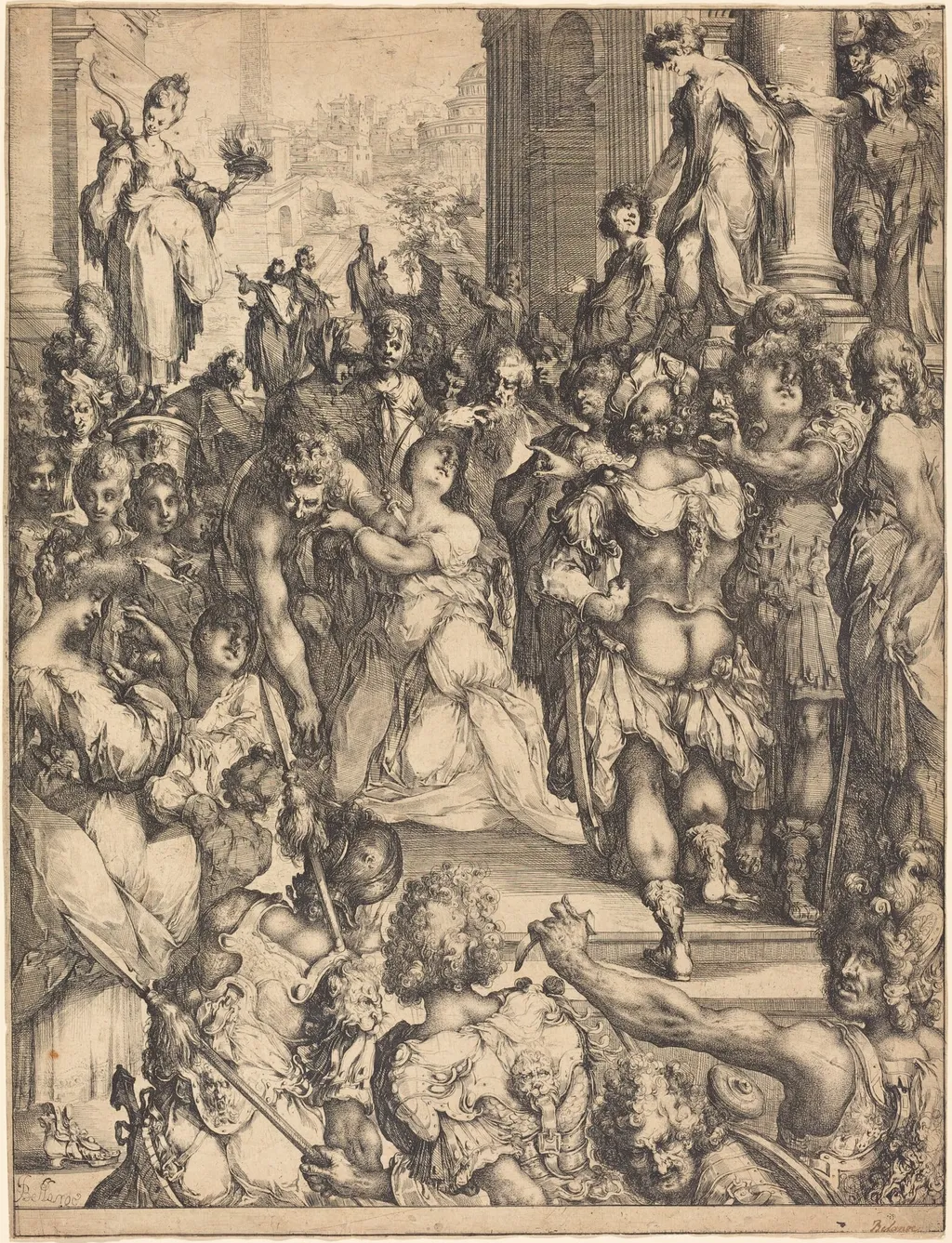
Martyrdom of Saint Lucy is an ink print by the Renaissance artist Jacques Bellange. It dates from 1605 and is held in the collection of the National Gallery of Art.
About this work
Overview
Though trained as a court painter, he devoted his later years to printmaking, creating a compact but striking series of religious subjects.
Jacques Bellange, a printmaker active in the Duchy of Lorraine, produced the etching *Martyrdom of Saint Lucy* in 1605. Though trained as a court painter, he devoted his later years to printmaking, creating a compact but striking series of religious subjects. This work emerged during a brief, intense phase of his career, just years before his early death. It was made under the patronage of the ducal court, reflecting both devotional needs and the artistic ambitions of Lorraine’s elite.
Subject & Meaning
The scene depicts Saint Lucy, a Christian martyr traditionally associated with sight and suffering, shown blindfolded and holding a palm frond—the symbol of martyrdom. Around her, agitated figures gesture toward the heavens or collapse in chaos, emphasizing divine intervention and earthly turmoil. The central figure’s obscured eye and the upward-pointing hand of a male figure suggest a spiritual transcendence beyond physical torment, aligning with Counter-Reformation themes of faith under persecution.
Technique & Style
Bellange employed fine, incised lines to generate dense, theatrical compositions. His etching technique allowed for sharp contrasts and intricate detail, creating a sense of movement through overlapping bodies and fragmented architecture. The composition is crowded yet deliberately unbalanced, with figures twisting in unnatural poses. This Mannerist approach prioritizes emotional intensity over naturalism, using distortion to heighten spiritual tension rather than depict physical reality.
History & Provenance
The print was made during Bellange’s service to the Dukes of Lorraine, likely for private devotional use or as part of a commissioned series. Few of his prints survive, and this work is among the few securely dated examples from his mature period. It remained within Lorraine’s cultural orbit until the 18th century, later entering public collections as interest in Northern Mannerism revived. Its rarity underscores Bellange’s limited output and the niche appeal of his style.
Context
Created during the height of the Counter-Reformation, Bellange’s etching responds to Catholic efforts to reinforce faith through vivid imagery of martyrdom. While Italian and Flemish artists produced similar subjects, Bellange’s style diverged with its exaggerated forms and claustrophobic space. His work reflects the isolation of Lorraine—a culturally distinct region caught between French and German influences—where religious art retained a unique, introspective character distinct from broader European trends.
Legacy
Bellange’s prints, including this one, were largely overlooked after his death until the 19th century, when scholars began recognizing his idiosyncratic vision. His fusion of dramatic gesture, architectural instability, and spiritual intensity influenced later interpretations of Mannerism in Northern Europe. Though never widely disseminated, his etchings are now studied as rare examples of a localized, intensely personal approach to religious printmaking in early 17th-century France.
Artist & collection
Artist
Jacques Bellange (c. 1575–1616) was an artist and printmaker from the Duchy of Lorraine (then independent but now part of France) whose etchings and some drawings are his only securely identified works today. They are…

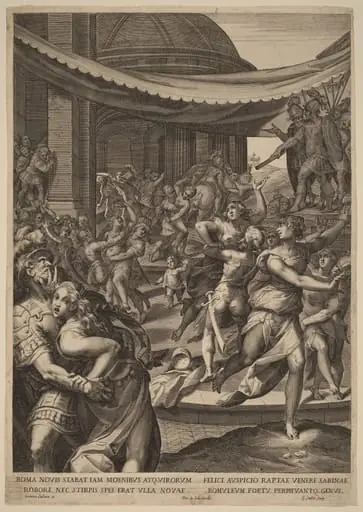 The Rape of the Sabines
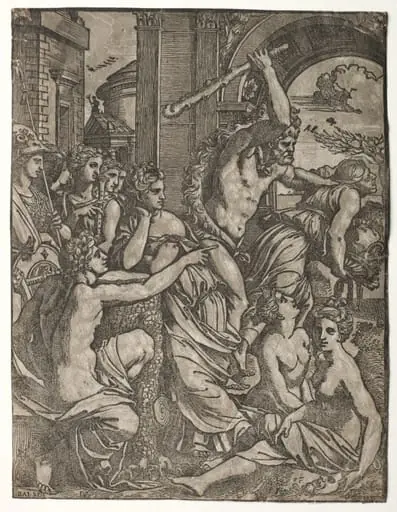 Hercules Driving Envy from the Temple of the Muses
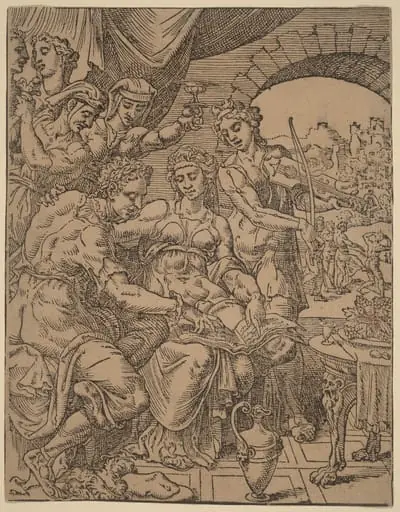 The Prodigal Son Squandering His Inheritance on Harlots
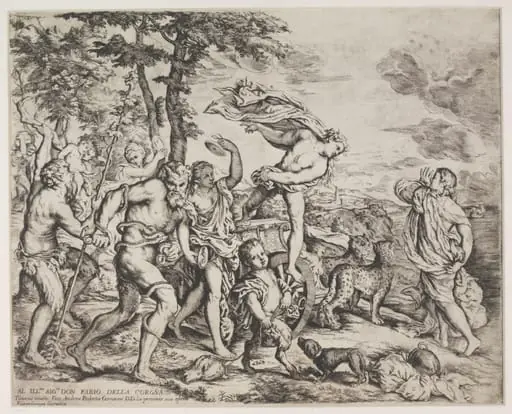 Bacchus and Ariadne
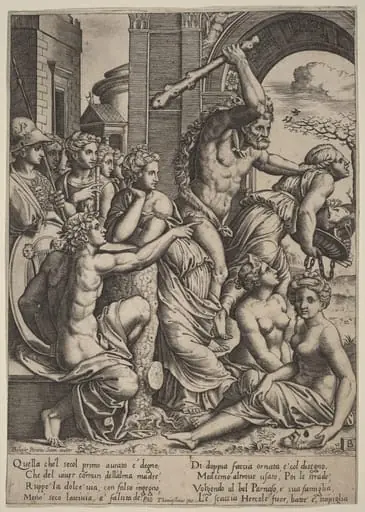 Envy Driven from the Temple of the Muses
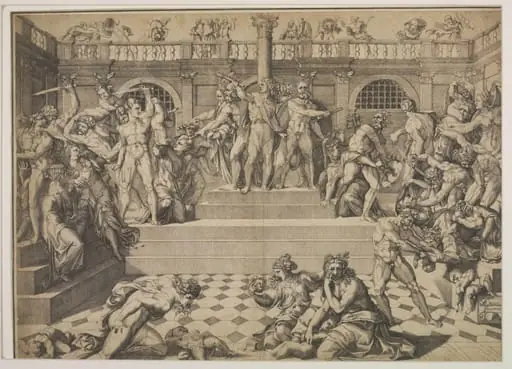 Murder of the Innocents
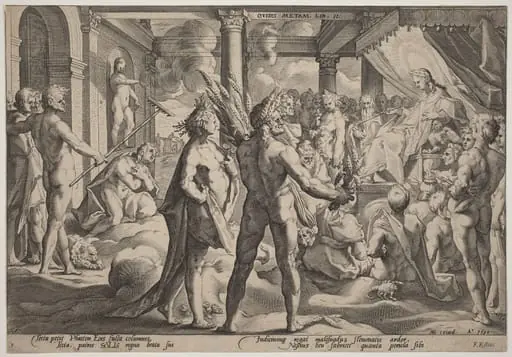 Phaeton Asking for the Chariot
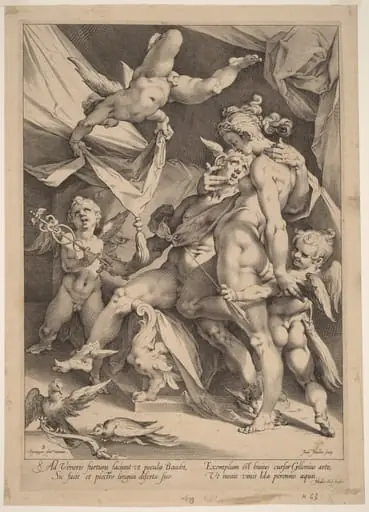 Venus and Mercury
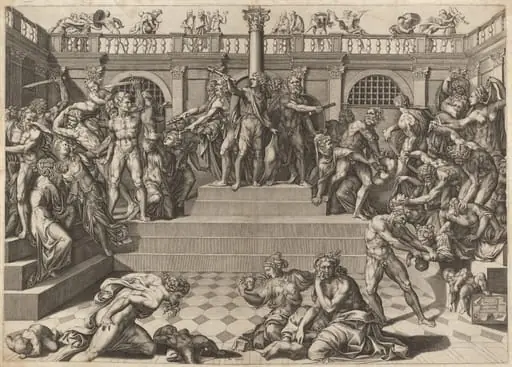 The Massacre of the Innocents
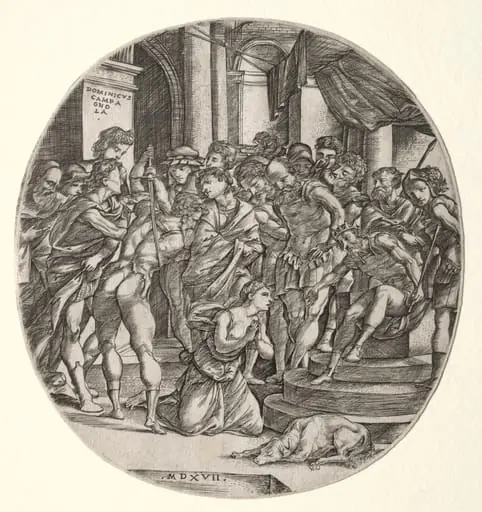 Beheading of Saint Catherine
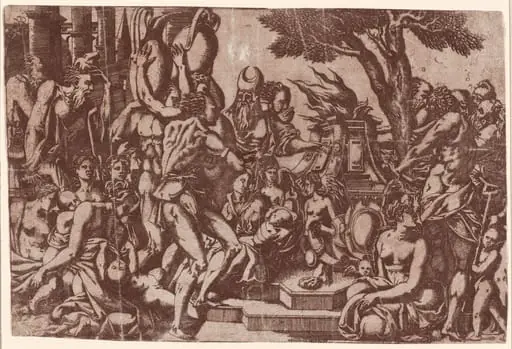 Sacrifice to Priapus
 The Martyrdom of Saint Lucy