Artwork
Francois de Troy
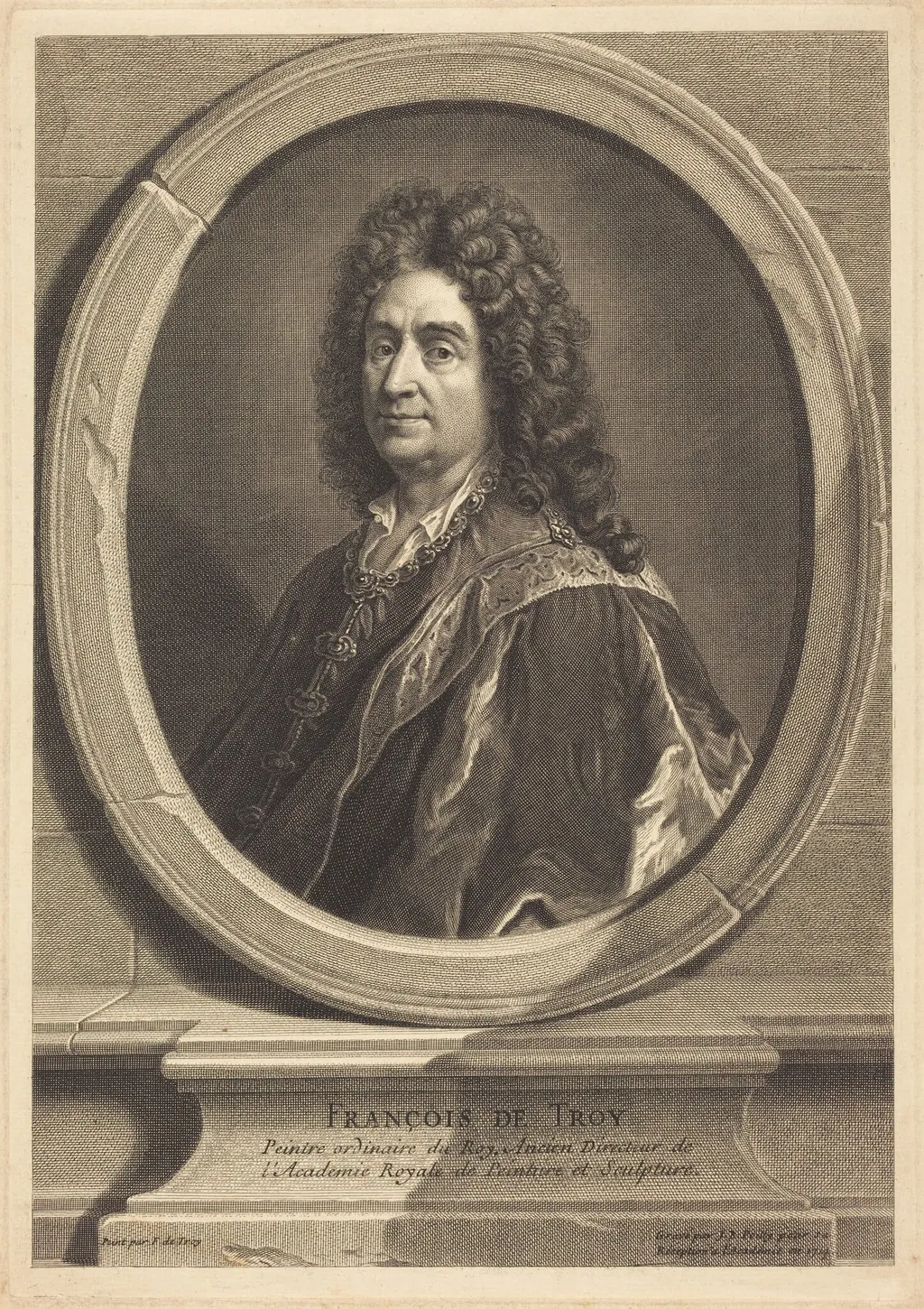
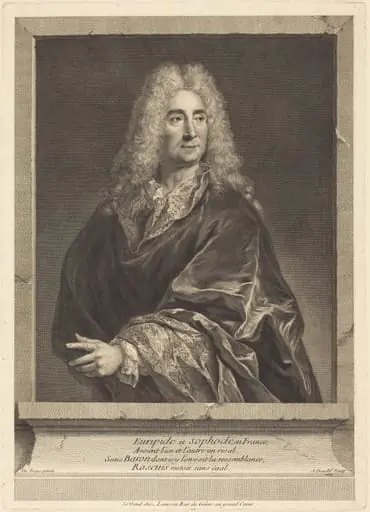
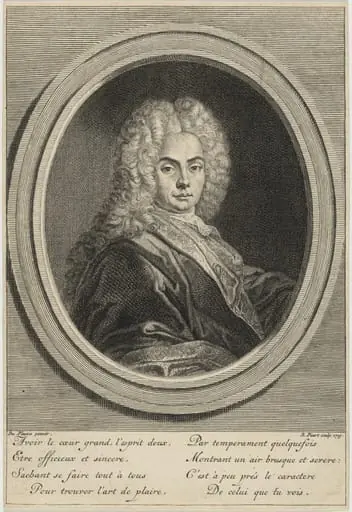
Francois de Troy is an ink print by the Baroque artist Jean-Baptiste de Poilly. It dates from 1714 and is held in the collection of the National Gallery of Art. This 1714 print, executed in engraving over etching on laid paper, presents a portrait of the French painter François de Troy.
About this work
Overview
This 1714 print, executed in engraving over etching on laid paper, presents a portrait of the French painter François de Troy. The image is composed as a bust view, showing the sitter from the chest upward against an unadorned background, and is bounded by a decorative oval frame that forms part of the print itself.
Subject & Meaning
The figure is rendered with curly hair, a dark robe trimmed with a lighter collar, and a modest chain at the throat, suggesting a gentleman of artistic standing. The neutral expression and straightforward pose convey a dignified, documentary quality typical of early‑18th‑century portraiture.
Technique & Style
Jean‑Baptiste de Poilly combined etching and engraving to achieve fine line work and tonal variation. The laid‑paper support provides a subtle texture that enhances the contrast between the dark garment and the lighter background, while the oval border integrates the composition into a cohesive whole.
History & Provenance
Created by the French printmaker Jean‑Baptiste de Poilly, the work was likely intended for circulation among patrons and fellow artists familiar with de Troy’s oeuvre. No specific collection history is recorded, but the print reflects the period’s practice of disseminating portrait images through print.
Context
In the early 1700s, portrait prints served both as a means of honoring notable individuals and as a commercial product for the art market. De Poilly’s portrait of de Troy aligns with this tradition, offering a reproducible likeness of a respected painter for contemporary audiences.
Artist & collection