Artwork
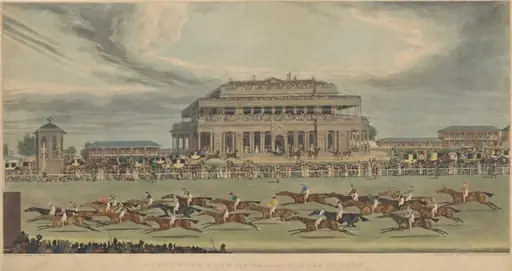
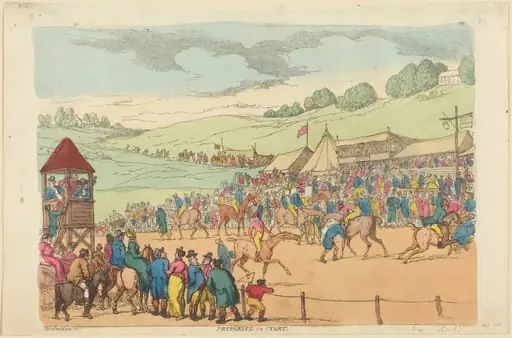
Doncaster Races: The Horses Starting for the Great St. Ledger Stakes
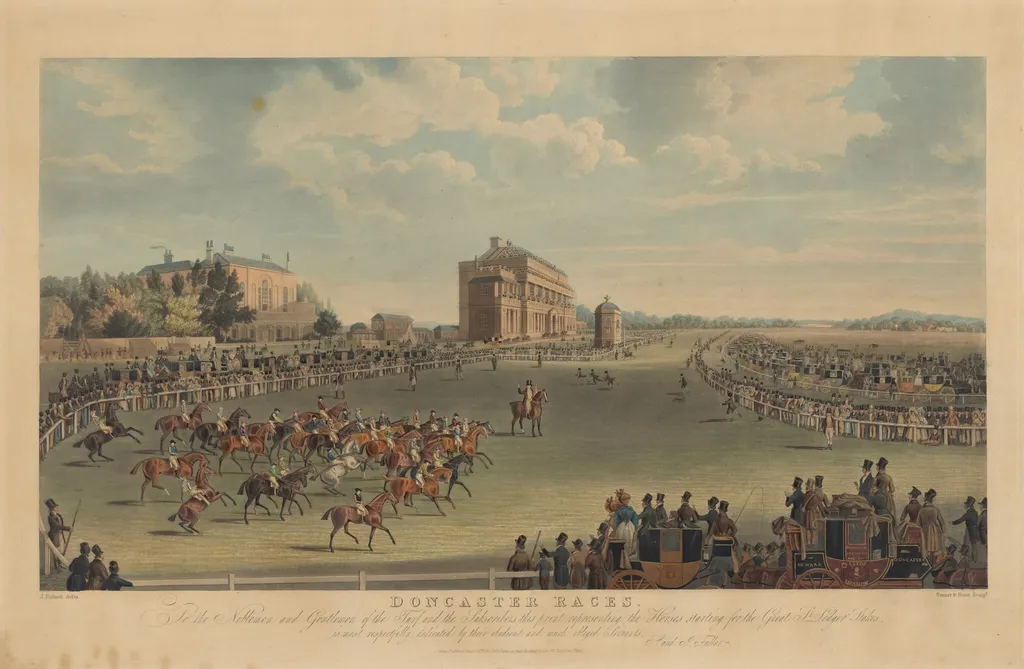
Doncaster Races: The Horses Starting for the Great St. Ledger Stakes is an ink print by the Romanticist artist James Pollard. It dates from 1832 and is held in the collection of the National Gallery of Art.
About this work
Overview
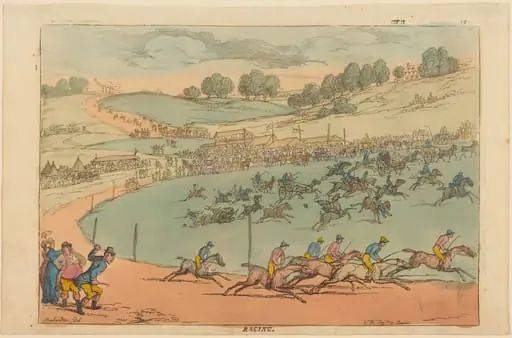
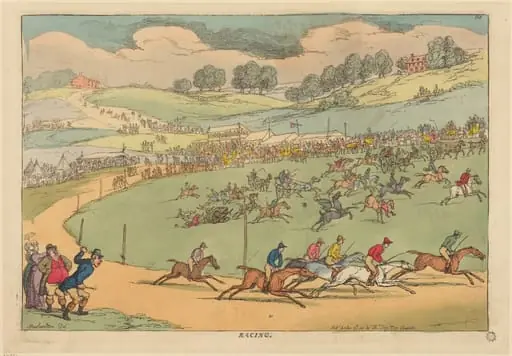
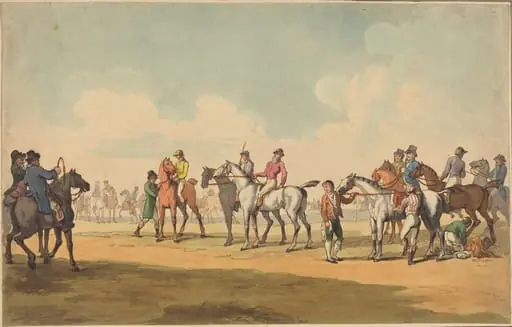
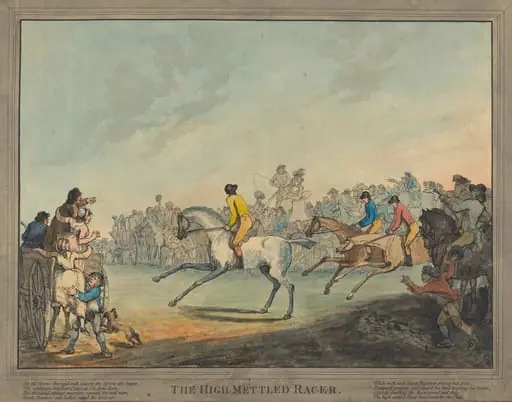
James Pollard’s 1832 hand‑colored aquatint, titled *Doncaster Races: The Horses Starting for the Great St. Ledger Stakes*, depicts a moment before the start of a horse race at Doncaster. The composition centers on a line of thoroughbreds poised on a dirt track, their jockeys clad in vivid racing silks, while spectators fill the background, their faces rendered with surprising clarity.
Subject & Meaning
The image captures the anticipation that precedes a competitive race, emphasizing the collective focus of riders, horses, and onlookers. By presenting the assembled field and attentive crowd, Pollard conveys the social spectacle of early‑19th‑century British horse racing, where sport and public gathering intertwined.
Technique & Style
Executed as an aquatint, the work employs tonal washes to render the atmospheric sky and ground, while hand‑coloring adds saturated hues to the jockeys’ silks and the spectators’ attire. Pollard’s line work delineates the horses and riders with precision, and his use of light and shadow creates a sense of depth across the crowded scene.
History & Provenance
Created in 1832, the print forms part of Pollard’s extensive series of racing subjects that established his reputation in the United Kingdom. It has circulated among collectors of sporting prints and appears in catalogues of 19th‑century British lithography, reflecting its continued relevance to the study of equine art.
Context
During the early 1800s, horse racing was a prominent leisure activity, and Doncaster’s St. Leger Stakes was one of the sport’s most prestigious events. Pollard’s work aligns with a broader visual culture that documented such gatherings, providing contemporary audiences with a record of the event’s pageantry and the era’s fashion.
Artist & collection