Artwork
Jesus Christ Appearing to Saint Roch
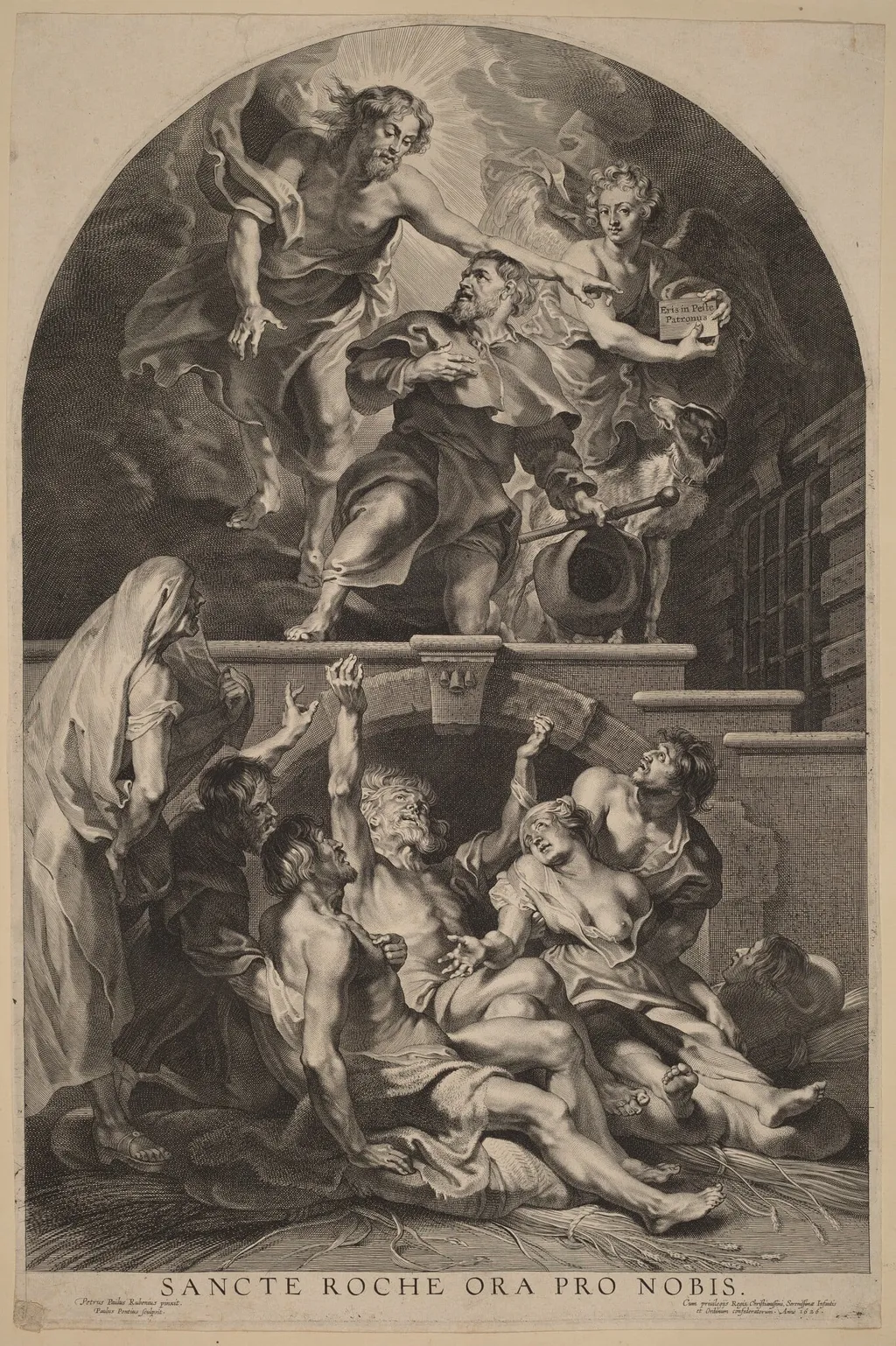
Jesus Christ Appearing to Saint Roch is an ink print by the Baroque artist Paulus Pontius. It dates from 1626 and is held in the collection of the National Gallery of Art. Created in 1626 by Flemish engraver Pontius Paulus, this print depicts a moment of divine intervention involving Saint Roch.
About this work
Overview
As a reproductive print, it reflects the devotional culture of early 17th-century Antwerp, where religious imagery served both spiritual and communal functions.
Created in 1626 by Flemish engraver Pontius Paulus, this print depicts a moment of divine intervention involving Saint Roch. Executed in black ink on laid paper, the composition uses fine linear shading to convey motion and emotional intensity. As a reproductive print, it reflects the devotional culture of early 17th-century Antwerp, where religious imagery served both spiritual and communal functions.
Subject & Meaning
The scene portrays Saint Roch receiving a vision of Christ amid a crowd of distressed figures. One individual is lifted by a winged form holding a scroll, suggesting angelic intervention. The Latin inscription at the base, 'Sancte Roche Ora Pro Nobis,' invokes the saint’s intercessory role, aligning the image with prayers for protection against plague—a disease Saint Roch was traditionally associated with.
Technique & Style
Pontius employed precise engraving techniques to render texture and depth, using cross-hatching and varied line weight to model forms and suggest movement. The composition is densely packed, with figures arranged in dynamic, upward-thrusting gestures. The absence of color focuses attention on tonal contrasts, enhancing the dramatic tension and spiritual gravity of the moment.
History & Provenance
Pontius trained under Peter Paul Rubens and worked alongside leading Antwerp artists like van Dyck and Jordaens. This engraving likely circulated as a devotional object or study piece, possibly commissioned for private use or religious institutions. Its survival in multiple impressions indicates modest but sustained demand within Catholic communities during the Counter-Reformation.
Context
In early 17th-century Flanders, religious prints were widely distributed to support personal piety amid ongoing religious conflict. Saint Roch, a patron against plague, was especially venerated after outbreaks in urban centers. This image taps into that devotion, using visual drama to reinforce faith in divine aid during times of crisis, reflecting broader trends in Counter-Reformation visual culture.
Legacy
Though not widely known today, Pontius’s engraving exemplifies the technical skill and devotional intent of Flemish printmakers working in the wake of Rubens. Its emphasis on emotional expression through line influenced later religious imagery and remains a testament to the role of print in disseminating sacred narratives beyond the confines of painting and sculpture.
Artist & collection
Artist
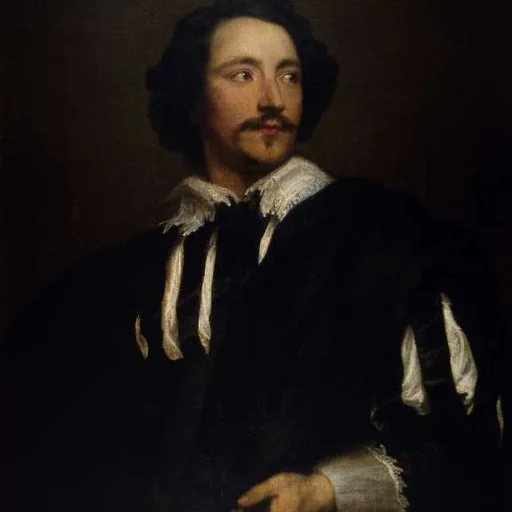
Paulus Pontius (27 May 1603 – 16 January 1658) was a Flemish engraver and painter.

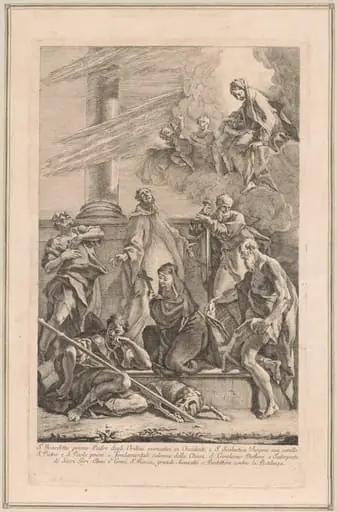 The Madonna and Child with Two Angels and Saints Scholastica, Benedict, Roch, Peter, Paul and Jerome
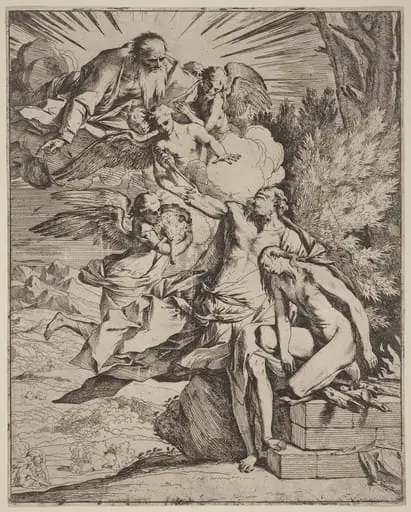 The Sacrifice of Abraham
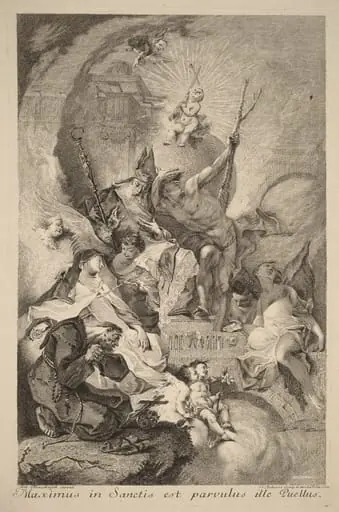 Four Saints
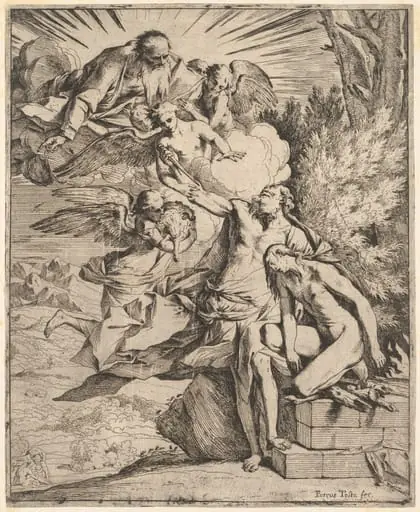 The Sacrifice of Abraham
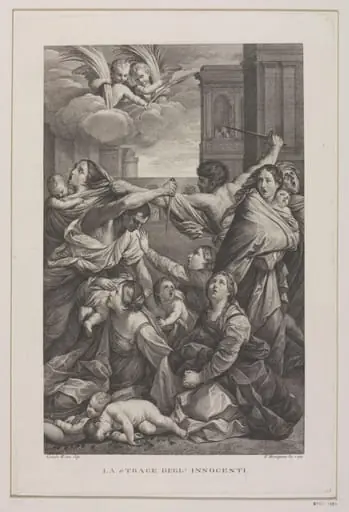 Massacre of the Innocents
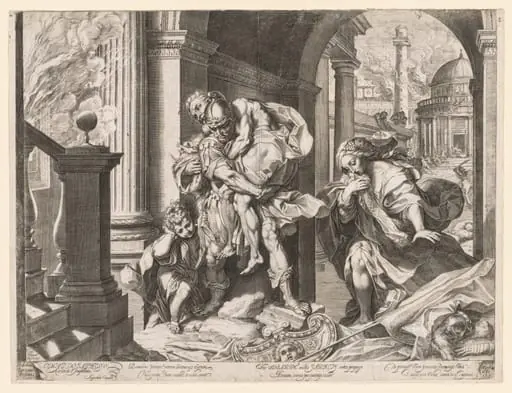 Aeneas and His Family Fleeing Troy
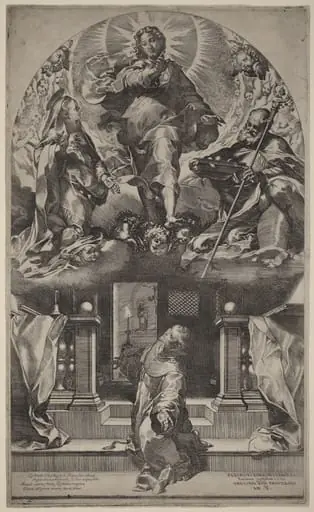 Vision of Saint Francis
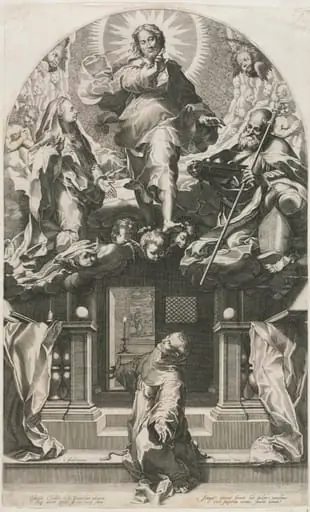 The Ecstasy of St. Francis
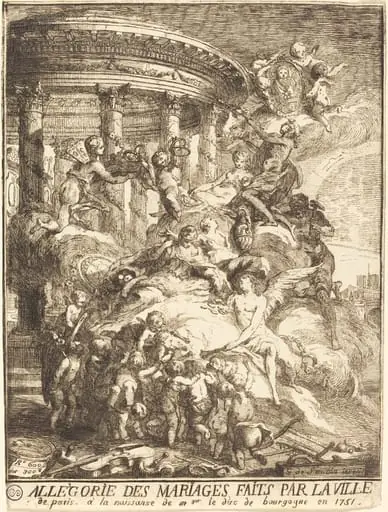 Allégorie des mariages faits par la ville de Paris à la naissance du duc de Bourgogne (Allegory of the Marriages Performed by the City of Paris in Honor of the Birth of the Duc de Bourgogne in 1751)
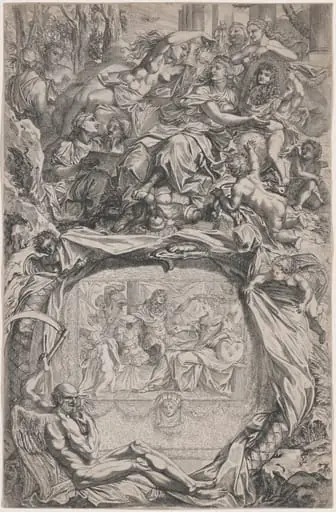 France Crowned with Victory by Louis XIV
 Adoration of the Magi
 Judith Beheading Holofernes