Artwork
The Sacrifice of Abraham
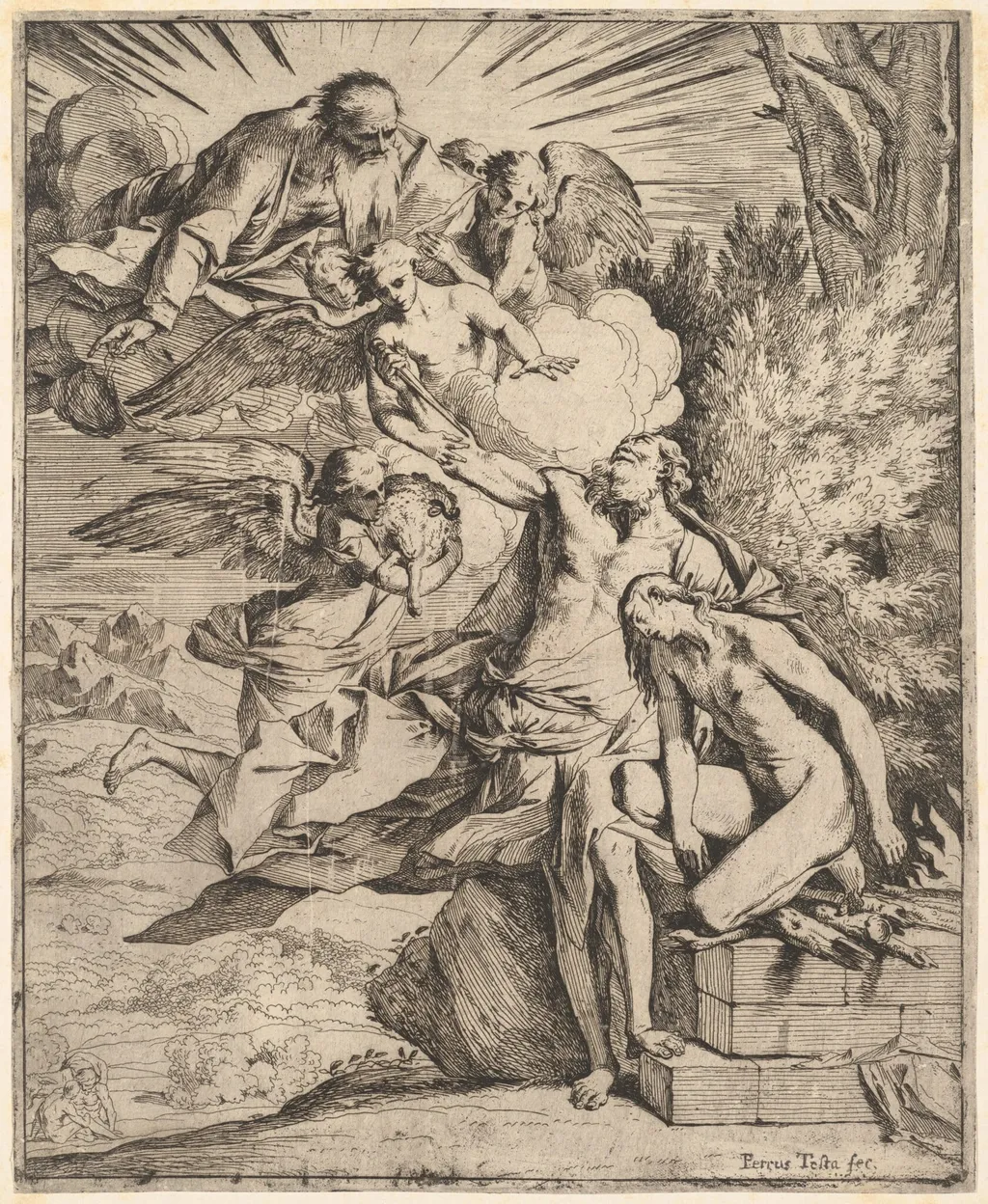
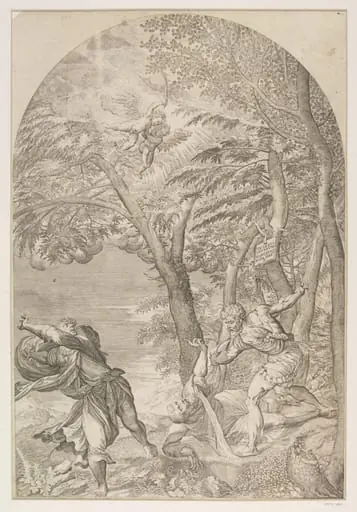
The Sacrifice of Abraham is an ink print by the Baroque artist Pietro Testa. It dates from 1641 and is held in the collection of the National Gallery of Art.
About this work
Overview
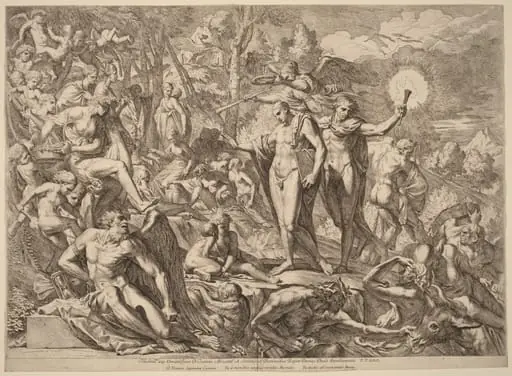
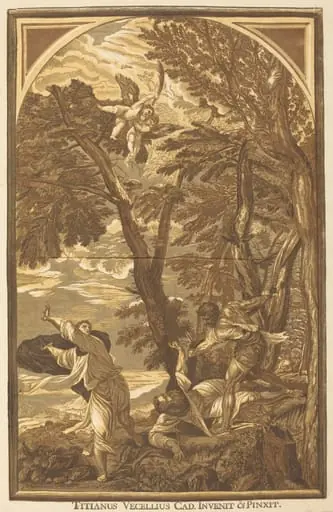
Created circa 1641, this print by Pietro Testa presents a biblical tableau in which Abraham prepares to sacrifice his son. Executed as an etching on laid paper, the composition is dominated by a kneeling patriarch, a poised knife, and an intervening angel, all set against a turbulent sky filled with swirling clouds and foliage.
Subject & Meaning
The image visualizes the Genesis narrative of Abraham’s test of faith, capturing the moment of divine intervention. The angel’s outstretched hand halts the impending act, while surrounding figures observe, emphasizing themes of obedience, sacrifice, and the tension between human duty and divine command.
Technique & Style
Testa employs fine, incisive lines characteristic of High Baroque printmaking, rendering muscular forms and dramatic chiaroscuro. The etched marks convey kinetic energy, especially in the twisting clouds and the tension of the knife, while the contrast between dark foreground and luminous background enhances the emotional intensity of the scene.
History & Provenance
The work belongs to the collection of the National Gallery of Art in Washington, D.C. It reflects Testa’s productive period in Rome, where he operated within the intellectual circle of Cassiano dal Pozzo, a patron known for fostering artists who pursued classical and scholarly subjects.
Context
Testa’s career was principally that of a printmaker and draughtsman, and this piece exemplifies his engagement with classical themes filtered through Baroque dynamism. The etching aligns with contemporary Roman artistic trends that favored dramatic narrative, precise draftsmanship, and the exploration of biblical stories as moral exempla.
Artist & collection
Artist
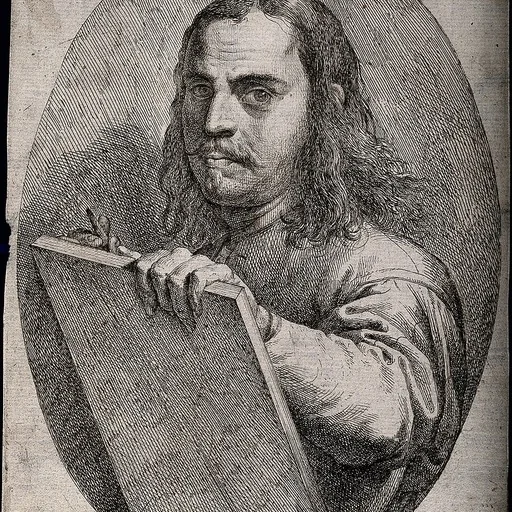
Pietro Testa (1612 – 1 March 1650) was an Italian High Baroque artist active in Rome.