Artwork
Library, San Lorenzo
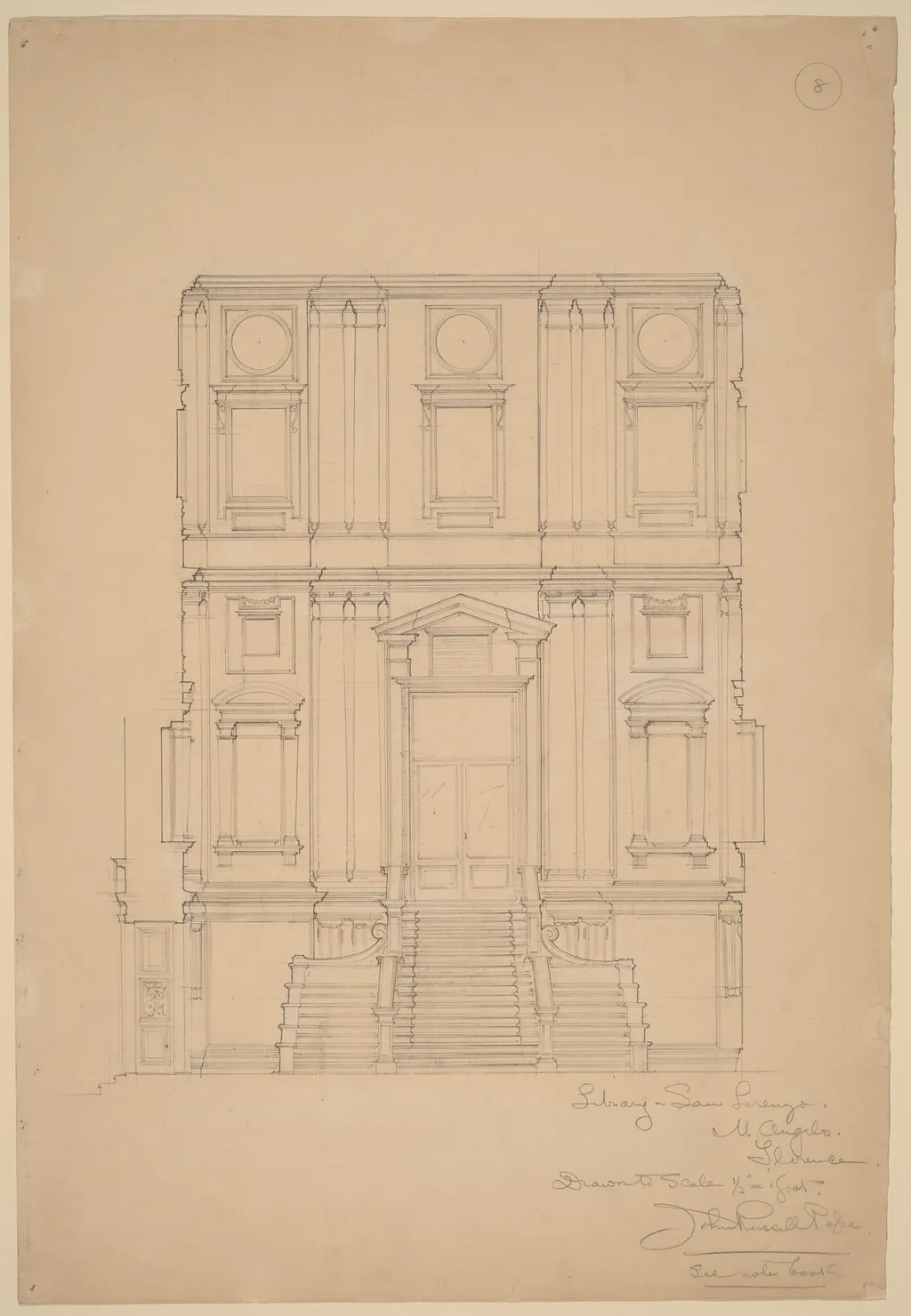
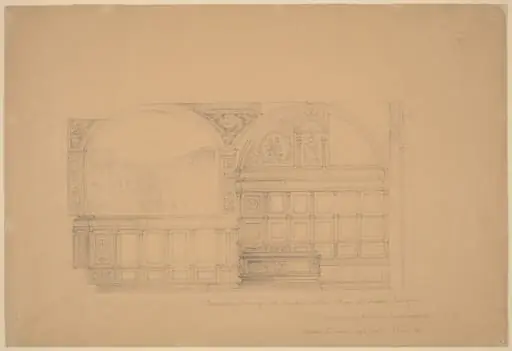
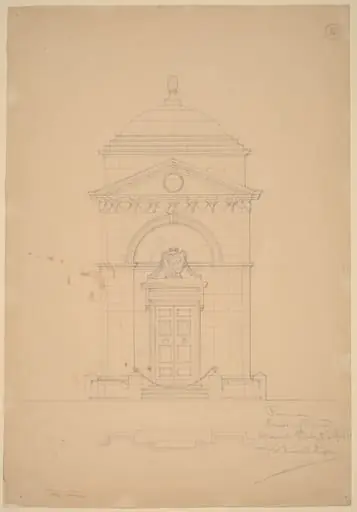
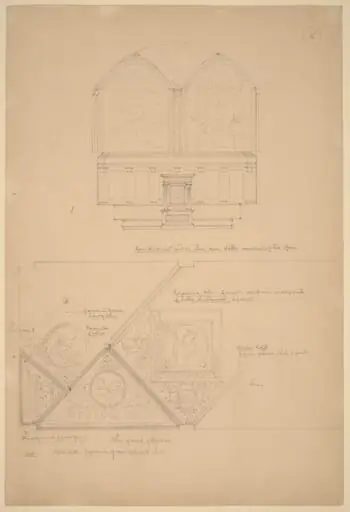
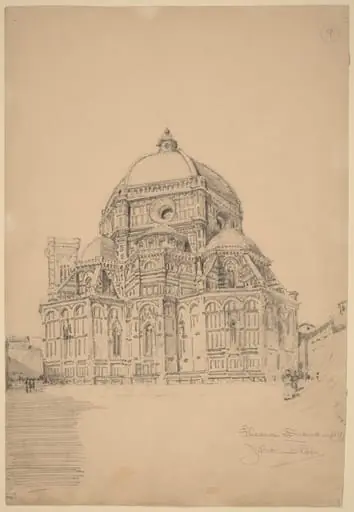
Library, San Lorenzo is a graphite drawing by the Impressionist artist John Russell Pope. It dates from 1896 and is held in the collection of the National Gallery of Art.
About this work
Overview
Drawn around 1896, this graphite sketch by John Russell Pope captures an interior view of the Biblioteca Medicea Laurenziana in Florence. It is one of several studies Pope made during his travels in Italy, reflecting his deep engagement with Renaissance architecture. The drawing serves as a record of his observational practice, not a finished architectural plan.
Subject & Meaning
The drawing focuses on the library’s elongated reading room, emphasizing its harmonious proportions and classical detailing. Pope was drawn to the space’s quiet grandeur and its integration of form and function. The work conveys an interest in how architecture shapes intellectual life, rather than documenting specific artifacts or patrons.
Technique & Style
Executed in graphite, the drawing employs precise linear control and subtle tonal gradations to suggest volume and light. Pope’s hand is deliberate but unembellished, favoring clarity over ornament. The composition is tightly framed, directing attention to the architectural rhythm of columns, arches, and ceiling moldings.
History & Provenance
Created during Pope’s formative years in Europe, the sketch was likely made as part of his architectural training. It remained in private hands until acquired by the Avery Architectural & Fine Arts Library at Columbia University, where it is now preserved among his personal papers and study materials.
Context
Pope produced this drawing while studying European architecture under the influence of the Beaux-Arts tradition. His time in Italy coincided with a broader American interest in classical models for public buildings. This sketch reflects a generation of architects seeking to translate historical precedents into modern civic design.
Legacy
The drawing illustrates Pope’s foundational approach to architecture: careful observation, respect for historical precedent, and a commitment to proportion. Though not widely exhibited, it remains a key document in understanding his development and the intellectual currents shaping American institutional architecture in the late 19th century.
Artist & collection


![The Erectheum, West Elevation [left half], by John Russell Pope](https://artifactworldgallery.com/img/john-russell-pope--the-erectheum-west-elevation-left-half--10b9b48e87f30a0f-w320.webp)