Artwork
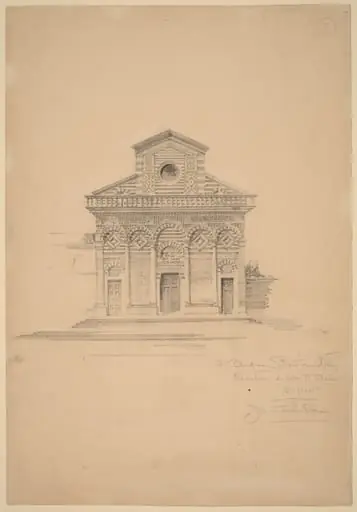
An Interesting Romanesque Treatment, San Giovanni, Pistoia
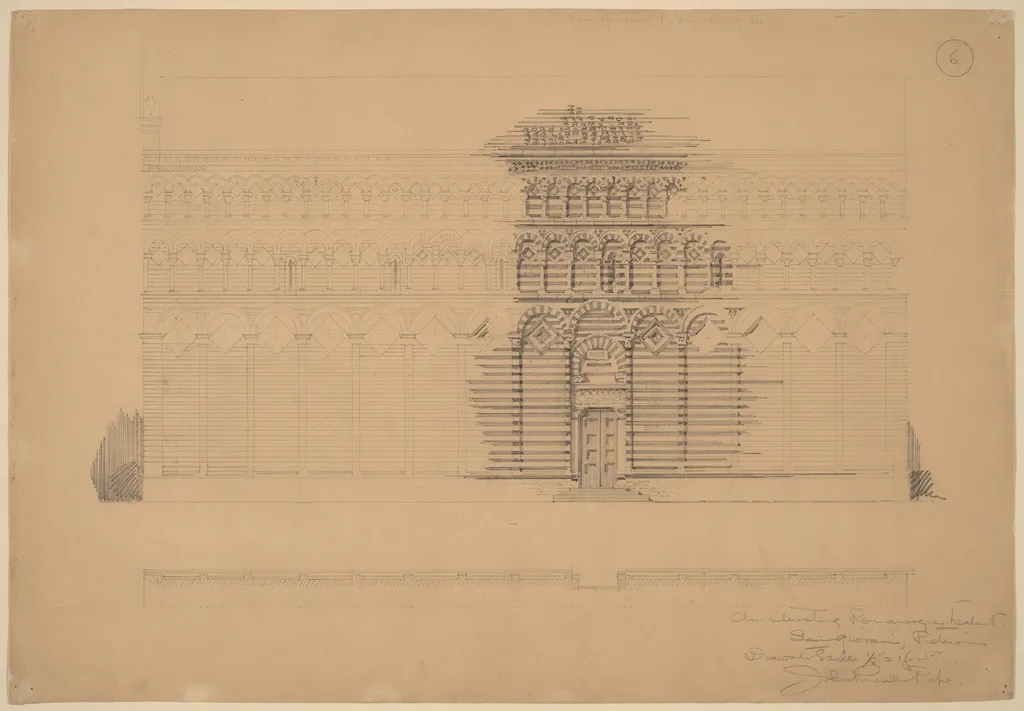
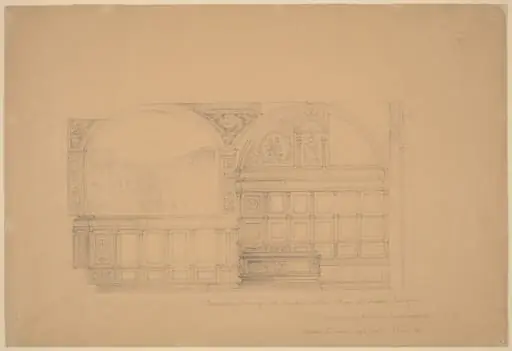
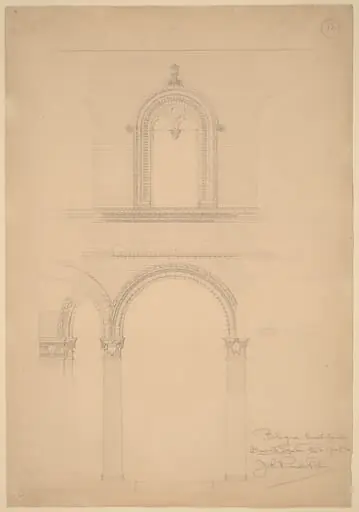
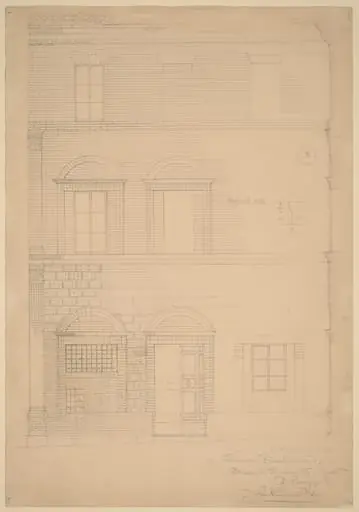
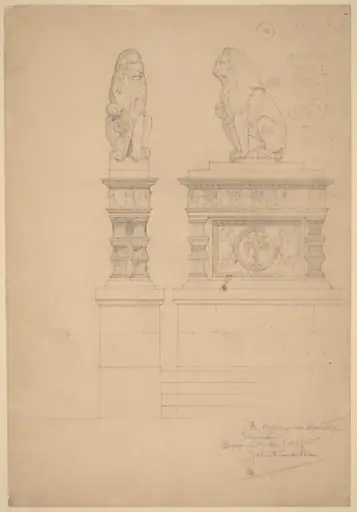
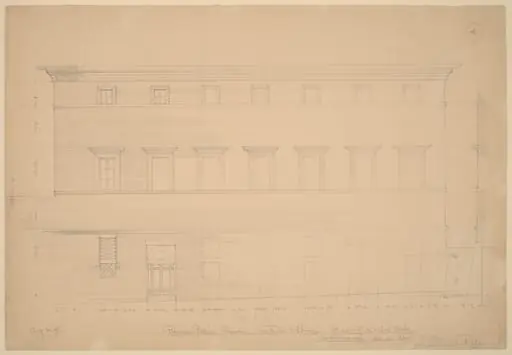
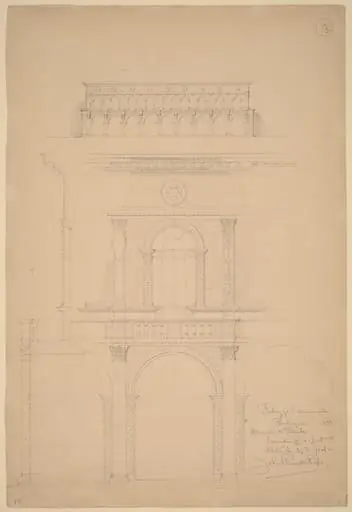
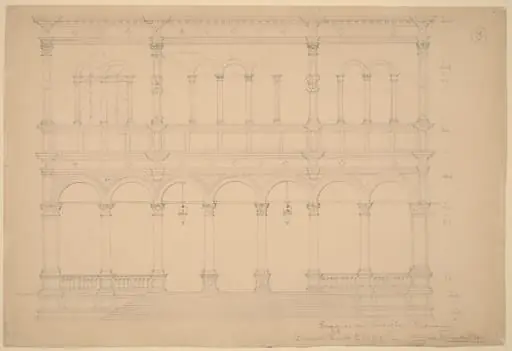
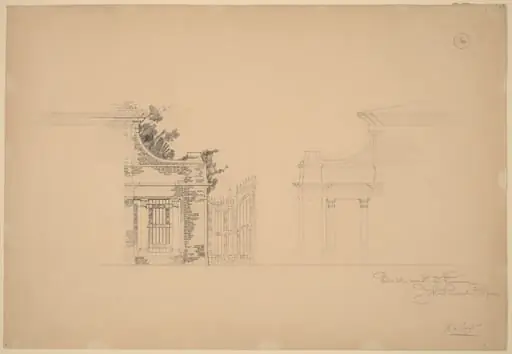
An Interesting Romanesque Treatment, San Giovanni, Pistoia is a graphite drawing by the Impressionist artist John Russell Pope. It dates from 1896 and is held in the collection of the National Gallery of Art.
About this work
Overview
This graphite drawing by John Russell Pope, dated around 1896, captures a architectural detail from the church of San Giovanni in Pistoia, Italy. It reflects Pope’s early engagement with medieval European structures during his formative years as an architect, prior to his later work in neoclassical design in the United States.
Subject & Meaning
The drawing focuses on a Romanesque architectural feature—likely an arch, capital, or molding—emphasizing its rhythmic stonework and geometric clarity. Pope’s selection suggests an interest in structural honesty and proportional harmony, values he would later integrate into his own civic buildings.
Technique & Style
Rendered in graphite, the work employs precise, controlled lines to define form and texture without shading or color. The precision indicates a study intended for analysis rather than aesthetic display, aligning with academic traditions of architectural documentation in the late 19th century.
History & Provenance
Created during Pope’s travels in Italy, the drawing likely served as reference material for his architectural education and early practice. It remained in private hands until acquired by an institutional collection, where it now contributes to the understanding of his intellectual development.
Context
In the 1890s, American architects increasingly looked to European precedents for inspiration, particularly Romanesque and Gothic forms. Pope’s sketch reflects this trend, part of a broader movement to ground modern design in historical precedent rather than pure innovation.
Legacy
Though not widely exhibited, this drawing offers insight into Pope’s foundational studies, revealing how early exposure to medieval Italian architecture informed his later public buildings, including the National Archives and the Jefferson Memorial.
Artist & collection


![The Erectheum, West Elevation [left half], by John Russell Pope](https://artifactworldgallery.com/img/john-russell-pope--the-erectheum-west-elevation-left-half--10b9b48e87f30a0f-w320.webp)