Artwork
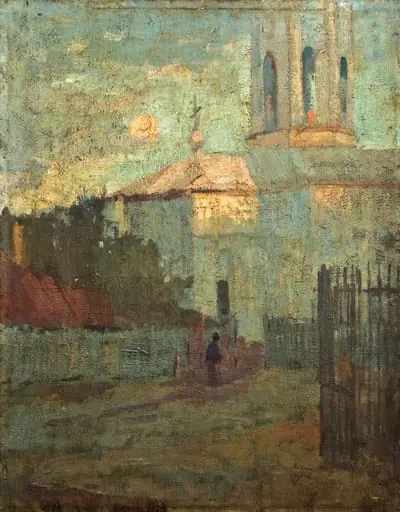
În mahala
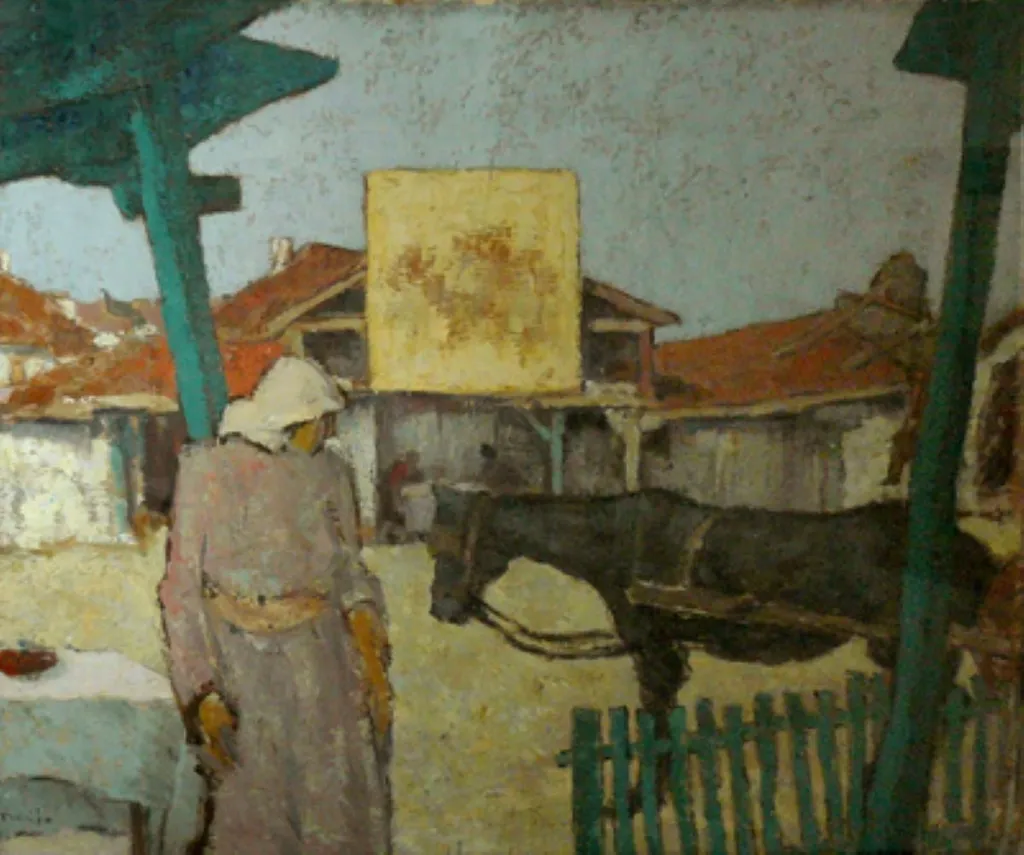
În mahala is a print by Nicolae Tonitza. It dates from 1923 and is held in the collection of the Art museum of Craiova.
About this work
Overview
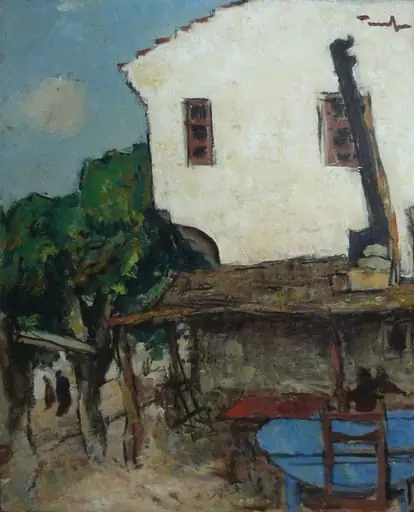
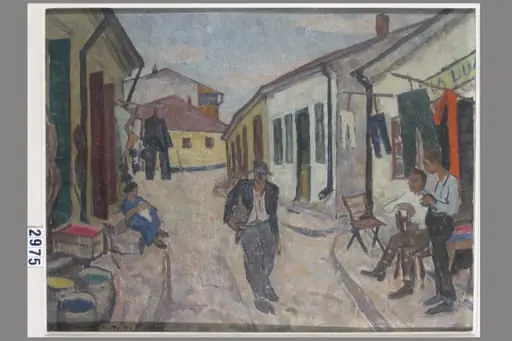
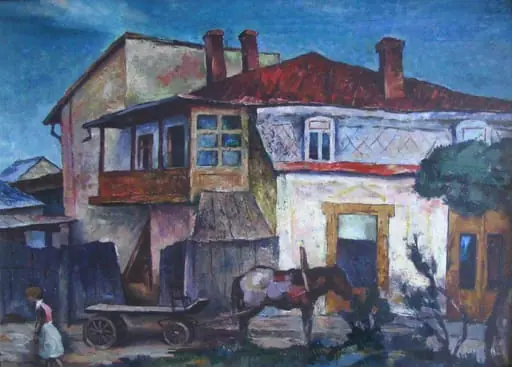
Nicolae Tonitza’s În mahala, dated around 1923, is an image that resides in the Museum of Ethnography. The composition captures a solitary figure in a dilapidated courtyard, framed by cracked walls and a sagging roof. The muted palette of blues, greens and faded whites conveys a sense of wear, while a distant cluster of red‑tiled houses rises on a hillside.
Subject & Meaning
The central figure is a woman wrapped in a plain white headscarf, bent under the weight of a large, yellow‑toned block she bears on her back. Her careful step over a low wooden fence and the surrounding ruin suggest a moment of labor within a disadvantaged quarter, hinting at the everyday hardships of the urban poor.
Technique & Style
Tonitza renders the scene with stark contrasts between light and shadow, emphasizing the texture of cracked plaster and the sheen of the block. The use of chiaroscuro creates depth, while the simplified forms and limited colour range focus attention on the figure’s effort and the environment’s decay.
History & Provenance
Created in the early 1920s, În mahala entered the collection of the Museum of Ethnography, where it remains on display. The work reflects Tonitza’s interest in documenting social conditions of Romanian neighborhoods during the interwar period, aligning with his broader oeuvre of genre scenes.
Artist & collection

Artist
Nicolae Tonitza was a Romanian painter, engraver, lithographer, journalist and art critic. Drawing inspiration from Post-Impressionism and Expressionism, he had a major role in introducing modernist guidelines to local art.