Artwork
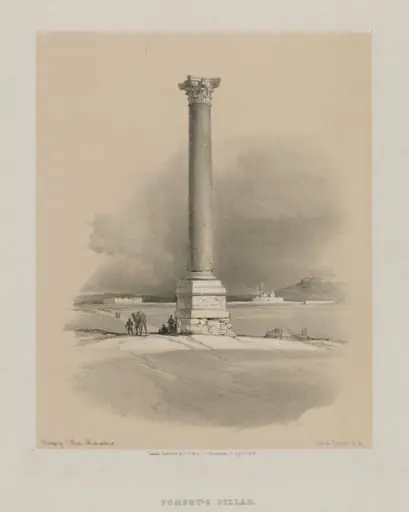
View of Pompey's Pillar; Alexandria in the distance
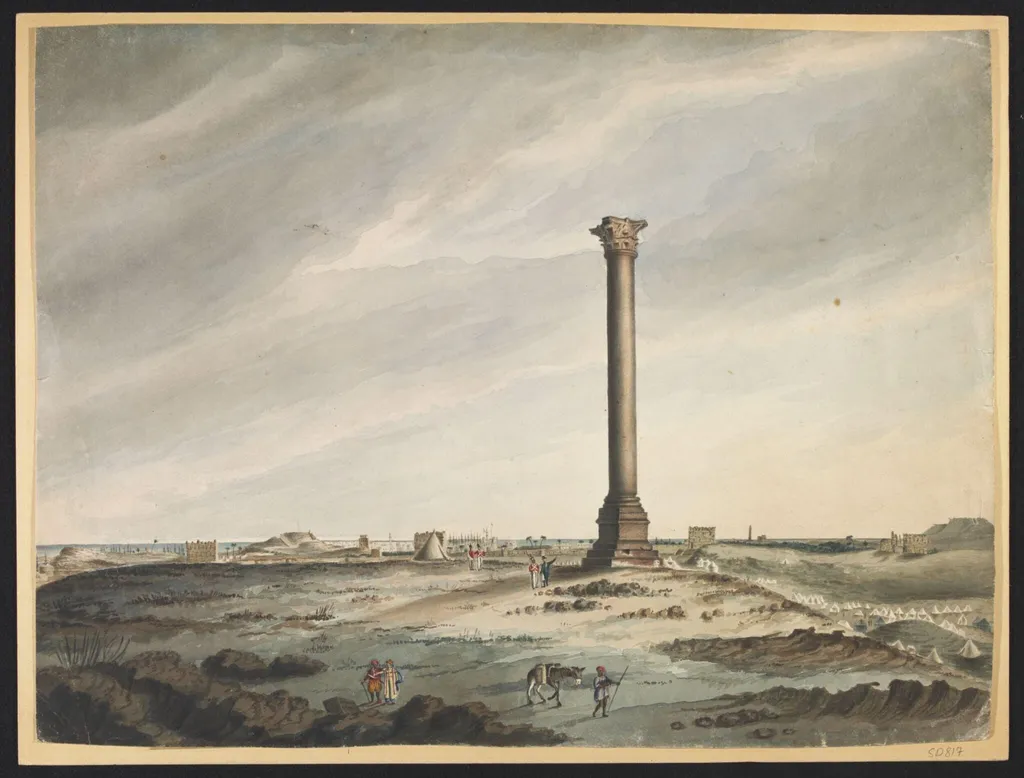
View of Pompey's Pillar; Alexandria in the distance is a watercolor work on paper by the Romanticist artist W. Porter. It dates from 1801 and is held in the collection of the Victoria and Albert Museum. Two watercolours by W.
About this work
Overview
Executed during a British military campaign in Egypt, the works reflect a quiet observational approach to ancient ruins amid a changing landscape.
Two watercolours by W. Porter, created in 1801, capture Pompey’s Pillar and the distant skyline of Alexandria. Executed during a British military campaign in Egypt, the works reflect a quiet observational approach to ancient ruins amid a changing landscape. They were later acquired by Rodney Searight in 1968 from W. Spencer for £27, preserving their connection to early 19th-century travel and documentation.
Subject & Meaning
The scene centers on the solitary column, its weathered form standing against a barren terrain, while Alexandria glimmers faintly on the horizon. Small figures near the base—walking or tending a donkey—emphasize scale and solitude. The contrast between the crumbling monument and the orderly city suggests a meditation on time, decay, and continuity, aligning with Romantic-era interests in ruins as symbols of transience.
Technique & Style
Porter employed delicate watercolour washes to render muted greys, blues, and earth tones, avoiding bold contrasts. The sky is softly graded, and distant architecture is rendered with minimal detail, enhancing the sense of distance. The pillar’s form is defined with restrained line and subtle shading, reinforcing its ancient presence without dramatic emphasis, reflecting a topographical rather than theatrical approach.
History & Provenance
The watercolours were made during a British military expedition to Egypt in 1801, a period of active surveying and documentation. They remained in private hands until October 1968, when Rodney Searight purchased them from W. Spencer for £27. Their survival through over 160 years suggests they were valued as personal records rather than public artworks, preserving a specific moment of early colonial engagement with Egypt’s antiquities.
Context
Created during Britain’s campaign in Egypt, these works reflect the growing European interest in ancient sites as both historical artifacts and subjects of aesthetic contemplation. While not commissioned, they align with the era’s trend of amateur artists recording landscapes and ruins during military or diplomatic travel, contributing to a visual archive that shaped Western perceptions of the region.
Legacy
Porter’s watercolours offer a modest but enduring record of Pompey’s Pillar before modern tourism and excavation altered its surroundings. Their quiet tone and lack of embellishment distinguish them from later, more romanticized depictions. As early visual documents, they provide insight into how ancient monuments were perceived by contemporaries navigating the intersection of military presence and archaeological curiosity.
Artist & collection
Artist
William Porter carried a pocket spyglass everywhere—he claimed it helped him see the future.

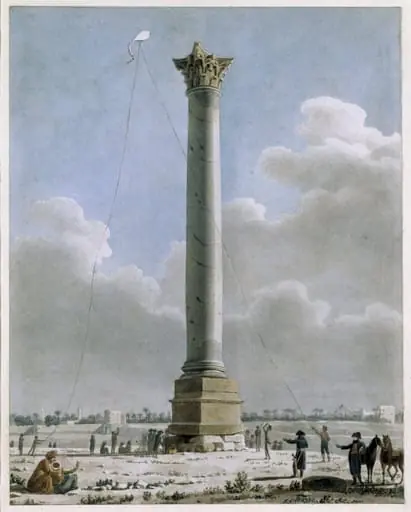 Vue de la colonne de Pompée à Alexandrie
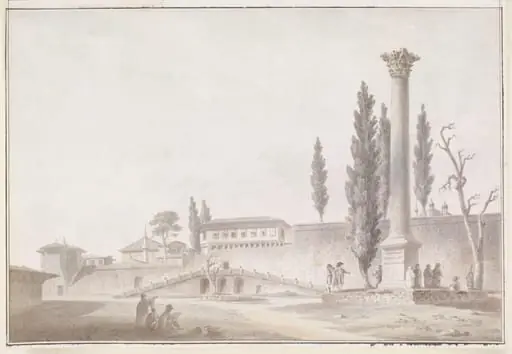 The Gardens of the Seraglio with European visitors inspecting the Column of the Goths, Constantinople
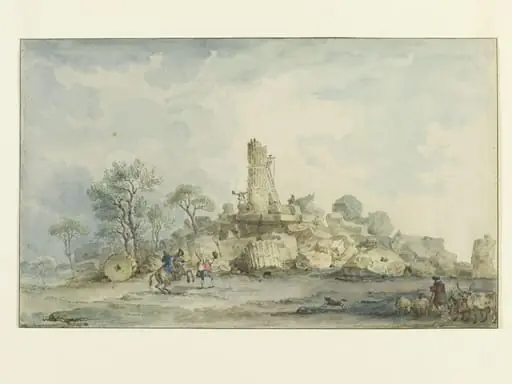 View of the Ruins of the temple of Hercules at Agrigentum
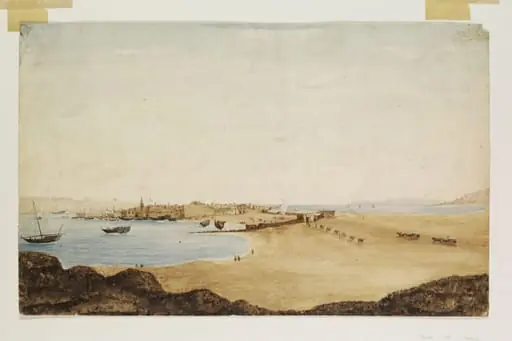 Suez from the Ruins of Colsum
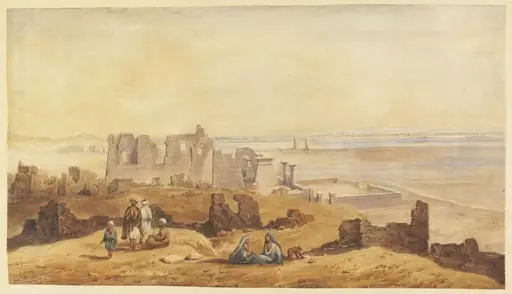 Luxor: the West Bank, with the Temple of Ramesses III at Madinat Habu; looking east towards the Nile
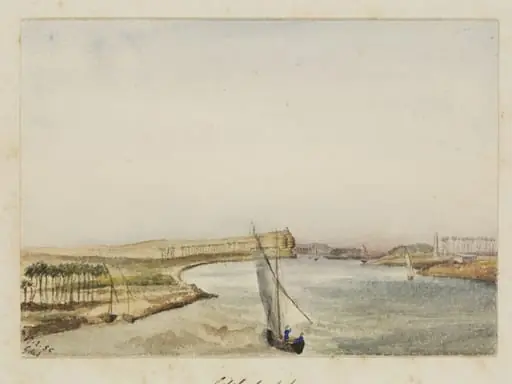 `Gibel-el-dab'
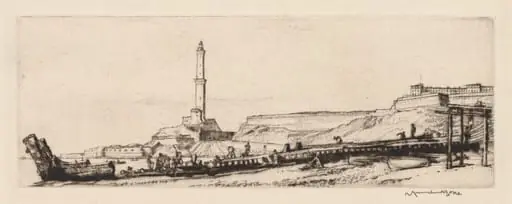 The Langterna, Genoa
 Untitled
 View of Lewenberg
 Village along a River Estuary in Devon
 Ruined Abbey with Cattle and a Man Chopping Wood
 Egypt and Nubia, Volume I: Pompey's Pillar, Alexandria