Artwork
View of Lewenberg
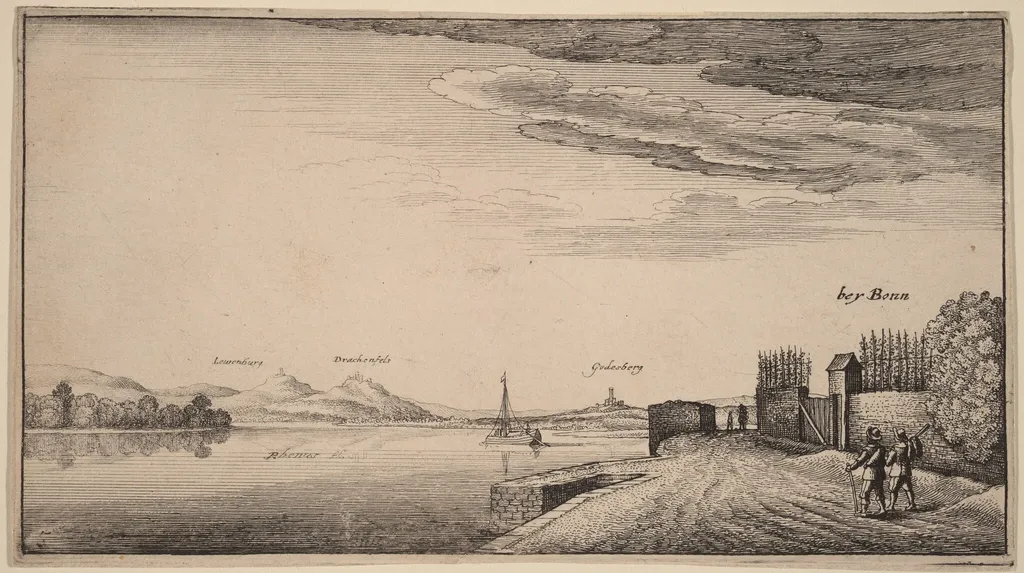
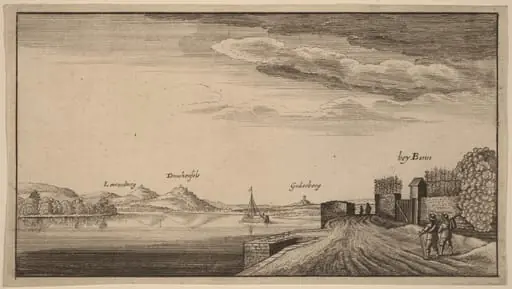
View of Lewenberg is an ink print by the Baroque artist Wenceslaus Hollar. It dates from 1644 and is held in the collection of the National Gallery of Art.
About this work
Overview
The composition centers on a modest boat drifting near the middle of the scene, flanked by two figures on the bank—one grasping a pole, the other a bundle.
Created in 1644, this etching titled *View of Lewenberg* presents a tranquil riverside tableau. The composition centers on a modest boat drifting near the middle of the scene, flanked by two figures on the bank—one grasping a pole, the other a bundle. Gentle hills bearing the names Lewenberg, Drachenfels and Godesberg rise in the background, while trees and a handful of structures line the shoreline beneath a sky brushed with delicate clouds.
Subject & Meaning
The work functions as a topographical record, marking specific landmarks with handwritten labels that turn the image into a quasi‑map of the Lewenberg region. By situating human activity—a boat and laborers—within a carefully rendered natural setting, the print conveys both the everyday life along the river and the distinctive geography of the three hills that define the locale.
Technique & Style
Executed with the etching process, Hollar employed fine, incised lines to model the water’s surface, the rolling hills, and the foliage, achieving a sense of depth through varying line density. The delicate hatching creates atmospheric effects in the sky and subtle texture on the buildings, reflecting the artist’s reputation for precise, documentary‑like cityscapes and landscapes.
History & Provenance
The piece was produced by Wenceslaus Hollar, a Czech-born printmaker who spent the majority of his professional life in England. Born in Prague in 1607, Hollar established a prolific output of prints after relocating to London, where he died in 1677 and was interred at St Margaret’s Church, Westminster. The etching reflects his ongoing interest in European topography.
Context
During the mid‑17th century, detailed vedute and topographical prints were in demand among travelers and scholars seeking visual documentation of distant places. Hollar’s *View of Lewenberg* aligns with this trend, offering a precise visual account of a Germanic landscape at a time when printed maps and city views were valuable resources for both navigation and cultural knowledge.
Artist & collection
Artist
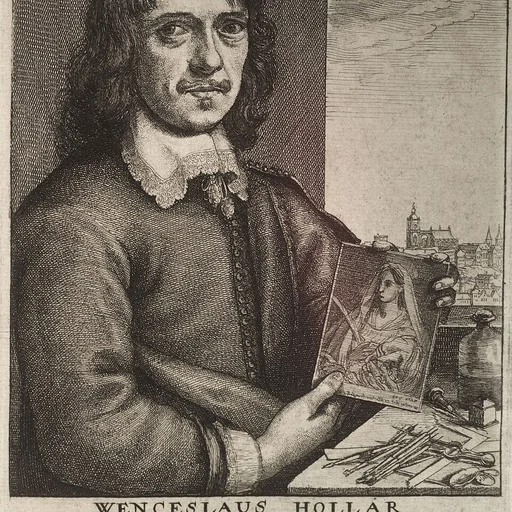
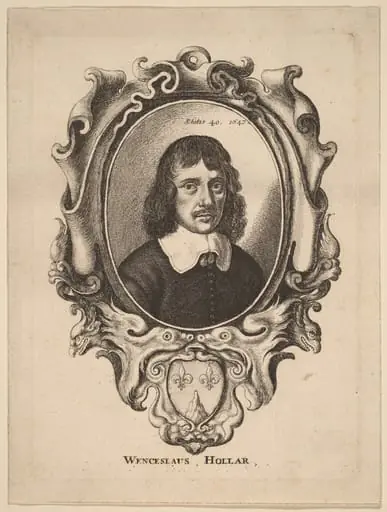
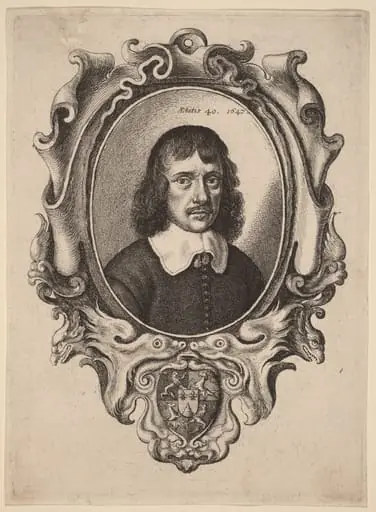
Wenceslaus Hollar (Czech: Václav Hollar (Czech pronunciation: ), German: Wenzel Hollar; 23 July 1607 – 25 March 1677) was a Czech engraver, etcher and painter.


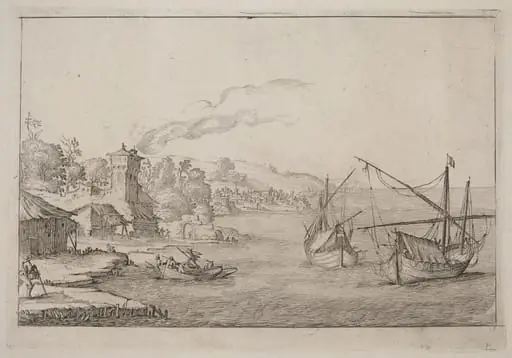 Coastal Landscape with Anchored Vessels
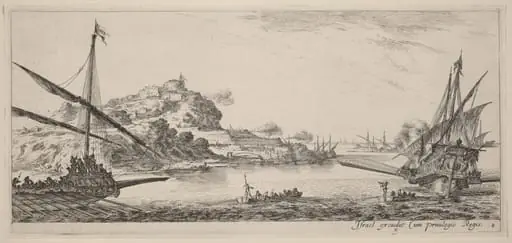 Two Galleys and their Launches
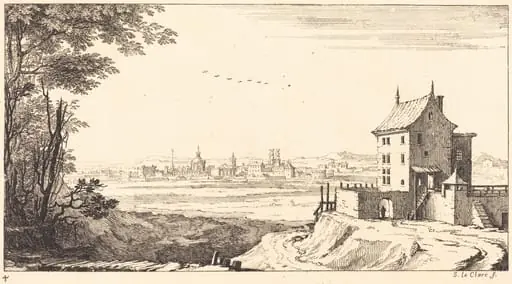 Landscape with City in Distance
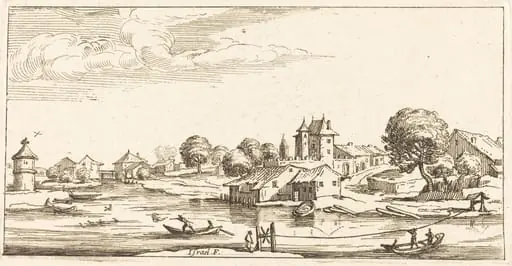 Landscape
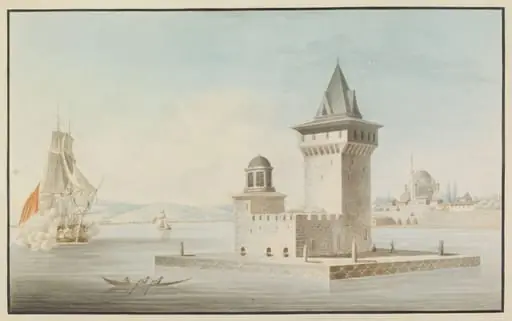 Kiz Kulesi (Leander's or Maiden's Tower) in the Bosphorus with Ayazma Camii near the shore at Üsküdar (Scutari)
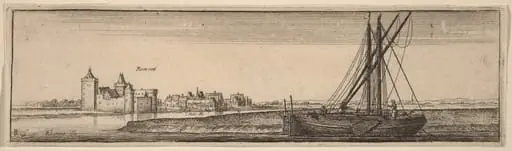 Roerort
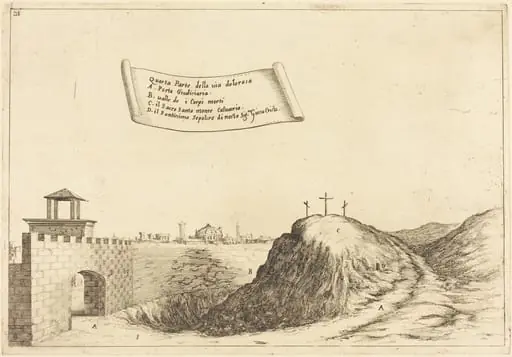 Four Parts of the Via Dolorosa
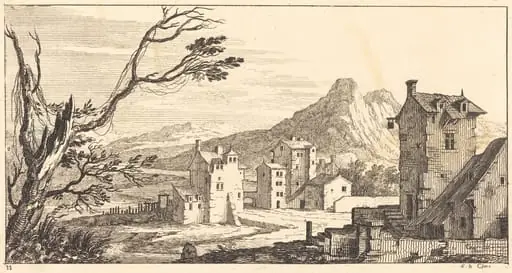 Landscape with Houses
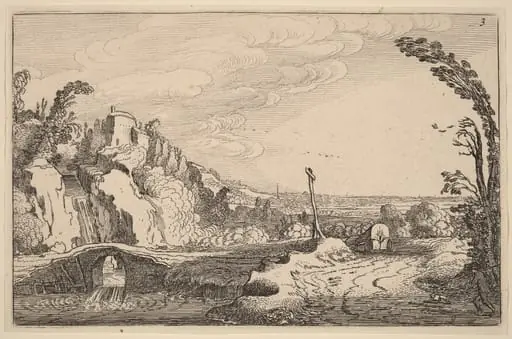 Cascade under a Stone Bridge
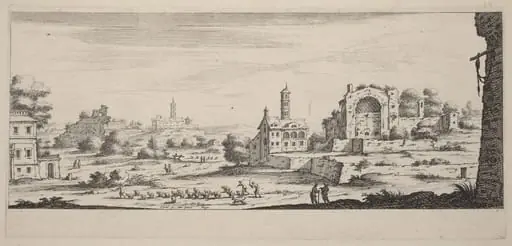 Veuë de temple de Soleil à Rome (View of the Sun Temple in Rome)
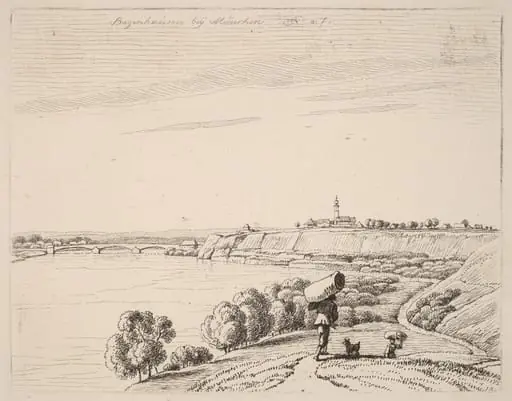 Bogenhausen
 View of Lewenberg