Artwork
Vue de la colonne de Pompée à Alexandrie
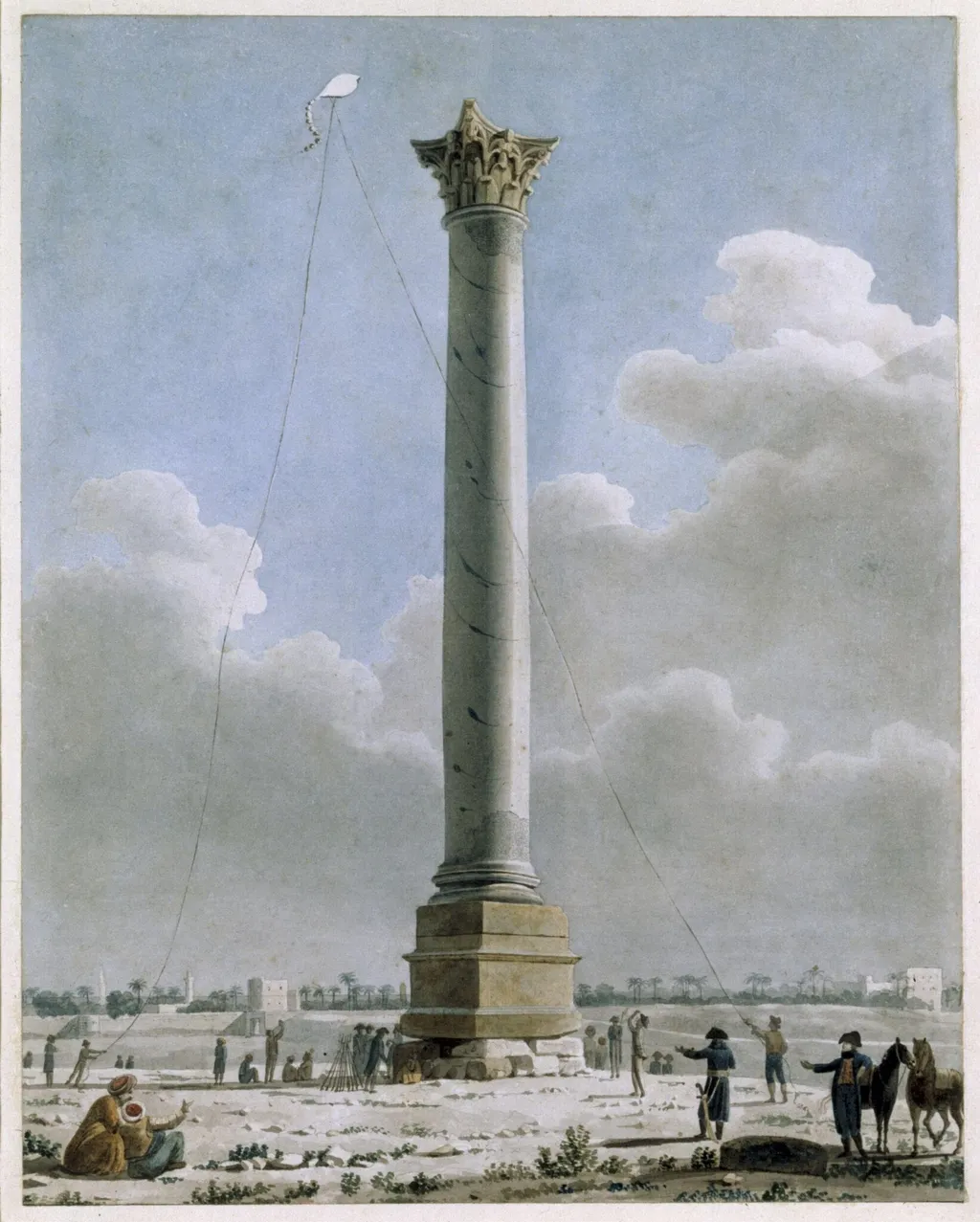
Vue de la colonne de Pompée à Alexandrie is a watercolor work on paper by the Romanticist artist Dominique Vivant Denon. It dates from 1798 and is held in the collection of the Victoria and Albert Museum. The watercolor, executed in 1798, records a scene from Napoleon’s Egyptian expedition.
About this work
Their team uses a kite to fly a line over the column’s capital so a soldier can climb up and raise the French flag.
Denon painted this watercolor in 1798 during Napoleon’s Egypt campaign. It shows a tall red granite column in Alexandria with two figures nearby—likely Napoleon and Denon himself. Their team uses a kite to fly a line over the column’s capital so a soldier can climb up and raise the French flag.
The British later copied this exact trick after beating the French. It wasn’t for measuring height—they had better tools.
Look up the Victoria and Albert Museum next.
Overview
The watercolor, executed in 1798, records a scene from Napoleon’s Egyptian expedition. It portrays the massive red granite column that dominates the Alexandria skyline, with two men in the foreground—identified as Napoleon and the artist Dominique‑Jean‑Larrey Denon—overseeing a kite‑based operation to hoist a French flag atop the monument.
Subject & Meaning
The composition captures a symbolic act of conquest: a kite is employed to carry a line over the column’s capital, allowing a soldier to ascend and plant the French colors. This gesture was later imitated by British forces after they expelled the French, underscoring the column’s role as a visual prize in the contest for dominance over Alexandria.
Technique & Style
Denon worked in transparent watercolor, using delicate washes to render the gleaming granite and the bright sky. The figures are rendered with fine linear detail, while the surrounding architecture and distant landscape are suggested with broader, looser strokes, creating a sense of depth and immediacy typical of late‑18th‑century field sketches.
Context
The column, erected around AD 300 to honor Emperor Diocletian, was mistakenly linked in medieval tradition to a temple of Pompey. During the French campaign, it became a focal point for propaganda, illustrating the scientific and artistic documentation undertaken by the Commission des Sciences et des Arts that accompanied Napoleon’s army.
Legacy
Denon’s watercolor stands as a primary visual record of the French attempt to claim the column, and it informs later British depictions of the same event. The work also exemplifies the broader Enlightenment‑driven effort to catalogue Egypt’s monuments, a project that influenced subsequent archaeological and artistic studies of the region.
Artist & collection

Artist
Dominique Vivant, Baron Denon was a French artist, writer, diplomat, author, and archaeologist.

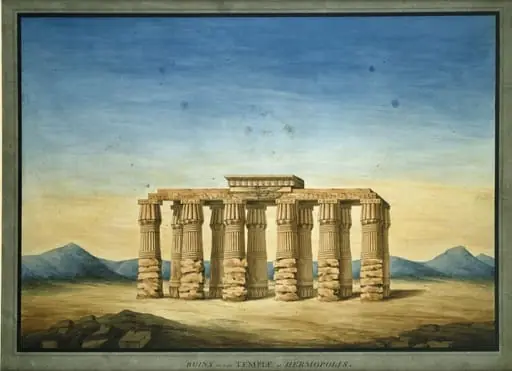 Ruins of the Temple of Hermopolis
![View of an Egyptian Temple. [Dendara]. 1807, by Dominique Vivant Denon](https://artifactworldgallery.com/img/dominique-vivant-denon--view-of-an-egyptian-temple-dendara-1807--69b7b6b17d97f4dc-w320.webp) View of an Egyptian Temple. [Dendara]. 1807
View of an Egyptian Temple. [Dendara]. 1807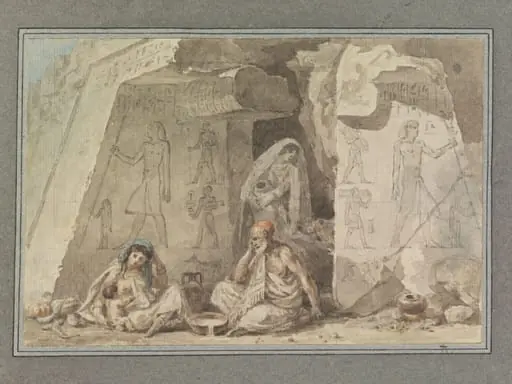 Family of Egyptian Fellahin, at Tomb Entrance
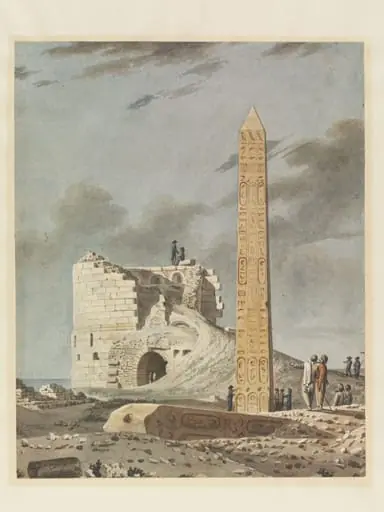 Vue de Obélisque dite de Cléopatre à Alexandrie
 Holy Family on the Flight into Egypt
 Allegory: Portraits of the Artist at Different Ages
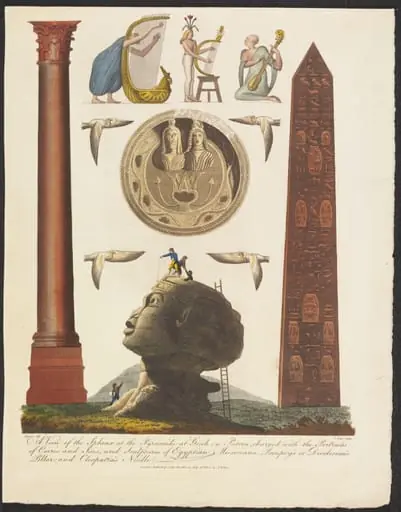 A view of the Sphinx at the Pyramids at Gizeh, a Patera, charged with the portraits of Osiris and Isis, and Sculptures of Egyptian Musicians, Pompey's or Dioclesian's Pillar, and Cleopatra's Needle
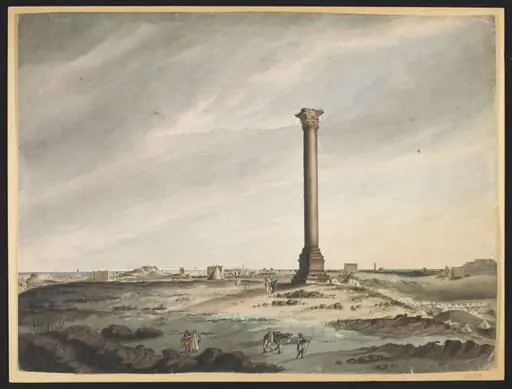 View of Pompey's Pillar; Alexandria in the distance
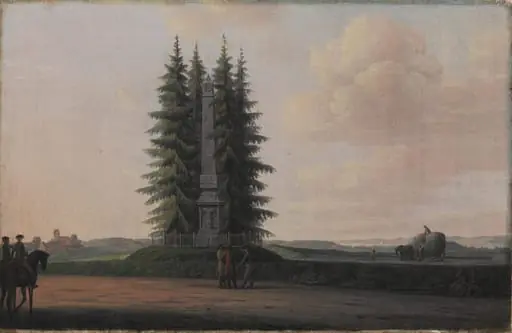 The Obelisk erected in Honour of the Statesman J.H.E. Bernstorff in Gentofte, North of Copenhagen
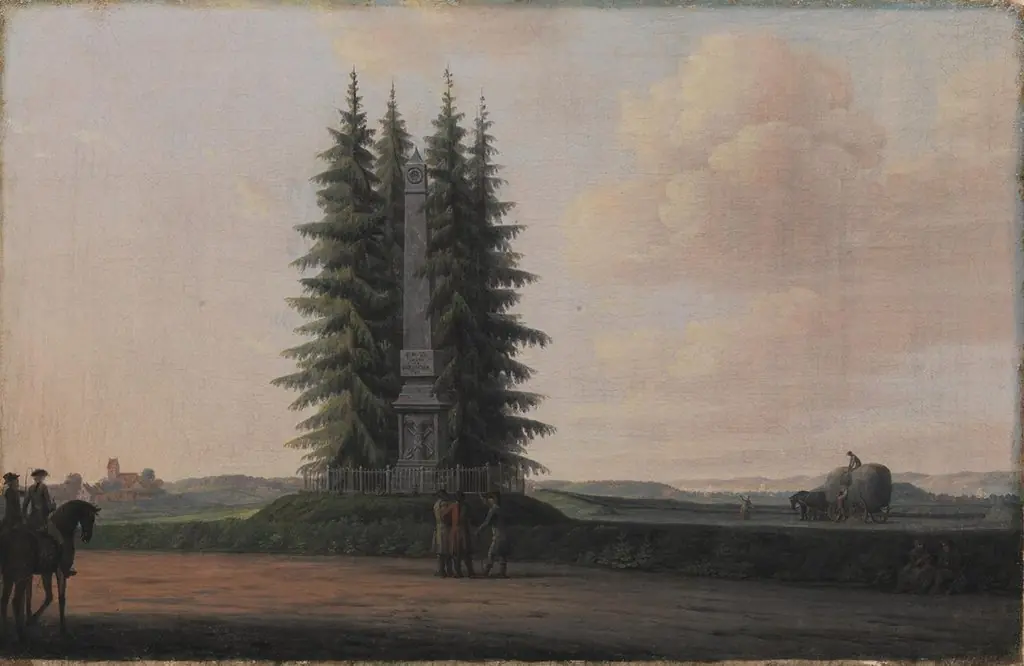 The Obelisk erected in Honour of the Statesman J.H.E. Bernstorff in Gentofte, North of Copenhagen
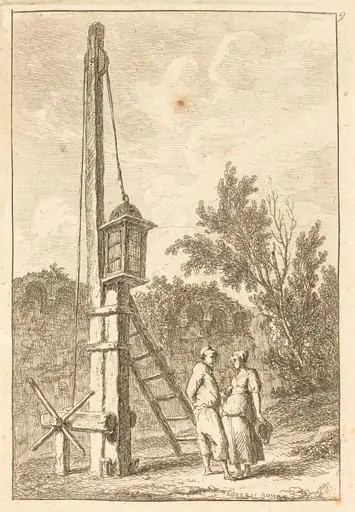 The Post
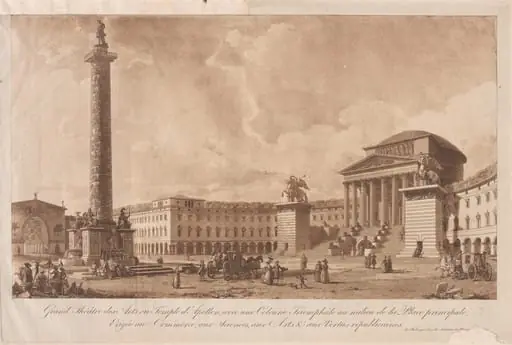 Grand Théâtre des Arts ou Temple d'Apollon, avec une Colonne Triomphâle au milieu de la Place principale, erigée au Commerce, aux Sciences, aux Arts & aux Vertus républicaines (Grand Theater of the Arts or Temple of Apollo, with a Victory Column in the Middle of the Main Square, Erected to Commerce, the Sciences, the Arts, and Republican Virtues)
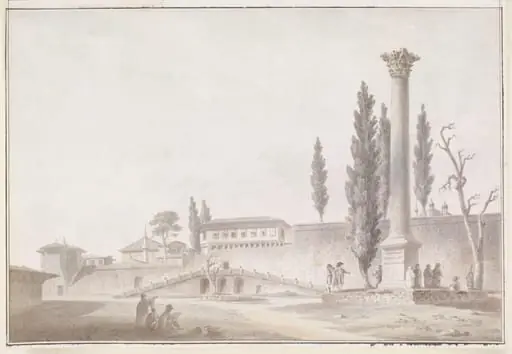 The Gardens of the Seraglio with European visitors inspecting the Column of the Goths, Constantinople
 Drie gezichten op de Parelrivier: Kanton, Macao, Whampoa
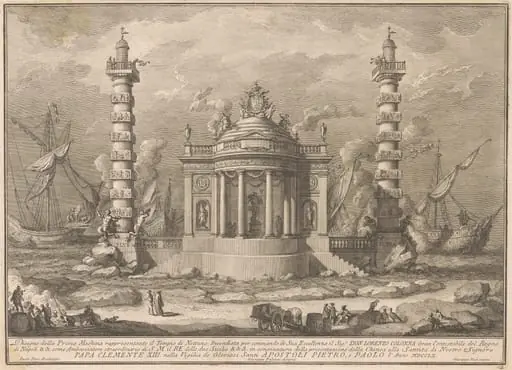 The Prima Macchina for the Chinea of 1760: The Temple of Neptune
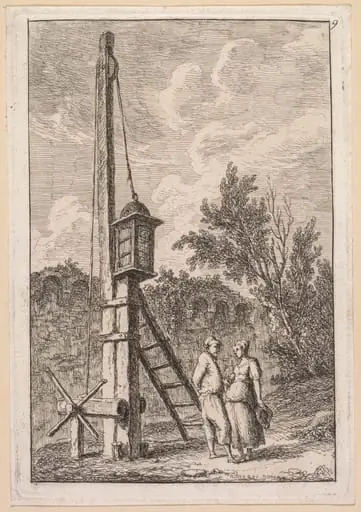 Le Poteau
 Kiz Kulesi (Leander's or Maiden's Tower) in the Bosphorus with Ayazma Camii near the shore at Üsküdar (Scutari)
 View of the Ruins of the temple of Hercules at Agrigentum