Artwork
St George's or Newin Gate, Canterbury
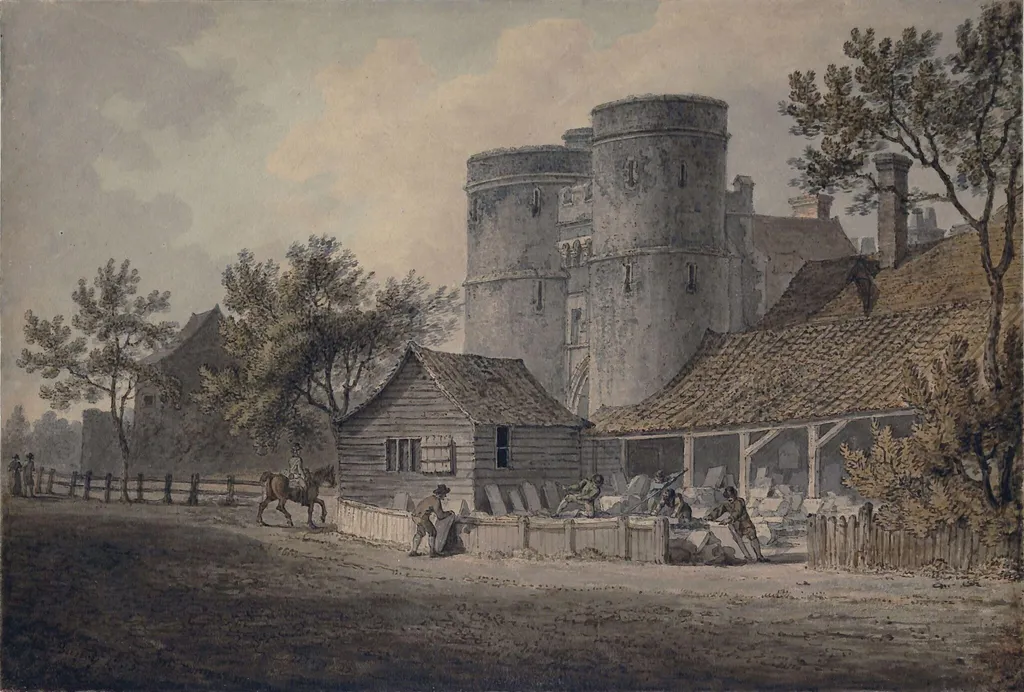
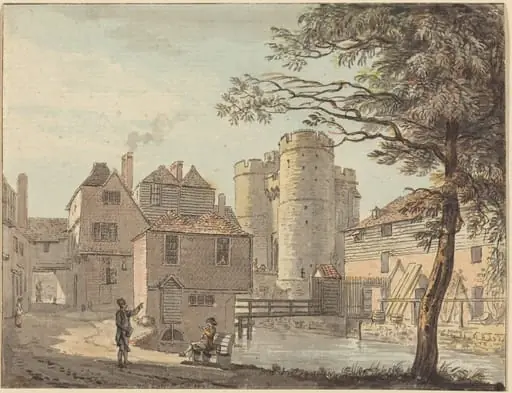
St George's or Newin Gate, Canterbury is a watercolor work on paper by the Romanticist artist Pouncy. It dates from 1795 and is held in the collection of the Victoria and Albert Museum. This 1795 watercolour by an anonymous artist captures the Newin Gate, also known as St George’s Gate, in Canterbury.
About this work
Overview
This 1795 watercolour by an anonymous artist captures the Newin Gate, also known as St George’s Gate, in Canterbury. The work is signed and dated by the hand of the painter, affirming its origin in the late eighteenth century. Rendered in delicate washes, the scene balances architectural presence with quiet human activity, avoiding dramatic emphasis in favor of observed reality.
Subject & Meaning
The painting juxtaposes the enduring stone gateway with the humble routines of daily life. Laborers haul stones and push a cart near a thatched cottage, while a lone rider passes a wooden fence. The gate, a relic of medieval fortifications, stands as a silent witness to ordinary work, suggesting continuity between past and present without overt symbolism or narrative.
Technique & Style
The artist employs soft, muted watercolour tones to evoke a subdued atmosphere. Fine brushwork defines textures—rough stone, thatch, and worn wood—while loose washes suggest distance and atmosphere. The composition avoids theatricality, favoring observational precision and tonal harmony to ground the scene in tangible reality.
History & Provenance
The painting’s early date places it within a period of growing interest in topographical accuracy and vernacular architecture. Though its early ownership is undocumented, its survival and signature indicate it was likely kept as a personal record or local study, rather than a commissioned work for public display.
Context
In late eighteenth-century England, watercolours of historic sites were increasingly made by amateur and professional artists alike, often as records of changing landscapes. Canterbury’s medieval structures attracted such attention, and this work reflects a broader trend of documenting urban and rural life alongside architectural heritage.
Legacy
The painting contributes to a quiet tradition of British watercolour that valued everyday scenes within historic settings. While not widely exhibited, its careful observation and restrained palette align it with contemporaries who sought authenticity over grandeur, influencing later topographical and documentary approaches in British art.
Artist & collection

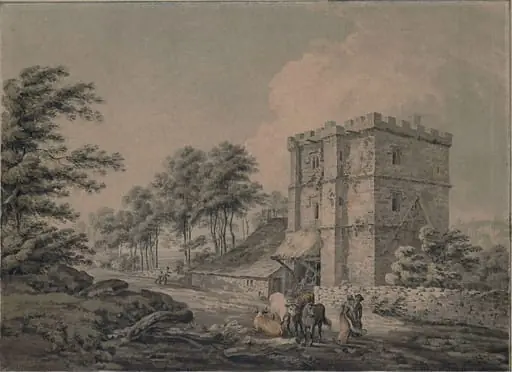 Wetheral Priory, Cumberland, with figures and cattle
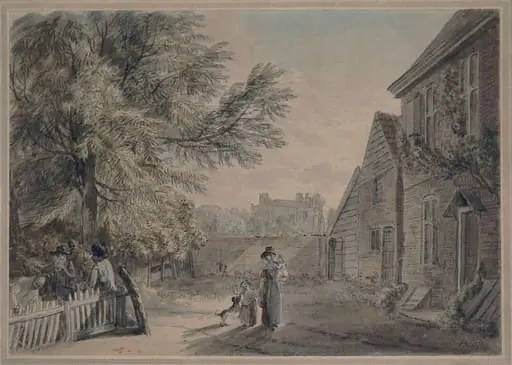 Old Public House, Bayswater
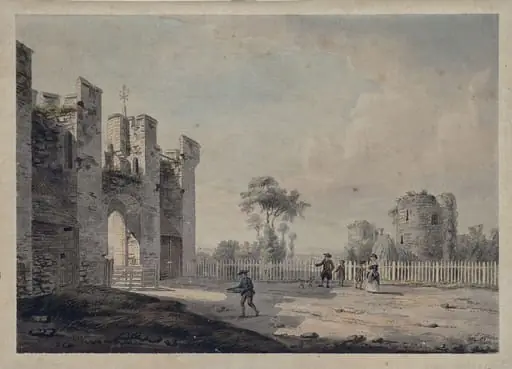 Interior view of the ruins of Cowling (or Cooling) Castle, Kent
 Cottages in a landscape
 St. James's Park
 Horses and Carts on a Country Road
 Millpond near Shrewsbury
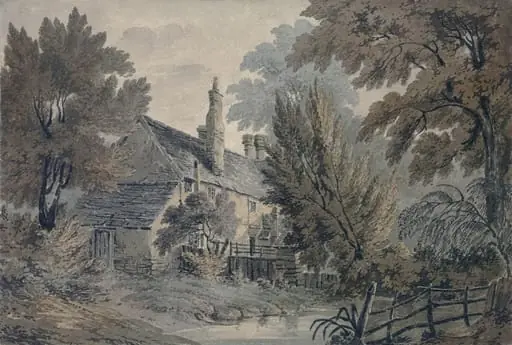 Landscape with House by a Pond
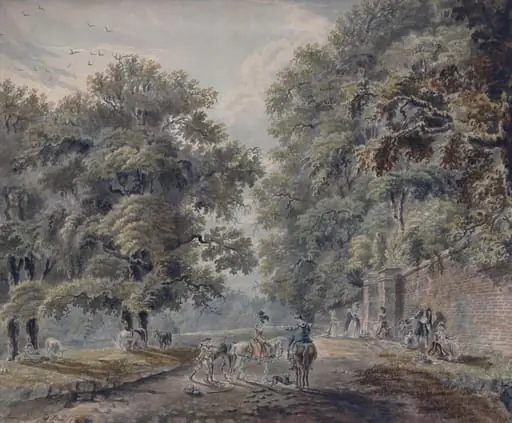 Entrance to Greenwich Park from Blackheath
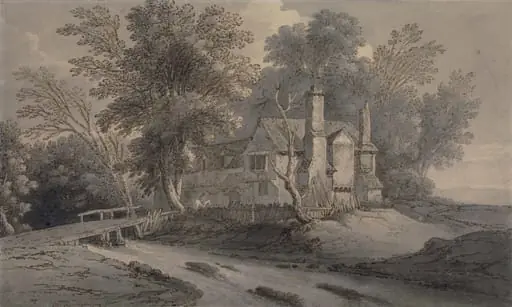 An Old Manor House
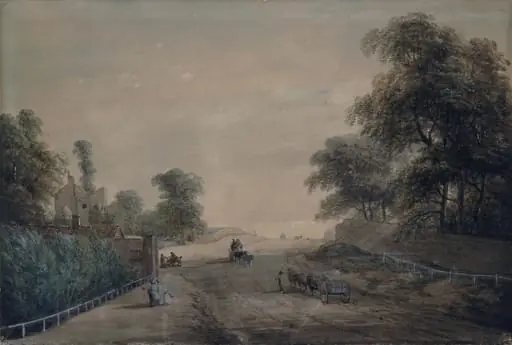 Bayswater Hill
 West Gate at Canterbury