Artwork
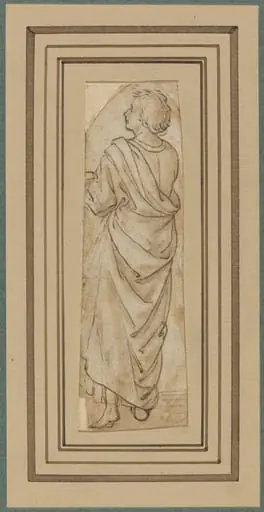
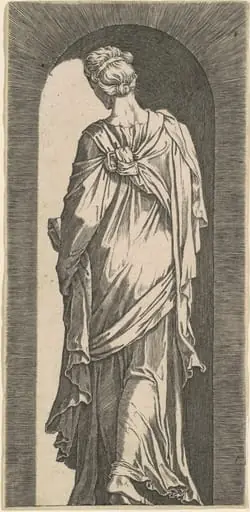
Female Roman Statue Seen from the Back
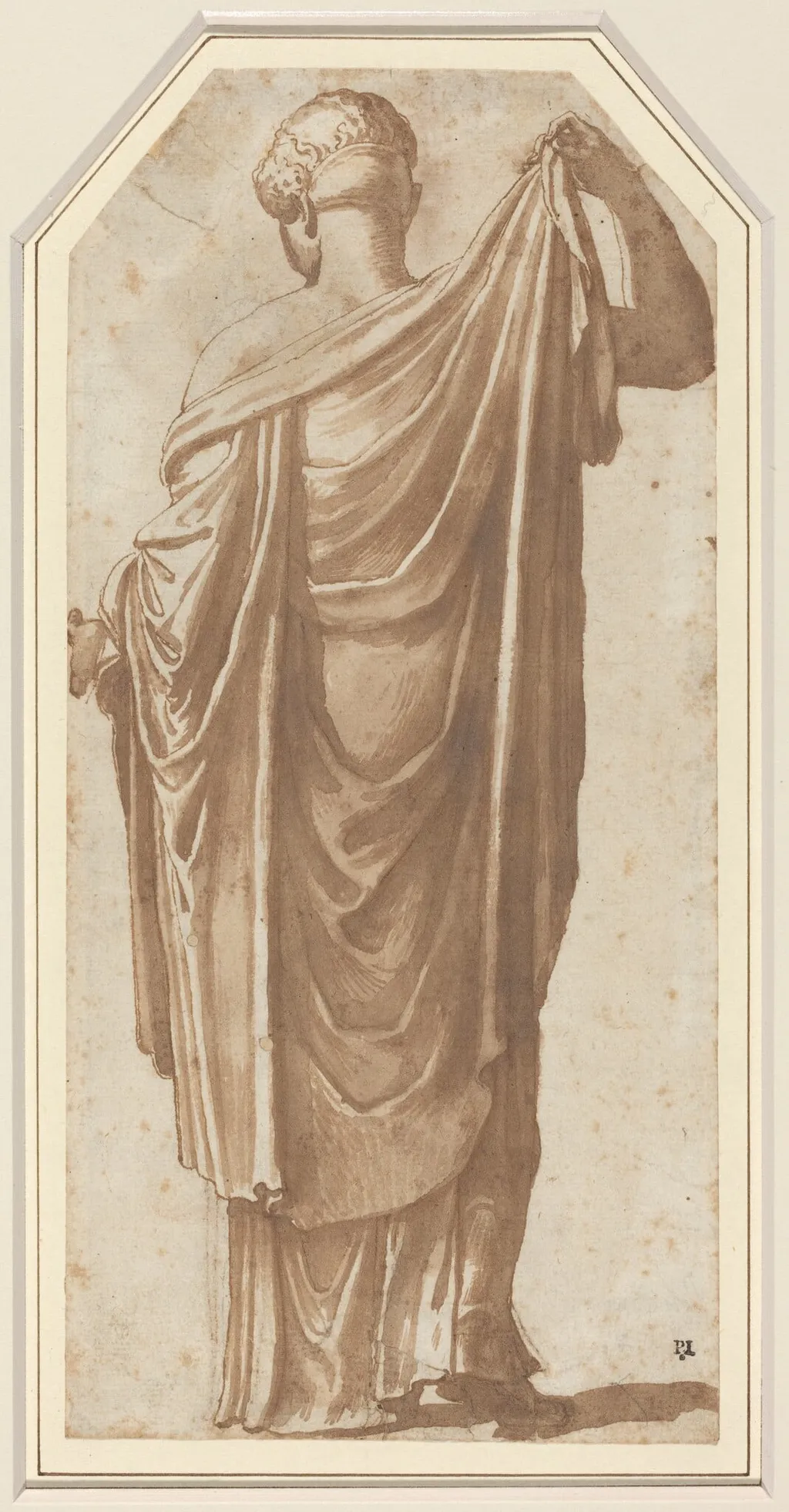
Female Roman Statue Seen from the Back is a chalk drawing by the Renaissance artist Nicolas Poussin. It dates from 1630 and is held in the collection of the National Gallery of Art.
About this work
The painting is called Female Roman Statue Seen from the Back.
It was made by Nicolas Poussin in the 17th century.
The artist used pen, brush, and ink on paper to create this work, which is now held at the National Gallery of Art, Washington, and is part of the Renaissance movement, you can learn more about the movement by looking into the Renaissance.
Overview
Created in 1630, Female Roman Statue Seen from the Back is a drawing by the French artist Nicolas Poussin. Executed with pen, brush and brown ink on a laid paper ground, the work records the rear view of a classical female statue. It is part of the collection of the National Gallery of Art in Washington, D.C.
Subject & Meaning
The composition presents the back of a Roman female figure, emphasizing the sculptural form and the play of light across its draped surface. By focusing on the reverse side, Poussin invites contemplation of the unseen aspects of classical sculpture, a theme that aligns with the period’s interest in antiquity and idealized beauty.
Technique & Style
Poussin employed a combination of fine pen lines and broader brush strokes, layering brown ink over an initial black chalk sketch. The use of laid paper provides a subtle texture that enhances the tonal contrasts, while the restrained palette reflects the drawing’s academic approach to rendering three‑dimensional form on a two‑dimensional support.
History & Provenance
The drawing entered the National Gallery of Art’s holdings through acquisition in the 20th century, though earlier ownership records are limited. Its presence in the museum’s collection underscores the institution’s commitment to representing Poussin’s oeuvre and the broader currents of 17th‑century French drawing.
Context
Produced during the early Baroque period, the work nevertheless reflects the Renaissance revival of classical motifs that persisted in French art. Poussin’s study of ancient statuary was part of a larger scholarly pursuit to integrate antiquarian knowledge into contemporary visual practice.
Artist & collection