Artwork
Modello for a Ceiling: Diana and the Dead Endymion, the Judgment of Paris, and the Death of Adonis
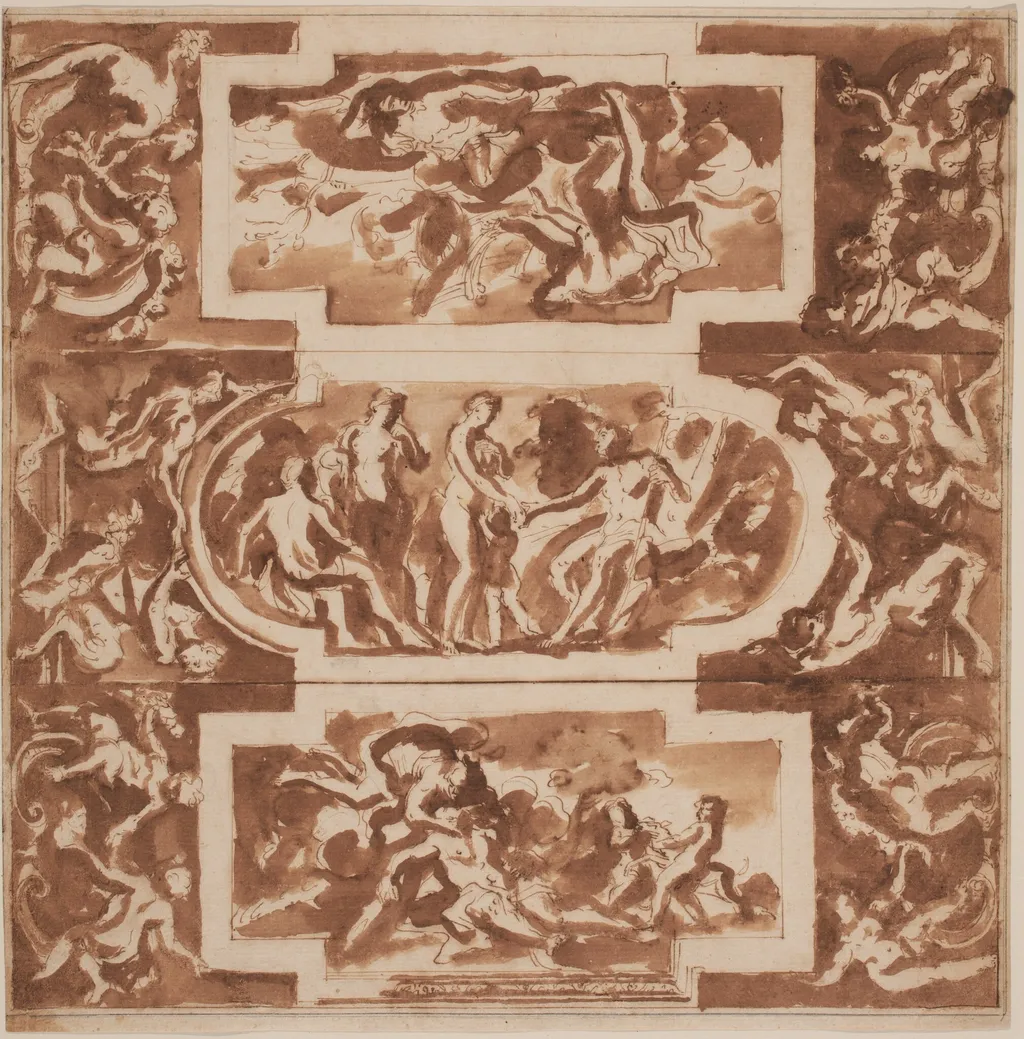
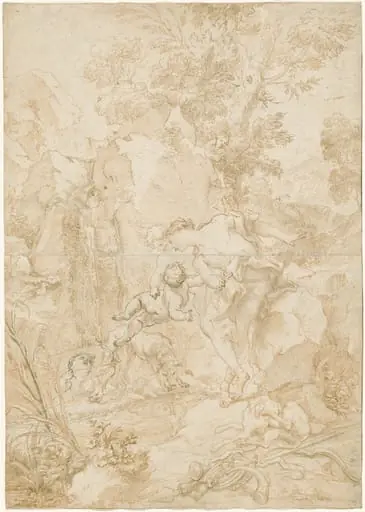
Modello for a Ceiling: Diana and the Dead Endymion, the Judgment of Paris, and the Death of Adonis is a chalk drawing by the Baroque artist Nicolas Poussin. It dates from 1641 and is held in the collection of the National Gallery of Art.
About this work
Overview
This ink and wash drawing by Nicolas Poussin, dated 1641, serves as a preparatory study for a ceiling composition. Executed on laid paper with black chalk underdrawing, it presents three mythological episodes in rectangular panels. The work’s loose, rapid strokes and muted tonality suggest a working sketch rather than a finished piece, emphasizing compositional planning over detail.
Subject & Meaning
The drawing unites three classical myths: Diana discovering the dead Endymion, the Judgment of Paris, and the death of Adonis. Each scene explores themes of mortality, divine judgment, and unfulfilled desire. By placing them side by side, Poussin invites contemplation on fate and the consequences of human and divine actions, linking them through shared emotional gravity.
Technique & Style
The figures are densely arranged, their movements rendered in swift, gestural lines that convey dynamism without refinement.
Poussin employed pen and brown ink with wash over black chalk to build form and shadow with economical strokes. The figures are densely arranged, their movements rendered in swift, gestural lines that convey dynamism without refinement. Decorative borders of foliate scrolls frame the scenes, suggesting the intended architectural context while contrasting with the raw energy of the central imagery.
History & Provenance
Created in 1641 during Poussin’s time in Rome, the drawing was likely intended as a model for a ceiling decoration, possibly for a private patron or ecclesiastical commission. Its survival as a standalone work reflects its value as a record of the artist’s process. It entered the collection of the Metropolitan Museum of Art in the 20th century, where it remains a key example of Baroque preparatory drawing.
Context
In mid-17th-century Rome, artists often produced detailed models for large-scale decorative programs. Poussin’s approach, rooted in classical literature and structured composition, stood apart from the more theatrical Baroque style. This drawing reflects his intellectual engagement with myth and his methodical planning, aligning with humanist ideals even as it embraced dramatic narrative.
Legacy
The drawing exemplifies Poussin’s influence on later academic traditions, particularly in the use of mythological themes and compositional studies. Its preservation highlights the importance of preparatory work in Renaissance and Baroque practice. Scholars continue to analyze it as a window into the artist’s thought process, bridging literary sources and visual execution.
Artist & collection


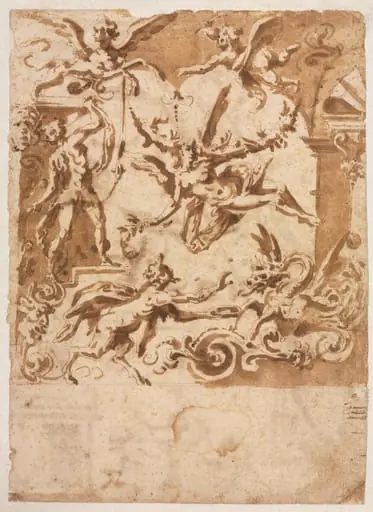 Grotesque with a Satyr Feeding a Dragon (recto)
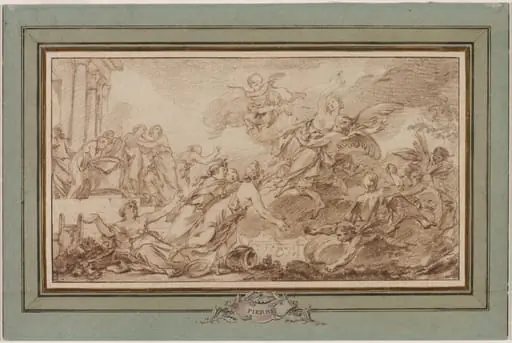 Boreas Abducting Oreithyia
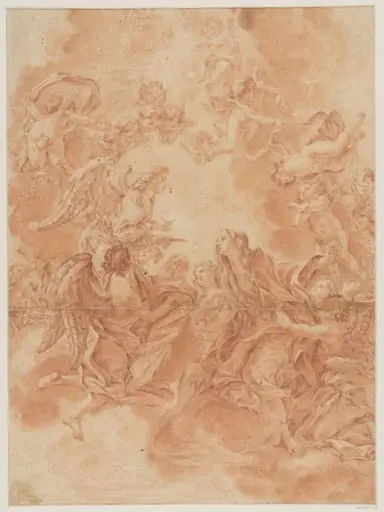 The Communion of St Mary Magdalene
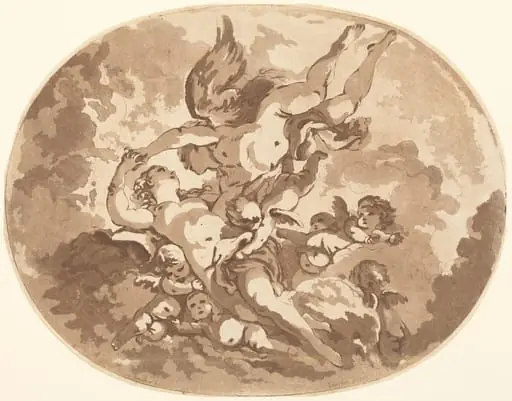 Eros and Psyche
 The Triumph of Empire, with the Four Continents
 The Last Judgment
 Allegory of the Union of Painting and Sculpture
 Illusionistic Ceiling with a Grape Arbor, Figures Poised on Galleries, and a Central Scene of Olympian Gods
 Echo and Narcissus