Artwork
The Triumph of Bacchus
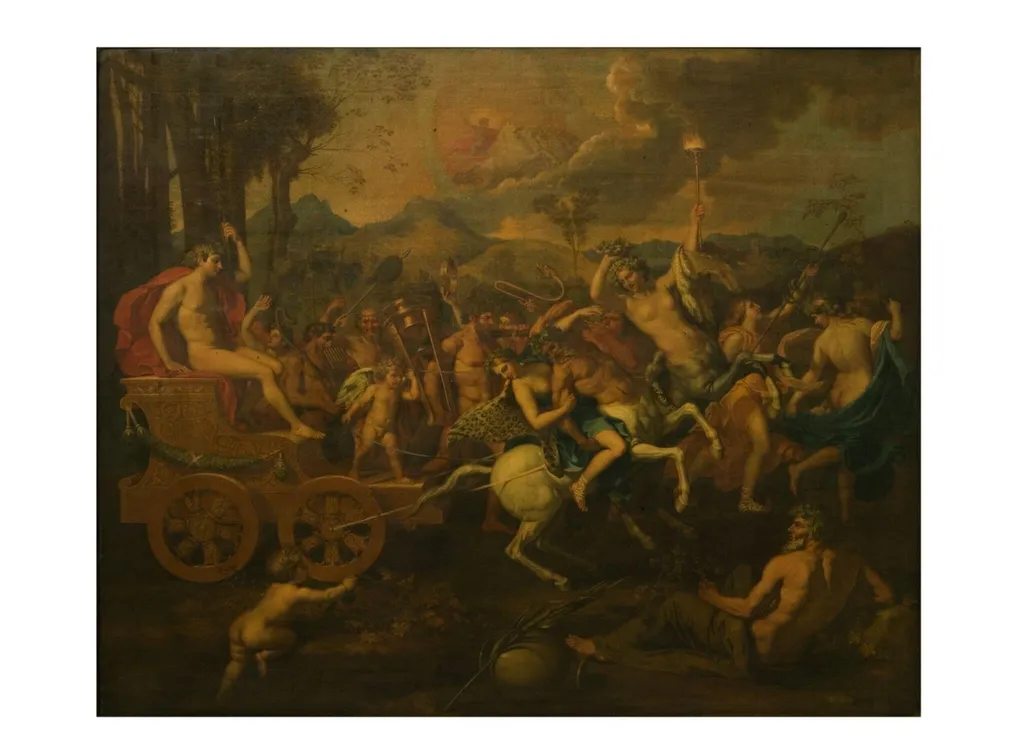
The Triumph of Bacchus is an oil painting by the Romanticist artist Nicolas Poussin. It is held in the collection of the Victoria and Albert Museum.
About this work
Overview
The Triumph of Bacchus is an oil painting depicting a mythological scene of revelry. Executed in Poussin's characteristic style, it showcases the god Bacchus amidst a procession of mythological figures. This work is a faithful, old copy of the original, matching its dimensions.
Subject & Meaning
The painting illustrates the triumphant procession of Bacchus, god of wine, accompanied by satyrs, centaurs, nymphs, putti, Pan, and Hercules.
The painting illustrates the triumphant procession of Bacchus, god of wine, accompanied by satyrs, centaurs, nymphs, putti, Pan, and Hercules. Apollo is also present, driving the Sun's chariot above. Beneath the joyful, wine-filled scene, the weariness of the participants and the use of mythological narrative hint at deeper emotional undertones, characteristic of Poussin's approach to blending revelry with introspection.
Technique & Style
Poussin's meticulous technique is evident in the layered, glowing colors and the realistic depiction of muscles and shadows, showcasing his mastery of chiaroscuro and anatomical detail. The work reflects his slow and deliberate painting process.
History & Provenance
The original painting was commissioned by Cardinal Richelieu around 1636 for his Poitou castle. This copy, of the same dimensions as the original (now in the Nelson Gallery of Art and Atkins Museum, Kansas City), is of unknown provenance but acknowledged as an old and faithful reproduction.
Context
Created during Poussin's Roman period, the work draws on his influences from the Ecole de Fontainebleau and his study of classical mythology. It reflects the artistic tastes of prominent 17th-century collectors like Cardinal Richelieu.
Legacy
As part of Poussin's oeuvre, The Triumph of Bacchus influenced later artists, notably through his pupil Gaspard Dughet. Poussin's overall contribution to the development of landscape and historical painting can be further explored through his broader body of work.
Own this work as a print
Artist & collection


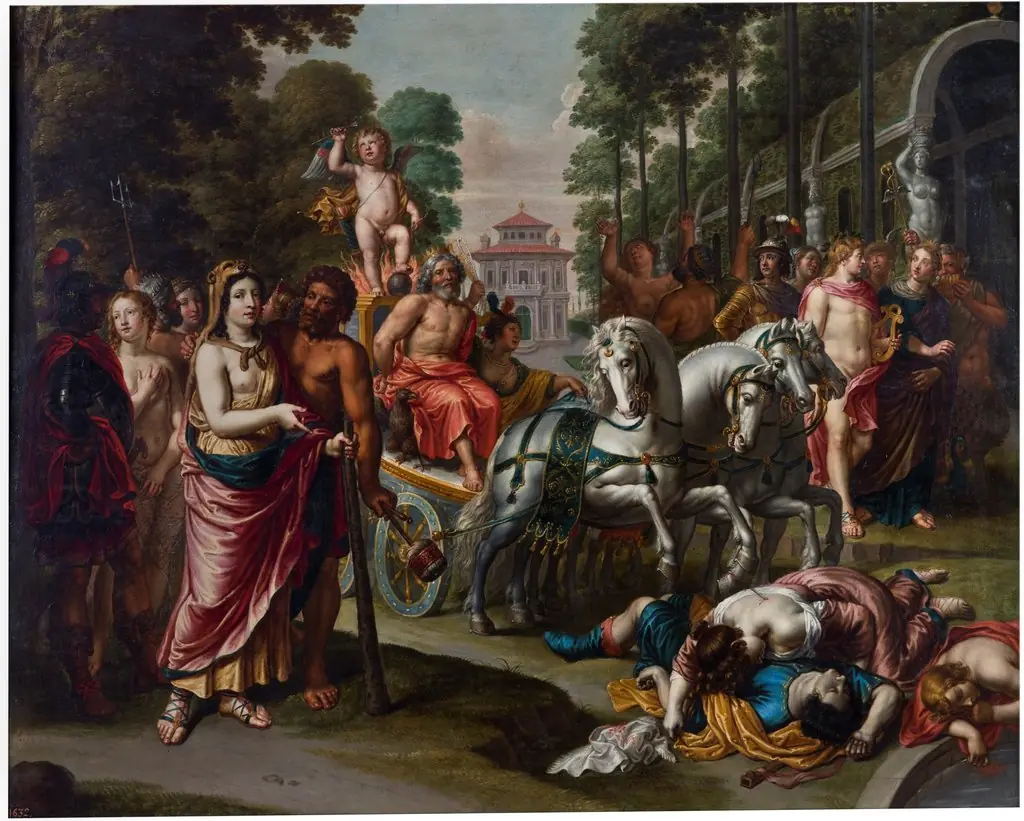 Triumph of Love
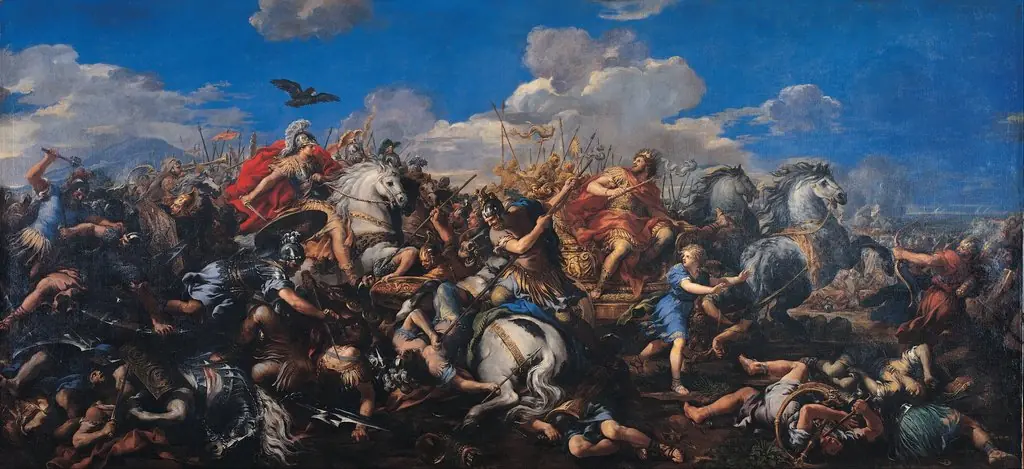 Battle of Alexander versus Darius
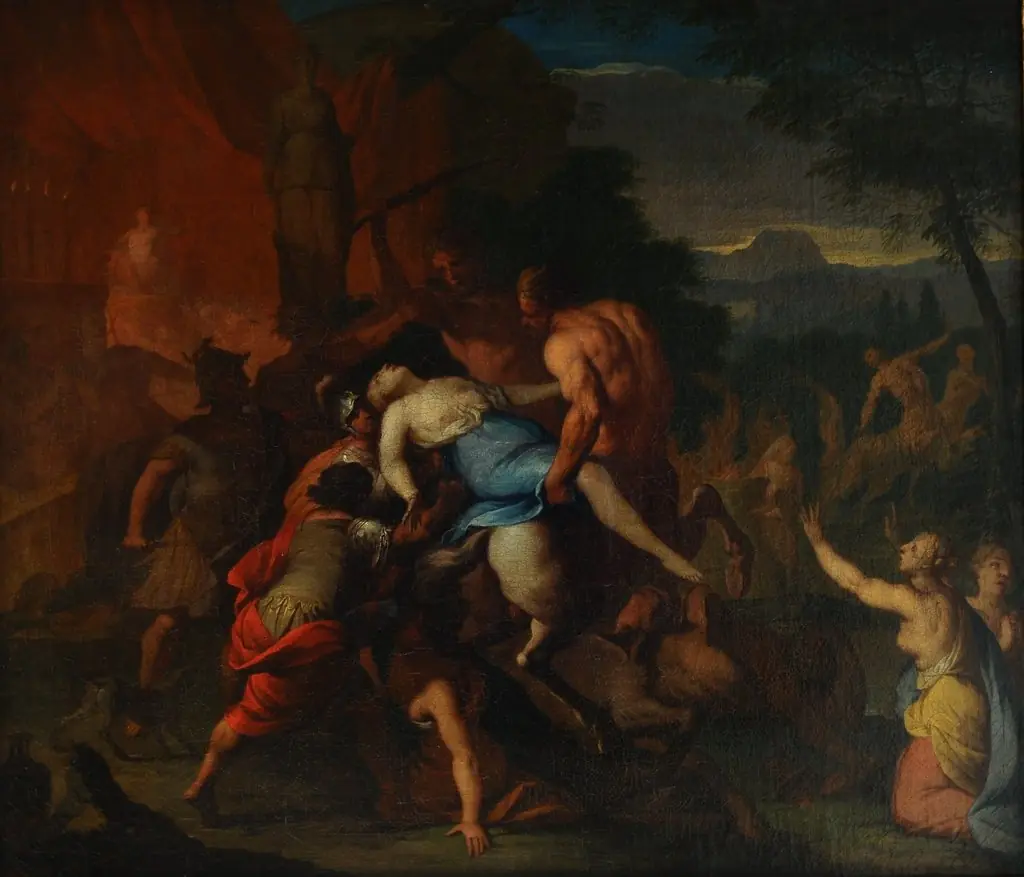 Combate de centauros y lapitas. (Tit. Ant.: Centauros e ilotas)
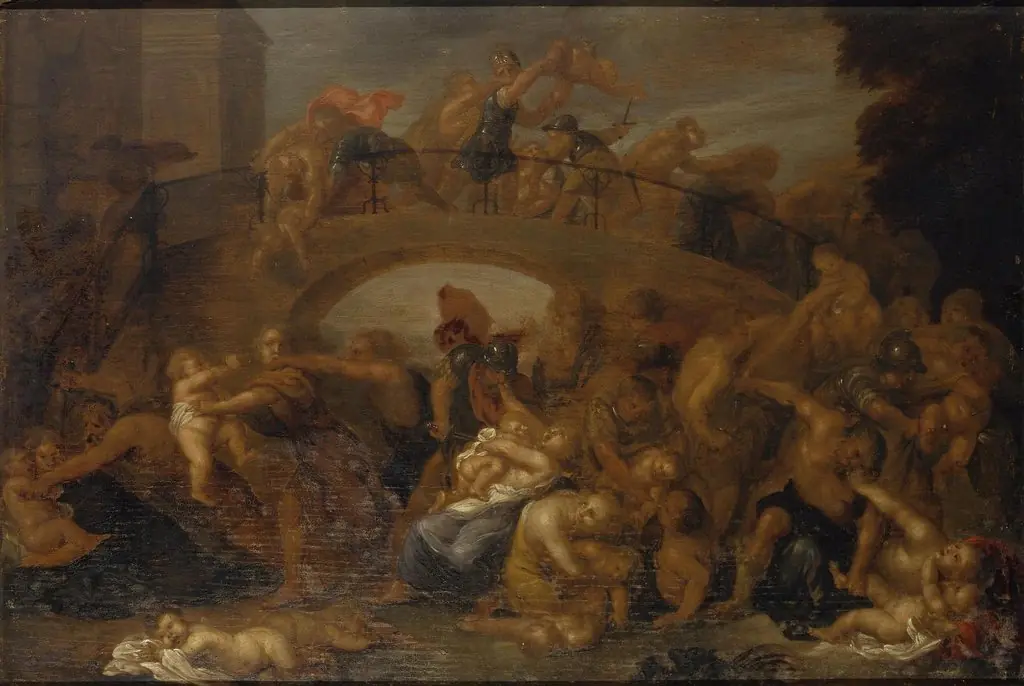 Massacre of the Innocents
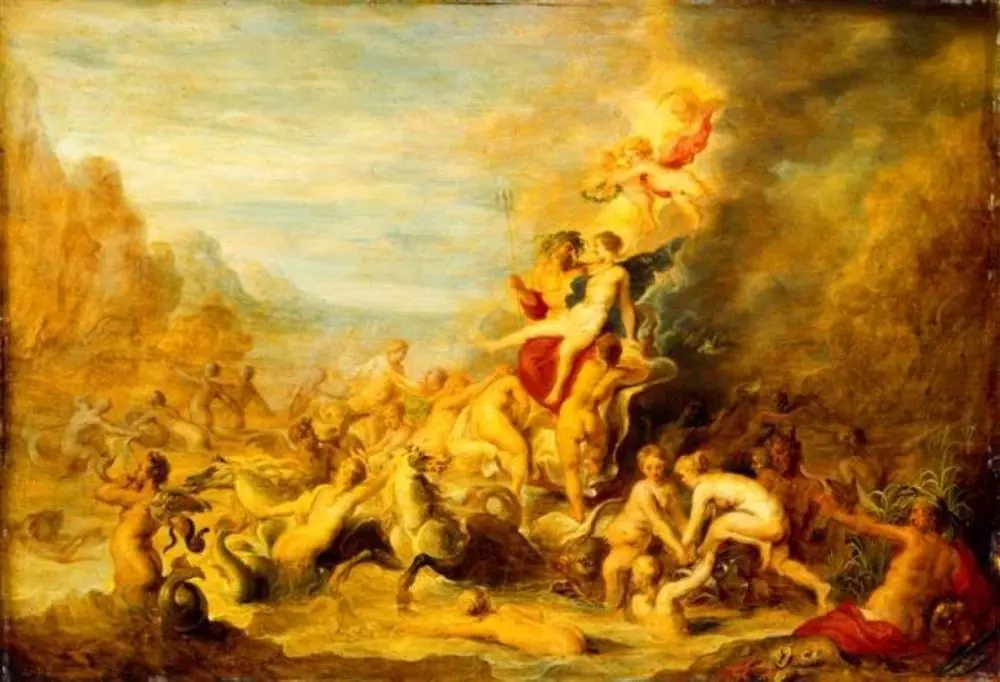 Triumph of Neptune and Amphitrite
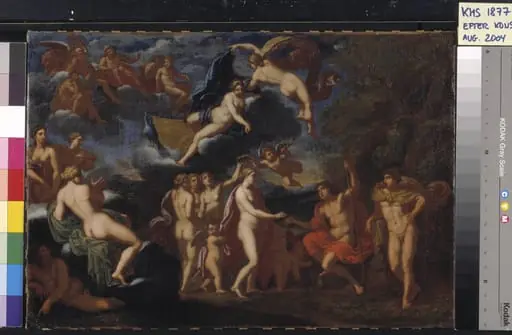 Paris Giving Venus the Apple
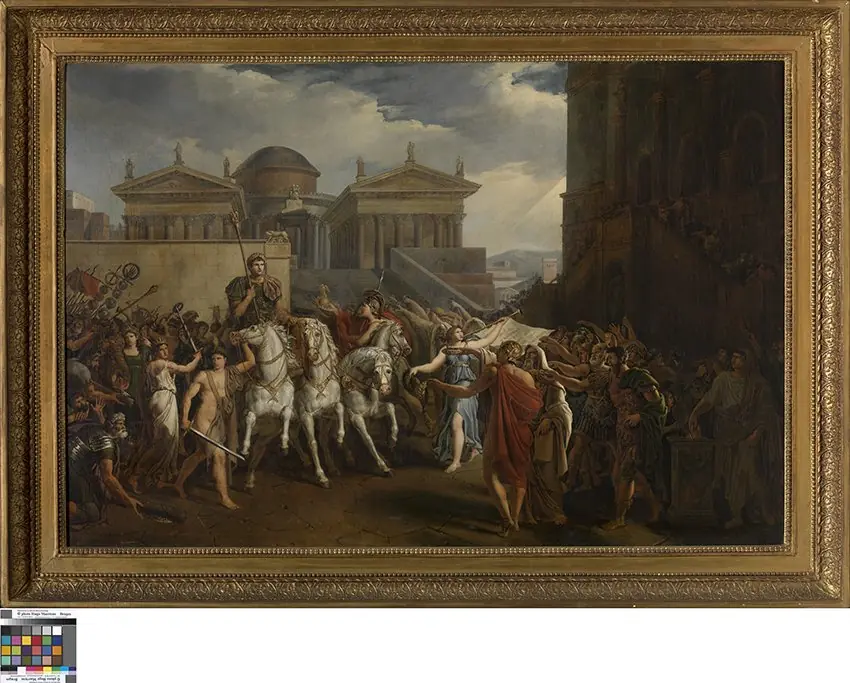 Triomftocht van keizer Trajanus
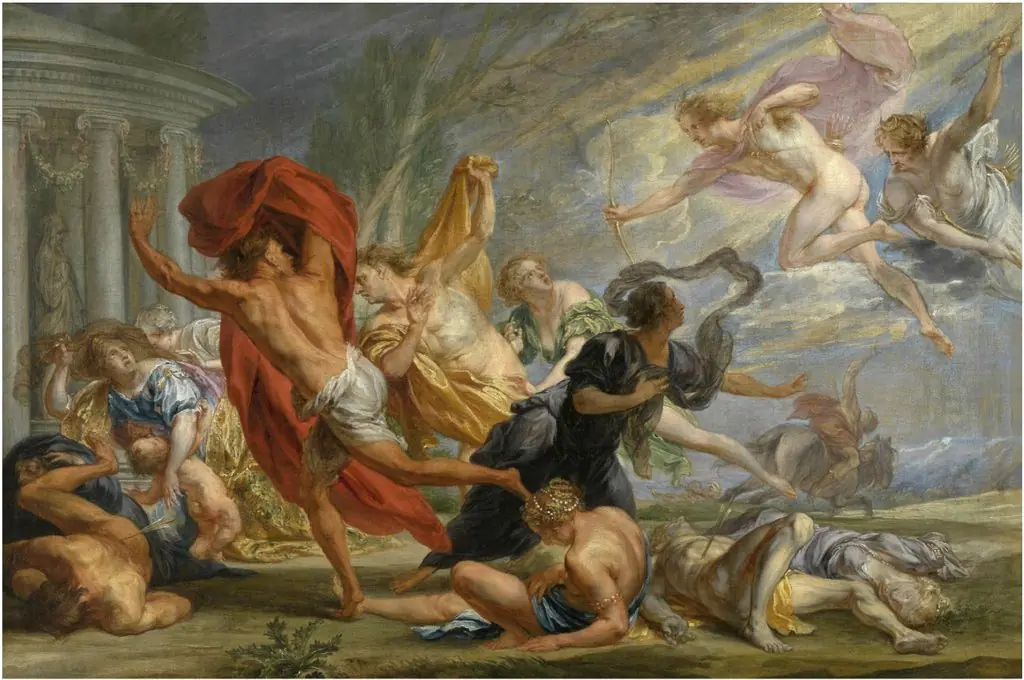 Apollo and Diana Kill Niobe's Children
 Gloria de santos
 The Race of the Riderless Horses