Artwork
Dr. Monro's house, Winster
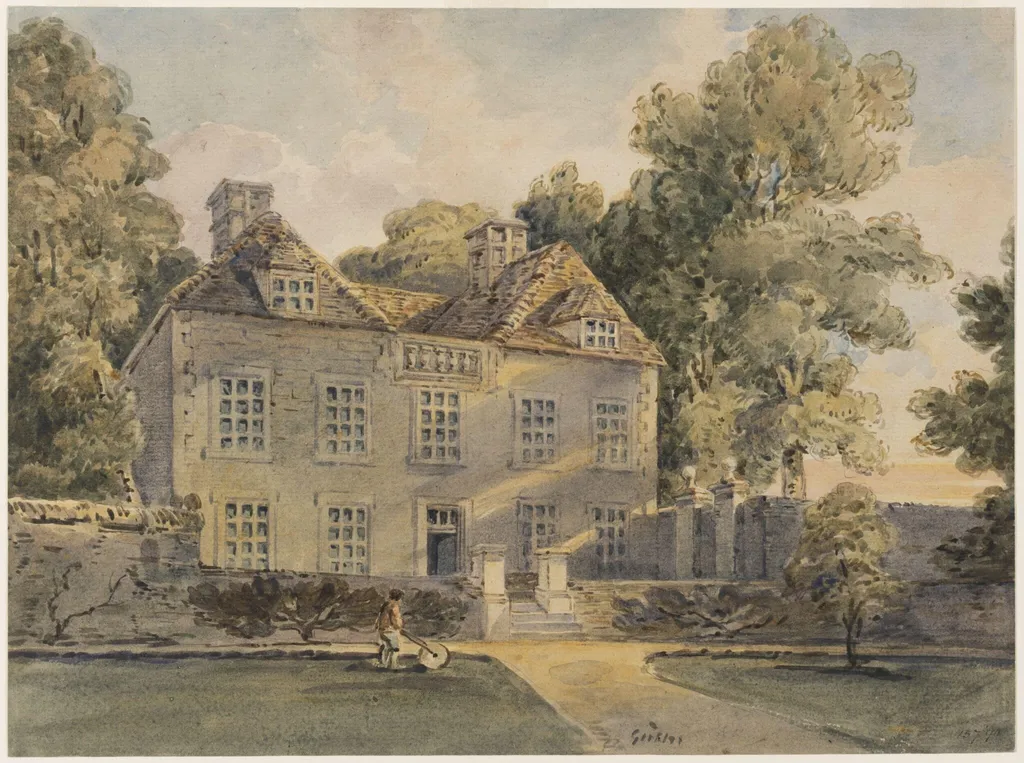
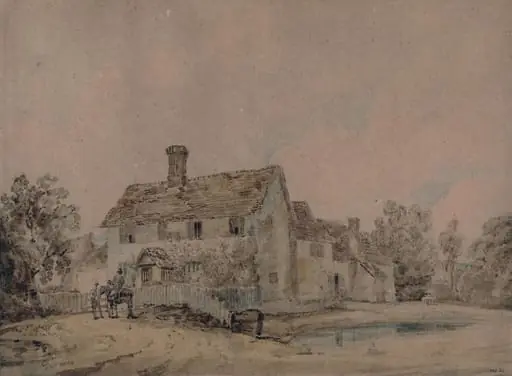
Dr. Monro's house, Winster is a watercolor work on paper by the Romanticist artist Girtin. It dates from 1800 and is held in the collection of the Victoria and Albert Museum.
About this work
Overview
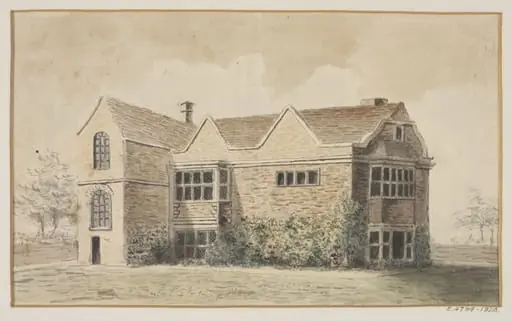
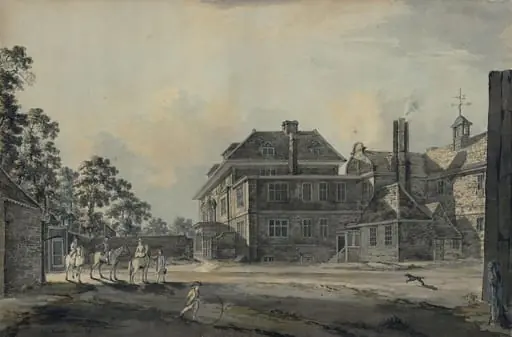
Thomas Girtin’s 1800 watercolour depicts the two‑storey stone residence of Dr. Monro in Winster, a building that was demolished around 1815. The signed work presents the house with a steeply pitched roof, numerous small windows, and chimneys, set amid a modest landscape of trees, a fountain, and a figure pushing a wheelbarrow along a dirt path.
Subject & Meaning
Monro’s home, emphasizing its aged grandeur through the arrangement of windows and roofline.
The composition centers on the domestic architecture of Dr. Monro’s home, emphasizing its aged grandeur through the arrangement of windows and roofline. The inclusion of a working figure and a fountain suggests everyday rural life, while the surrounding foliage and soft sky convey a tranquil, almost nostalgic atmosphere that reflects early 19th‑century interest in the relationship between built environment and nature.
Technique & Style
Girtin employs loose, watery brushstrokes characteristic of his watercolour practice, allowing light to filter across the stone walls and foliage. The delicate handling of sky and shadow creates a sense of atmosphere, while the rendering of the trees and the figure’s movement adds a lively immediacy to the scene, balancing structural solidity with a fleeting, luminous quality.
History & Provenance
The painting is a replica of a drawing held by the British Museum (reference 1890,0806.5). That original drawing was reproduced in Randall Davies’s 1924 catalogue *Thomas Girtin’s Water Colours* (Plate 34). The watercolour itself, signed by Girtin, remains in the Victoria and Albert Museum’s watercolour collection, documenting the artist’s practice of copying his own drawings for exhibition.
Own this work as a print
Artist & collection
Artist
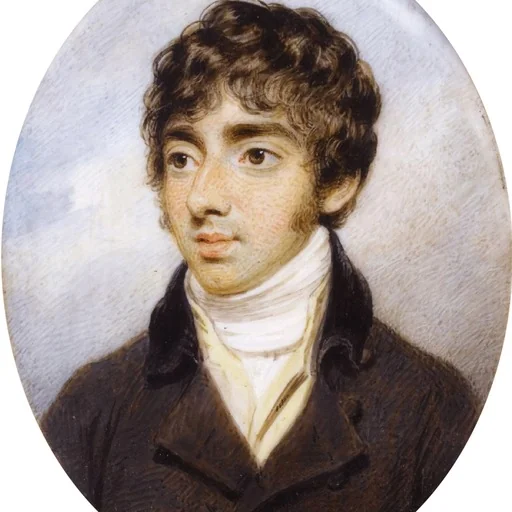
Thomas Girtin (18 February 1775 – 9 November 1802) was an English watercolourist and etcher. A friend and rival of J. M. W. Turner, Girtin played a key role in establishing watercolour as a reputable art form.