Artwork
Harlequin at Dr. Polovard's House
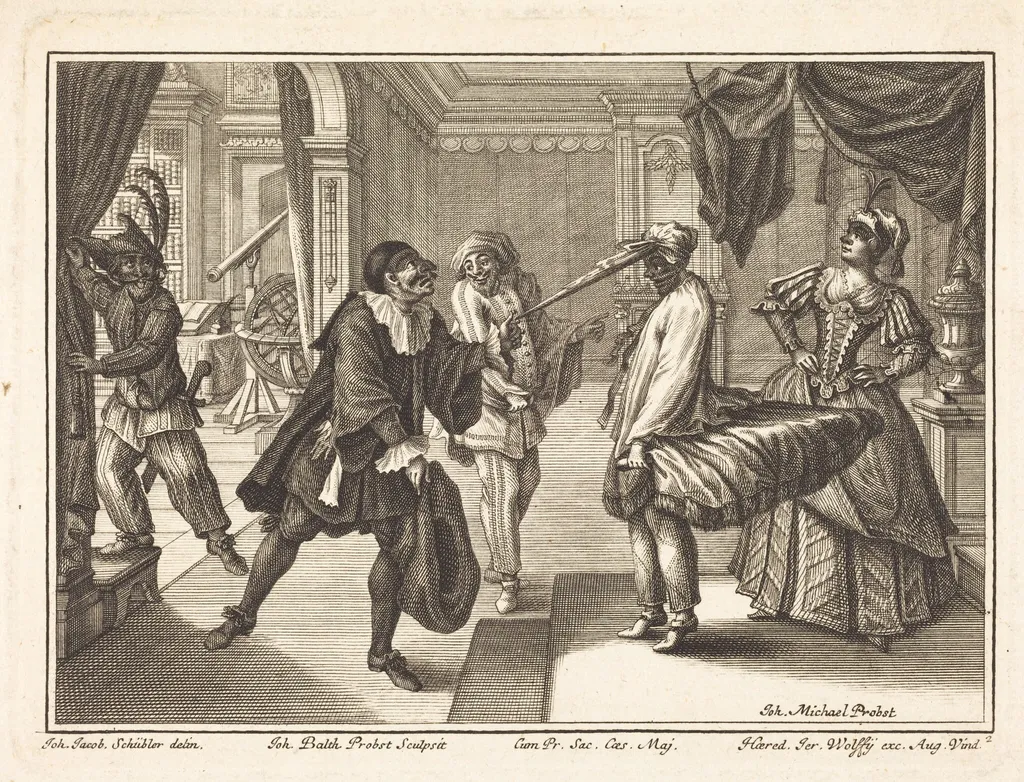
Harlequin at Dr. Polovard's House is an ink print by the Baroque artist Johann Balthasar Probst. It dates from 1729 and is held in the collection of the National Gallery of Art.
About this work
Overview
Executed as an etching and engraving on laid paper, the work depicts an interior scene populated by several figures.
Johann Balthasar Probst’s print, titled Harlequin at Dr. Polovard’s House, was produced in 1729. Executed as an etching and engraving on laid paper, the work depicts an interior scene populated by several figures. The composition includes a man in a white robe, another figure holding a long object near his face, and a backdrop filled with furnishings, curtains, and a wheel, all rendered in the detailed manner typical of early eighteenth‑century prints.
Subject & Meaning
The image presents a domestic interior where a harlequin character appears among other occupants of Dr. Polovard’s residence. The presence of theatrical costume elements, such as the harlequin’s attire, alongside the scholarly setting suggested by the doctor’s title, hints at a narrative interplay between performance and learned life. While the precise story remains ambiguous, the juxtaposition invites viewers to consider themes of disguise, social roles, and the mingling of art and everyday existence.
Technique & Style
Probst combined etching and engraving techniques on laid paper, allowing for both delicate line work and deeper, richer tones. The etched areas capture fine textures—curtains, fabric folds, and ornamental details—while the engraved passages provide stronger outlines for figures and architectural elements. The overall style reflects the late Baroque interest in intricate composition and narrative depth, employing a balanced chiaroscuro that models space and emphasizes the varied costumes of the characters.
History & Provenance
Created in 1729, the print belongs to the early phase of Probst’s career, a period when German printmakers were engaging with theatrical subjects. Although specific ownership records are scarce, the work has circulated among collections focusing on Baroque prints and the visual culture of 18th‑century Germany. Its survival on laid paper indicates careful preservation, and it continues to be referenced in studies of period genre scenes and the representation of theatrical figures in print media.
Artist & collection


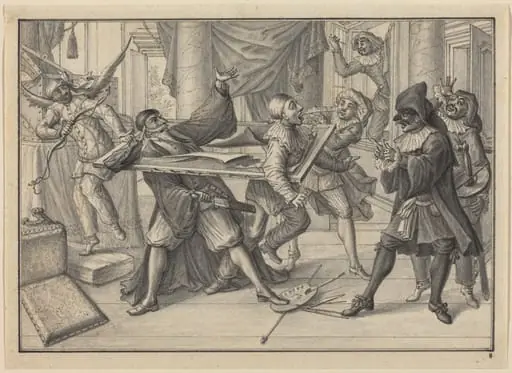 Mezzetin and Harlequin Use the Picture Frame to Catch Pantaloon and Pierrot
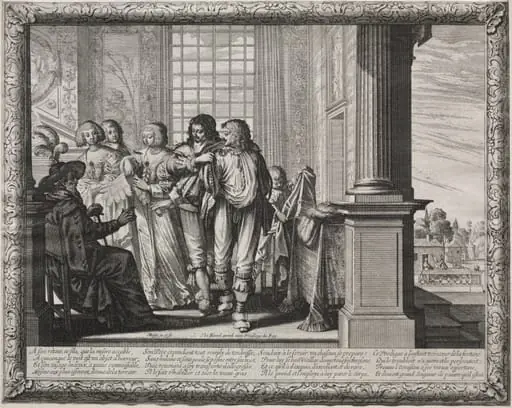 The Prodigal Son: Dressing for the Feast
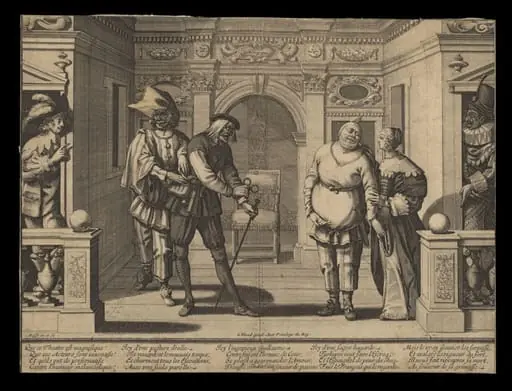 H Beard Print Collection
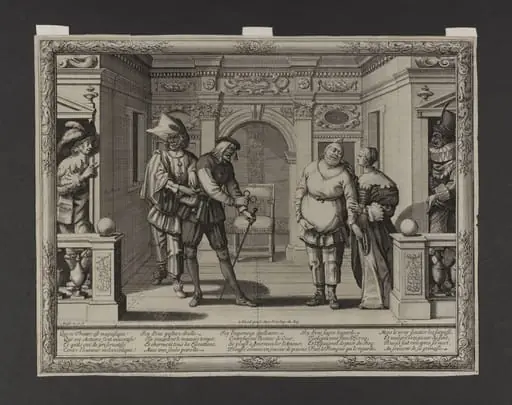 Harry Beard Print Collection
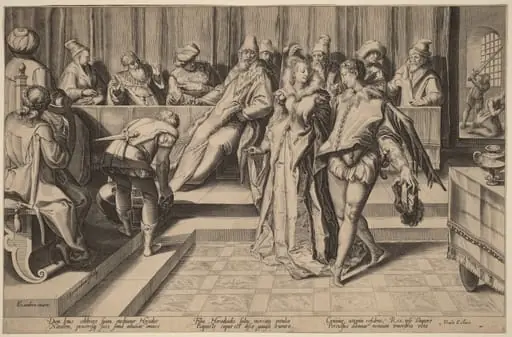 Salome Dancing Before Herod
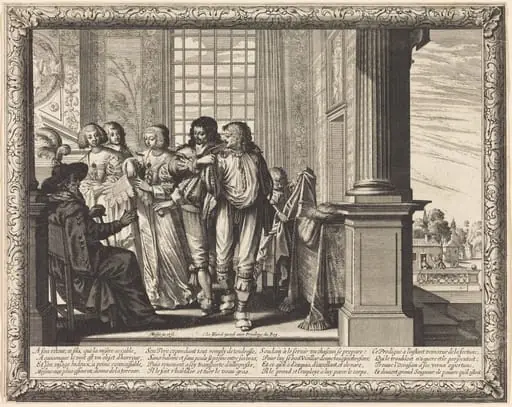 The Prodigal Son's Father Orders the Best Robe and the Slaughter of the Fatted Calf
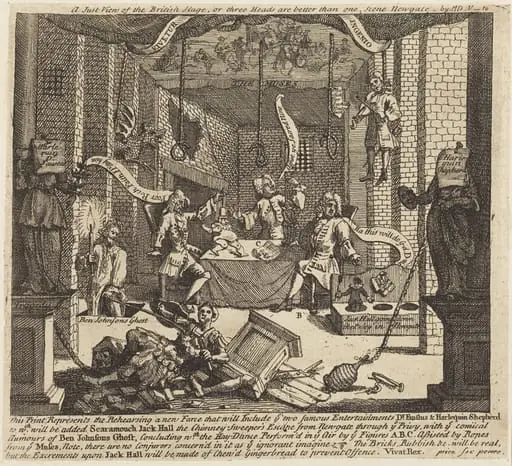 A Just View of the British Stage
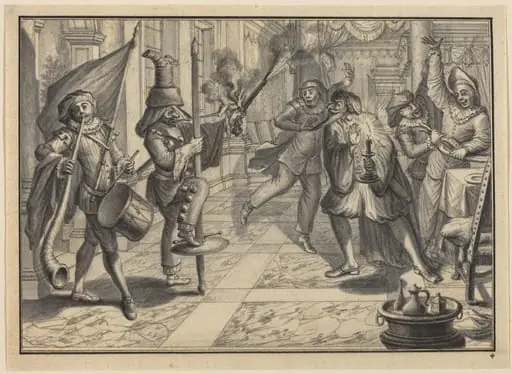 Mezzetin and Harlequin, Disguised as the Captain, Disrupt Pantaloon's Dinner
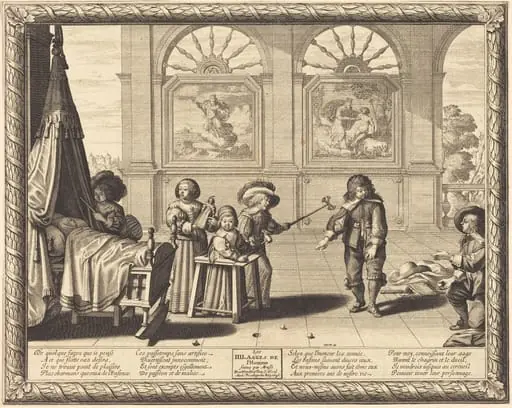 Childhood
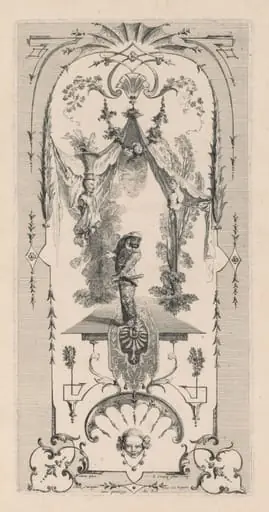 Harlequin, Arabesque
![King and Queen in Consultation about the Turks [recto], by Jacques Callot](https://artifactworldgallery.com/img/jacques-callot--king-and-queen-in-consultation-about-the-turks-recto--5b03792b86815455-w320.webp) King and Queen in Consultation about the Turks [recto]
King and Queen in Consultation about the Turks [recto]