Artwork
The Captain Regains His Freedom
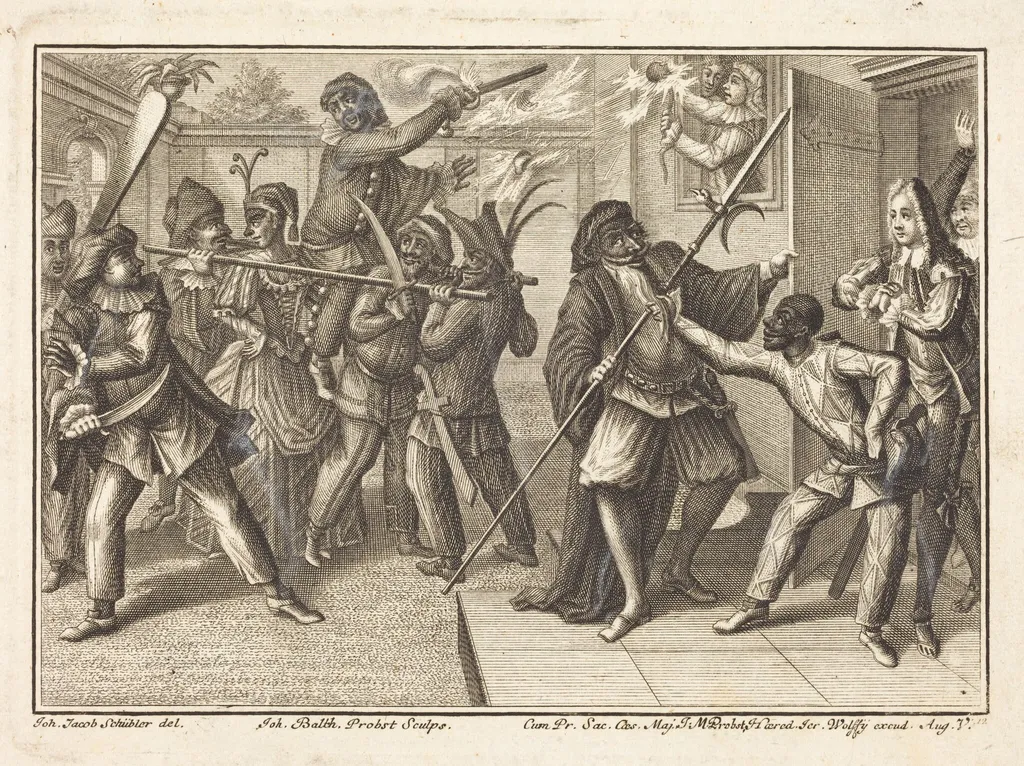
The Captain Regains His Freedom is an ink print by the Baroque artist Johann Balthasar Probst. It dates from 1729 and is held in the collection of the National Gallery of Art.
About this work
Overview
The Captain Regains His Freedom is a 1729 etching and engraving on laid paper by Johann Balthasar Probst, depicting a tumultuous scene of liberation.
Subject & Meaning
At the center, a captain, identifiable by his attire, wrestles free from restraining figures, sword in hand, conveying a broader struggle for freedom. Surrounding chaos—stick-wielding, shouting figures, and wildly playing musicians—amplifies the emotional intensity.
Technique & Style
Probst employs sharp, dynamic lines characteristic of Baroque art to capture movement and drama. The use of etching and engraving techniques (involving acid and tools to cut designs into metal plates) achieves detailed, expressive renderings of the scene’s turmoil.
History & Provenance
Created in 1729 by Johann Balthasar Probst, specific provenance details are not provided, highlighting the work within the context of early 18th-century European printmaking.
Context
The hovering armored figure in the background introduces a sense of oversight or divine intervention, common in Baroque themes that often intertwined secular struggle with religious or symbolic elements.
Legacy
While specific legacy details of 'The Captain Regains His Freedom' are not outlined, the piece reflects Probst’s contribution to Baroque printmaking, characterized by dramatic and emotionally charged subjects.
Artist & collection


 Philip II of Spain on His Throne
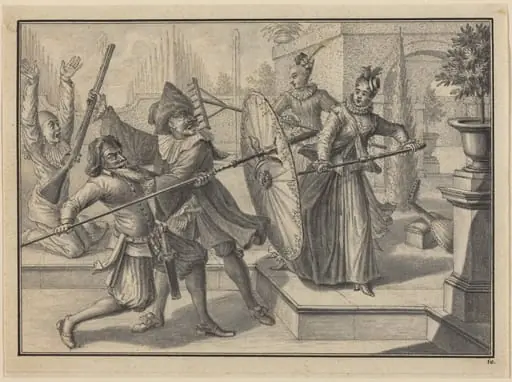 Pantaloon and the Doctor Fighting with Columbine and Brigatella in the Garden
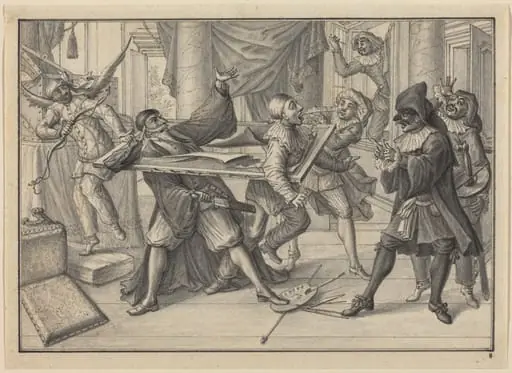 Mezzetin and Harlequin Use the Picture Frame to Catch Pantaloon and Pierrot
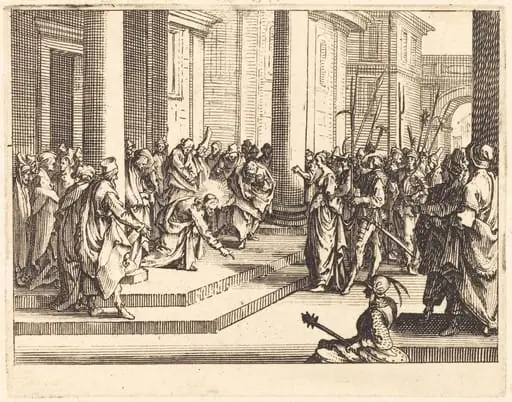 Christ and the Woman Taken in Adultery
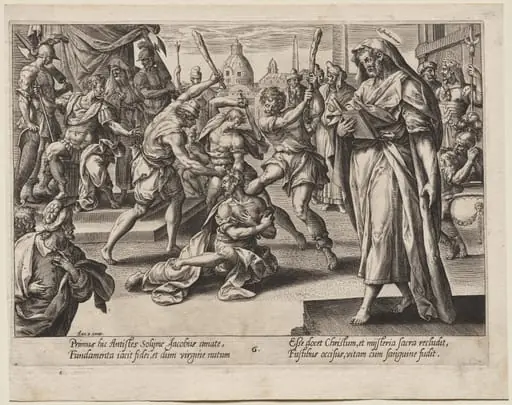 St. James the Less
 The Judgment of Solomon
 St. Matthias
 Harlequin and Scaramouche Create a "Fountain"
 Stoning of Jesus
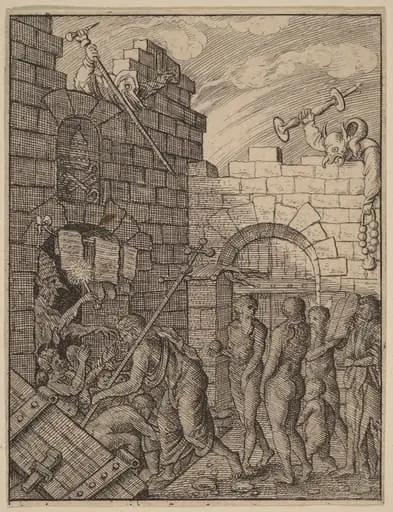 Descent into Hell
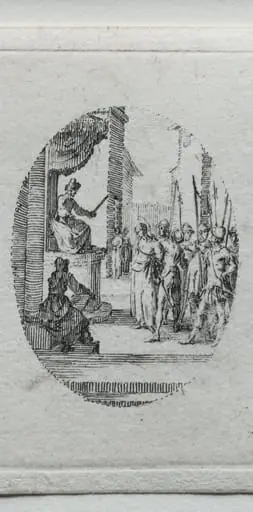 The Mysteries of the Passion: Christ before Pilate